
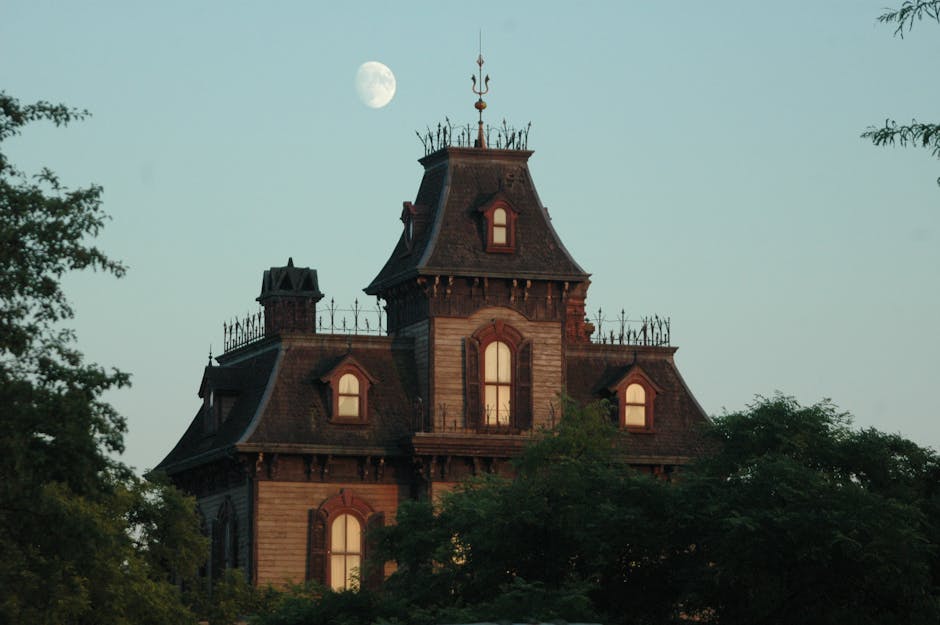
Have you ever felt the chill of a story’s atmosphere seep into your bones, linger like a shadow long after the last page is turned? In this third installment of our weekly writing prompts series, we turn our gaze to that elusive craft: building an atmosphere that haunts, whispers, and lingers. As we journey deeper into storytelling, we now explore how setting becomes soul, how dread breathes in the margins. This series builds upon our previous explorations, connecting ideas into a cohesive narrative journey for your craft.
The Anatomy of Atmosphere in Gothic Fiction
Atmosphere is the unseen character in any tale. It is the mood that envelops the reader, the emotional resonance that transcends plot. In gothic fiction, this becomes paramount. As Edgar Allan Poe demonstrated in “The Fall of the House of Usher,” atmosphere is not mere backdrop; it is a living, breathing entity. The crumbling mansion mirrors the decay of the human psyche, each stone whispering of madness. To master this, you must treat setting as an extension of your characters’ inner worlds.
Sensory Details: The Foundation of Dread
Begin with the senses. What does your setting smell like? Is it the musty odor of old books, or the sharp tang of rain on rusted iron? In H.P. Lovecraft’s “The Shadow over Innsmouth,” the air itself seems thick with brine and alien decay. Use sight, sound, touch, taste, and smell to immerse your reader. However, be selective; a single, precise detail often evokes more than a paragraph of description. For example, instead of saying “the room was dark,” describe “the way shadows clung to the corners like velvet shrouds.”
“The boundaries which divide Life from Death are at best shadowy and vague. Who shall say where the one ends, and where the other begins?” — Edgar Allan Poe, “The Premature Burial.”
Therefore, cultivate an awareness of the liminal spaces. Dusk, dawn, fog, and silence—these are your tools. Daphne du Maurier’s Rebecca uses Manderley’s estate to create an atmosphere of lingering ghosts, where every corridor echoes with past sins. Your setting should feel charged with history, even if it is mundane. A suburban house can become gothic if you emphasize the way the wallpaper peels like skin, or how the stairs groan underfoot like old bones.
Setting as Character: The Unseen Presence
In gothic narratives, the environment often actively influences the plot. Consider Shirley Jackson’s The Haunting of Hill House, where the house itself is a sentient force, manipulating and menacing its inhabitants. To achieve this, personify your setting. Give it agency. Does the forest seem to watch with a thousand eyes? Does the wind murmur secrets in forgotten languages? This technique deepens dread and makes the ordinary feel sinister.
Furthermore, use weather and time to mirror emotional states. A storm during a confession, a heatwave during a descent into madness—these parallels create subconscious resonance. Gillian Flynn in Gone Girl masterfully uses the Midwestern landscape to reflect the characters’ claustrophobia and hidden depths. Your atmosphere should never be static; it should evolve with the narrative, twisting and tightening like a noose.
Language: The Veil of Atmosphere
Your word choice is critical. Prefer words that evoke mood: shadow, whisper, echo, veil, silence, fracture, unravel, dusk, murmur, hollow. Avoid clichés; instead, craft original metaphors. For instance, rather than “the wind howled,” try “the wind keened like a mourner at a graveside.” Active voice amplifies tension; passive voice can drain it. As Angela Carter showed in The Bloody Chamber, language can be both beautiful and terrifying, weaving fairy-tale dread into modern prose.
In addition, sentence rhythm matters. Short, clipped sentences create urgency and unease, while longer, flowing ones can build a dreamlike quality. Haruki Murakami, though not strictly gothic, uses this in Kafka on the Shore to blur reality and dream. Experiment with punctuation—em-dashes, semicolons—to control pace. A well-placed ellipsis can leave a sentence hanging, much like an unsolved mystery.
Common Pitfalls in Crafting Atmosphere
Avoid over-description. Too much detail can overwhelm and slow the pace. Instead, suggest rather than state. Let the reader’s imagination fill the gaps, as Tana French does in In the Woods, where the forest’s darkness is implied through fragments and feelings. Also, ensure atmosphere serves the story; it should not distract from character and plot. As Jorge Luis Borges noted, every element in a story must have purpose.
Finally, do not neglect internal atmosphere—the character’s emotional landscape. The external setting should echo internal turmoil. Sylvia Moreno-Garcia in Mexican Gothic brilliantly intertwines the protagonist’s growing fear with the oppressive, decaying mansion. Your atmosphere is a mirror, a mask, and a weapon.
A Case Study: The Echoing Gallery
The following short story embodies the techniques discussed. Notice how sensory details, personified setting, and deliberate language weave an atmosphere of dread.
The gallery stretched before her, a corridor of forgotten footsteps. Each step echoed not behind, but within her chest, a hollow percussion. The walls were lined with portraits, their eyes following with a gaze that felt less painted and more predatory. A low hum permeated the air—not from pipes or wires, but from the plaster itself, as if the house exhaled a continuous, weary sigh.
She paused before a canvas depicting a woman in a crimson dress. The colors seemed to shift under the dim light, the red deepening to something like dried blood. A whisper, barely audible, slithered from the frame: “Stay.” The word was not heard so much as felt, a vibration in her teeth. Outside, dusk had settled, but here, time felt suspended, thick and syrupy. The floorboards groaned in agreement with her trembling breath.
Turning, she noticed the gallery had lengthened. The door at the far end, once visible, now seemed distant, shrouded in a mist that crept along the carpet. Shadows pooled in the corners, not absence of light but a presence of their own—alive, watching. She quickened her pace, but the echoes multiplied, becoming a chorus of murmurs. “Stay,” they now chanted, a collective sigh from the very bones of the building. Her heart raced, a frantic bird against her ribs, as the atmosphere tightened around her, a living shroud.
Weekly Writing Prompts: Your Turn to Create Atmosphere
Now, apply these lessons to your own work. As part of this weekly writing prompts series, consider this exercise: Choose a mundane setting—a kitchen, a park, a bus stop—and infuse it with gothic atmosphere. Use sensory details to transform the ordinary into the eerie. Write 500 words, focusing on how the environment affects your character’s mood. Share your piece in the comments below, and let us witness the shadows you conjure.
Remember, atmosphere is a craft honed through practice. As you experiment, revisit our first prompt on idea generation and our second prompt on character depth. Each part builds upon the last, creating a richer understanding. For deeper study, explore Edgar Allan Poe’s complete works or the origins of gothic literature.
Closing Reflections: The Lingering Echo
As we conclude Part 3 of our journey, ask yourself: what does your setting whisper when no one is listening? Atmosphere is the silent language of story, a veil through which truth and terror dance. Like Poe’s narrators, we must learn to listen to the walls, to the wind, to the fractures in reality. Will you dare to let your settings breathe, to let them haunt?
In our next installment, we will explore narrative structure—how to weave these elements into a compelling arc. Until then, let the echoes guide your pen. After all, the most enduring stories are those that linger in the atmosphere long after the plot has unraveled.