
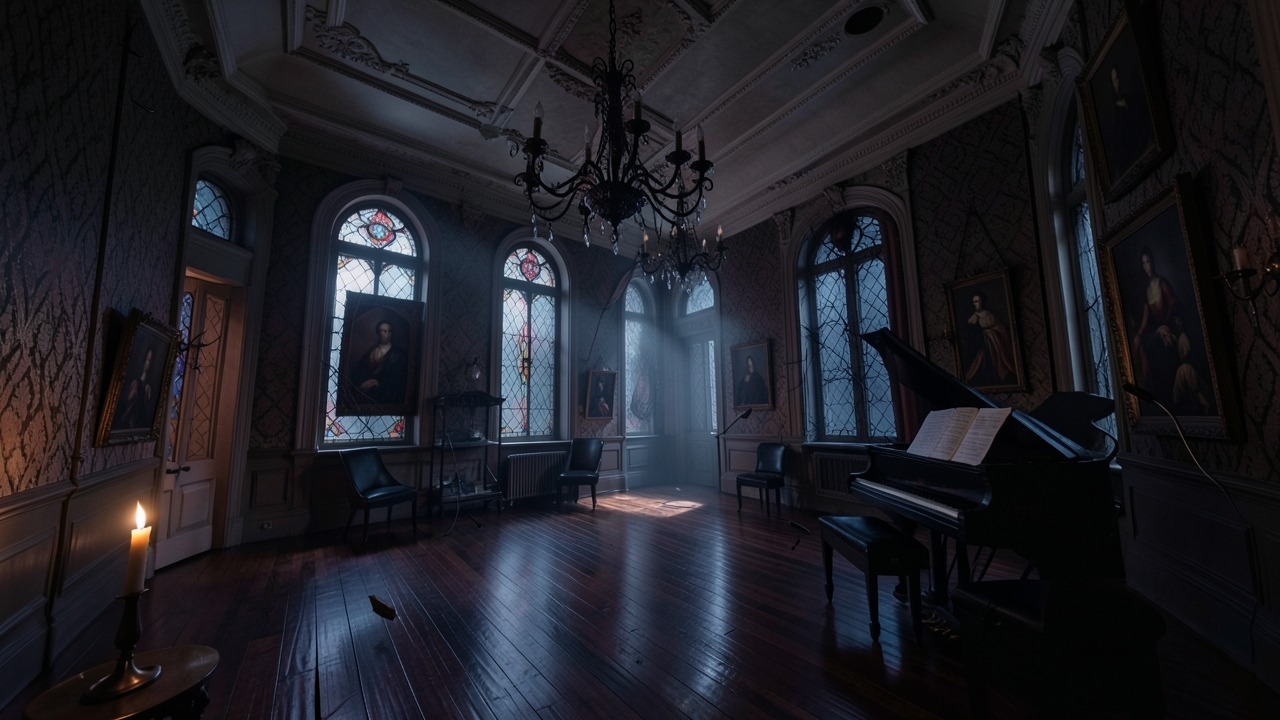
What truly haunts the halls of a modern mind? Is it the spectral visage in the moonlit window, or the uncanny echo of your own voice, slightly distorted, played back through a forgotten smart speaker? In 2026, the architecture of dread has been rewired. The classic haunted house, with its creaking floorboards and cold spots, often feels quaint—a relic of a simpler fear. Today’s masters of unease, the inheritors of Poe and Jackson, operate on a more insidious frequency. They employ modern gothic uncanny techniques that exploit the fractures between the familiar and the alien, amplified by the digital fabric of our lives.
This is not mere ghost story craft. It is the precise engineering of psychological dread, translating Sigmund Freud’s century-old concept of the uncanny—das Unheimliche, the ‘unhomely’—into the glowing rectangles and silent algorithms that define contemporary existence. For the storyteller seeking to master this new shadow, the task is to learn the anatomy of this evolved fear.
The Digital Uncanny Valley: Where Familiarity Becomes Fractured
Freud located the uncanny in the return of repressed feelings and the blurring of distinction between imagination and reality. Modern gothic uncanny techniques extend this principle into the technological realm. The ‘homely’ is no longer just the family home; it is the familiar glow of a phone screen, the comforting predictability of a streaming service’s recommendation algorithm, the trusted voice of a virtual assistant. The dread ignites when these reliable elements subtly, then profoundly, malfunction in a way that feels like a betrayal of their fundamental nature.
Sensory Betrayal and the Glitch in the Mundane
A key technique is the sensory betrayal of mundane technology. Consider a character’s playlist, which begins to randomly insert a song they’ve never heard, yet know intimately—a song from a memory they cannot place. This is not a simple haunting; it is a corruption of the personal archive. Authors like Silvia Moreno-Garcia, in works like Mexican Gothic, masterfully use physical decay to mirror psychological unease. The modern update is digital decay: a photo library where images subtly shift, a loved one’s face morphing pixel by pixel in an old video. The unease stems from the violation of expected order in a system designed for perfect recall.
For example, the routine notification from a smart home device—”Front door is locked”—is mundane. The uncanny technique arises when the notification repeats, three times, at 3:00 AM. Or when the device states, “Front door is watching,” not “locked.” The terror is in the near-miss. It is almost correct, which forces the mind to race towards the horrific alternative.
Algorithmic Dread: The Unknowable Narrative
A profound shift in modern gothic uncanny techniques involves narrative agency. In traditional tales, the supernatural entity has a will—a ghost seeks vengeance, a demon craves a soul. In the digital uncanny, the source of dread is often will-less yet patterned. Think of a social media feed that begins showing you content from a life you never lived, but which has a disturbingly coherent logic. This reflects what we might call algorithmic dread: the fear of an opaque system that knows and shapes you, yet lacks human motive.
The poet and scholar H.P. Lovecraft feared the indifferent cosmos. The 2026 storyteller, following this lineage, may fear the indifferent algorithm. As noted in analyses of contemporary speculative fiction, the most potent horror emerges not from malice, but from a complex, inhuman intelligence operating on logic we can only perceive in fragments. The technique is to present a chain of events that is not random, but not purposeful either—it is merely optimized, and that optimization leads to a terrifying, logical conclusion.
The Mechanics of Narration: Crafting the Uncanny Gaze
Mastery of the uncanny requires more than just eerie content; it demands a specific narrative lens. The point of view must be calibrated to blur the line between perception and reality, forcing the reader into the protagonist’s fraying consciousness.
The Unreliable Filter of Digital Memory
Shirley Jackson’s The Haunting of Hill House famously uses a protagonist, Eleanor Vance, whose inner turmoil is indistinguishable from the house’s hauntings. Modern gothic uncanny techniques achieve this via mediated perception. The protagonist’s memory is no longer a private realm; it is backed up, indexed, and vulnerable. A narrator might recall an argument, then check their cloud archive for a video of the event, only to find it subtly contradicts their emotional memory. Did the event happen as they feel it did, or as the flawless digital record shows? This creates a terrifying dislocation from one’s own past. The self becomes another unreliable narrator.
The Lyrical Mundanity of Dread
To land these techniques, the prose itself must fuse the poetic and the prosaic. The language should linger on the specific, tangible details of the uncanny event. Don’t just say the lights flickered. Describe the way the LED bulb’s light didn’t dim, but momentarily shifted its hue to a cooler, more clinical blue—the color of a notification screen. Use short, declarative sentences to report the impossible event, allowing the horror to arise from the matter-of-fact tone. Then, let a longer, more lyrical sentence unfurl the psychological fallout. This rhythm mimics the mind trying, and failing, to process a fracture in reality. As demonstrated in our guide to crafting unreliable narrators, the goal is to make the reader complicit in the character’s doubt.
Furthermore, effective gothic writers like Tana French use hyper-specific setting details to ground the uncanny. The dread must be rooted in a place the reader can almost touch. The technique is to apply this to the digital landscape: describe the exact pixel bleed at the edge of a distorted video call, the specific sound a smart lock makes when it refuses your command but cannot name its error. This sensory precision makes the abstract algorithmic threat feel palpably real.
Common Pitfalls: When the Uncanny Becomes Cliché
Even the most promising technique can falter. Two common errors plague modern gothic uncanny attempts.
First is techno-babble over unease. The writer becomes so fascinated with the mechanism—the specific malware, the complex code of the AI—that the poetry of the fear is lost. The explanation kills the mystery. The uncanny thrives on ambiguity. We need not know how the photo changed, only that it did, and that it shouldn’t have been possible. The dread is in the gap, not the technical manual.
The second pitfall is abandoning the human core. For all its digital trappings, the uncanny is ultimately about human psychology—about memory, identity, and belonging. If the technology becomes the sole focus, the story becomes science fiction, not gothic horror. The machine is merely the new haunted house; the real terror is the human psyche echoing inside it. As the literary theorist Freud insisted, the uncanny is where the mind confronts its own shadow. Ensure your protagonist’s internal world remains the primary landscape being haunted.
A Case Study: The Echo Archive
Clara had always prided herself on her memory. It was a curated gallery, stored in the cloud: every laugh, every tear, every sunset from the last decade, tagged and searchable. Until the day the archive sent her a notification. “Memory restored: 14 March 2019.” She clicked. The video played: a picnic with Liam, under the sycamore tree. His smile was radiant. But the audio was wrong. Underneath the wind and their laughter, a third voice murmured, a perfect duplicate of her own, saying a phrase she did not remember speaking. “I know what you did.” She checked the file’s metadata. The voice layer had been added today. The file had not been accessed in seven years. The gallery of her own mind now contained a forgery, signed in her own voice.The Unraveling Thread: A Conclusion
We began with a question about the nature of the modern haunt. The answer, it seems, lies in the precision of the fracture. The most effective modern gothic uncanny techniques do not build new monsters. They take the scaffolding of our digital lives—the archives, the algorithms, the seamless integration—and introduce a single, profound flaw. They turn the homely into the unhomely with a whisper of corrupted data, a glitch in the ghost of our own stored selves.
The tools have changed. The haunted house now has a server room. But the fundamental terror remains the same: the horrifying realization that the world you trust, the self you remember, may be less stable than you believed. In an age of deepfakes and generative AI, the uncanny is no longer a literary trope; it is the ambient condition of our reality. And so, the final, lingering question for the storyteller of dread is not whether we can create fear, but whether we can ever again be certain where the familiar story ends and the uncanny echo begins?
For further exploration of these narrative mechanics, consider our deep dive into the use of sensory detail in horror.
External sources referenced: Poetry Foundation on The Uncanny and The Guardian on the reappression of the repressed.