
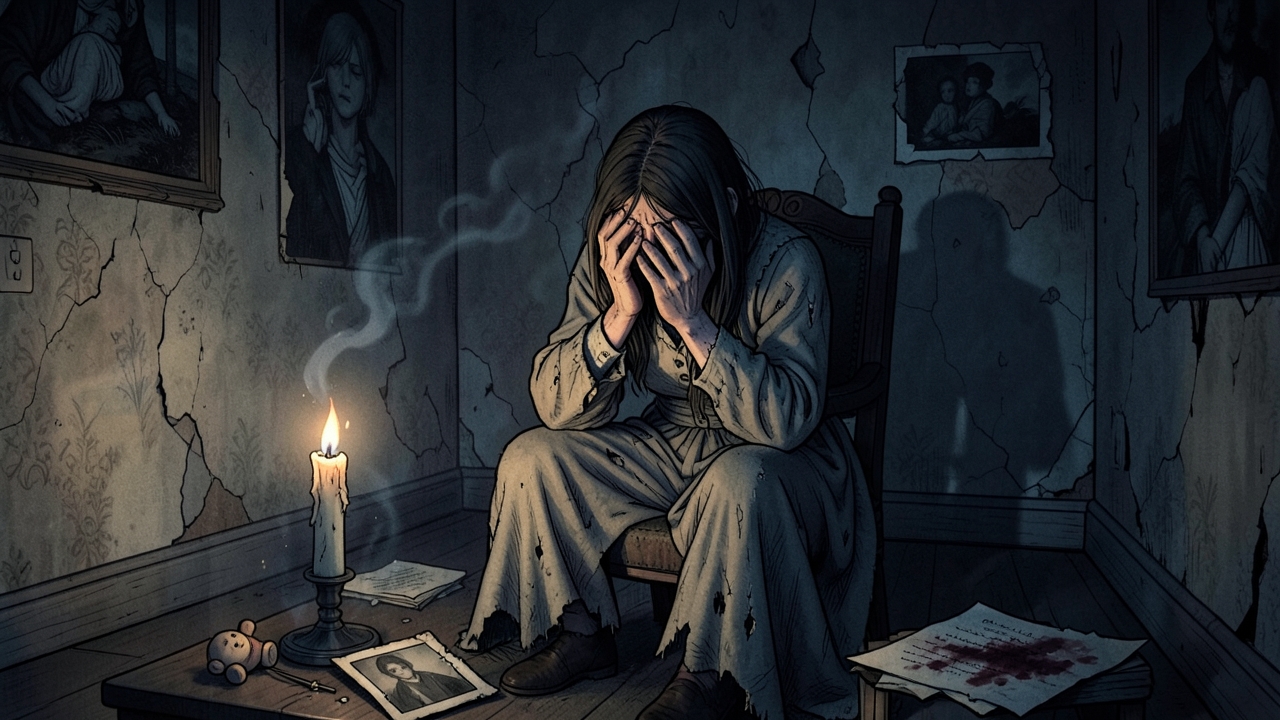
What if the true monster is not the creature lurking in the shadows, but the hollow ache within our own chests? In the realm of grief in horror fiction, loss transforms into a palpable dread, a force more relentless than any supernatural entity. This shift marks a profound evolution in storytelling, where the raw, visceral experience of grief becomes the primary source of terror.
Contemporary writers increasingly turn inward, crafting narratives that manifest psychological wounds as tangible threats. Therefore, we must examine how to master this craft, moving beyond clichés to tap into the universal fear of unprocessed loss. As a result, this exploration will delve into the anatomy of grief as terror, offering techniques to weave it into the fabric of horror.
Grief in Horror Fiction: Crafting the Monster of Loss
The art of grief in horror fiction lies in its ability to transcend the page, echoing the reader’s own vulnerabilities. For example, Edgar Allan Poe understood this deeply in “The Fall of the House of Usher,” where the decay of the mansion mirrors Roderick Usher’s crumbling psyche after loss. Consequently, setting becomes an extension of inner turmoil, a technique still vital today.
Meanwhile, writers like Shirley Jackson in “The Haunting of Hill House” use haunted houses not merely as ghostly abodes, but as metaphors for unresolved grief. The house itself becomes a monster, feeding on Eleanor’s past traumas. In addition, this psychological depth makes the horror intimate and inescapable.
The Anatomy of Grief as Terror
To manifest grief as a monster, first dissect its emotional layers. Grief is not singular; it encompasses denial, anger, bargaining, and depression. Therefore, each stage can fuel different forms of terror. For instance, in Tana French’s “The Witch Elm,” grief blurs the line between memory and madness, creating a slow-burn horror that feels all too real.
Moreover, the monster often takes symbolic form. In Silvia Moreno-Garcia’s “Mexican Gothic,” the fungal growth in the house represents familial grief and suppressed history. As a result, the horror is systemic, rooted in loss that festers across generations. Similarly, Gillian Flynn’s “Gone Girl” twists grief into manipulation, showcasing how unprocessed loss can warp relationships into nightmares.
Transitioning from theory to technique, consider using sensory details to externalize grief. For example, describe the cold touch of absence or the suffocating weight of sorrow. H.P. Lovecraft, though often cosmic, applied this in “The Statement of Randolph Carter,” where grief for a lost friend manifests as otherworldly horror. Consequently, the emotional becomes physical, intensifying the dread.
Techniques for Manifesting Psychological Wounds
One effective technique is personification. Give grief a form—a shadow, a whisper, a relentless pursuer. In Daphne du Maurier’s “Rebecca,” the memory of the deceased wife haunts like a spectral presence, though no ghost appears. Therefore, the living character’s grief becomes the true antagonist, driving paranoia and isolation.
Another method is using time as a weapon. Grief often distorts perception, making moments stretch or collapse. For instance, in Haruki Murakami’s “The Wind-Up Bird Chronicle,” loss unravels reality, creating a surreal horror that reflects inner chaos. Similarly, Angela Carter’s “The Bloody Chamber” reimagines fairy tales through grief-tinted lenses, where loss corrupts innocence.
Additionally, dialogue can reveal unspoken grief. Short, fragmented sentences mimic the fractured state of mourning. Compare this to Poe’s “Annabel Lee,” where the speaker’s obsessive grief for his lost love builds a gothic atmosphere. As a result, the narrative voice itself becomes haunted, amplifying the tension.
Common Pitfalls in Depicting Grief
Avoid melodrama; grief in horror fiction thrives on subtlety. Overdoing emotion can feel manipulative, breaking immersion. Therefore, focus on showing, not telling. For example, instead of stating a character is sad, describe their hollow stare or trembling hands, as Jorge Luis Borges might in a tale of metaphysical loss.
Moreover, ensure the grief serves the plot. If it merely decorates, it loses impact. Consequently, integrate it into the character’s actions and decisions. In contrast, some works fail by making grief passive, rather than an active force. Remember, the monster should evolve alongside the story, reflecting the character’s journey.
For deeper insights into gothic techniques, explore The Art of Shadow in Prose on Froie.com. Additionally, the Poetry Foundation offers excellent resources on Poe’s influence.
A Case Study: The Echo of Absence
The old house on Harrow Lane stood like a sentinel of decay, its windows dark eyes staring into the dusk. Clara felt the absence before she entered—a hollow whisper that clung to the air, thicker than dust. It was the grief, she knew, not for the dead, but for the silence they left behind. This grief was a monster, patient and cold, waiting to unfurl its tendrils in the corners of her mind.
Inside, the air was stale, suffused with the scent of forgotten things. Shadows danced on the walls, shaped by memories she couldn’t name. Therefore, each footstep echoed like a heartbeat, a reminder of the loss that had fractured her world. The house itself seemed to breathe, its groans mirroring the ache in her chest. In addition, the grief manifested as a palpable weight, pressing on her shoulders with relentless force.
As night fell, the whispers grew louder, shaping words from thin air. Clara saw figures in the periphery—her mother’s silhouette, her brother’s laugh—but they vanished upon focus. Consequently, paranoia set in; the monster was not external, but woven from her own sorrow. She realized the house fed on this unprocessed loss, growing stronger with each sob she stifled.
In the attic, she found a mirror, its surface clouded with age. There, her reflection smiled back, but the eyes were hollow, echoing the void within. Therefore, she understood: grief was not a visitor but a tenant, reshaping her from the inside out. The horror lay not in what lurked, but in what she had become—a vessel for loss, unraveling in the dark.
By dawn, the house fell silent, but the silence was no comfort. Clara stepped out, leaving the monster behind, yet she carried its echo within. As a result, she knew grief would follow, a shadow that time could not dispel. The true terror was eternal, a whisper in the hollow of her soul.
Reflecting on the Echo Within
Grief in horror fiction reminds us that our deepest wounds can birth the most terrifying monsters. By crafting psychological dread, writers create narratives that resonate with universal fear. For further reading, consider Gothic Settings and Emotional Mirrors on Froie.com, and Literary Hub’s exploration of grief in gothic literature.
In the end, as we navigate our own shadows, we must ask: when loss haunts us, do we confront the monster, or let it consume us from within? Perhaps the answer lies in the stories we tell, where grief is not the end, but a harrowing journey through the dark.