
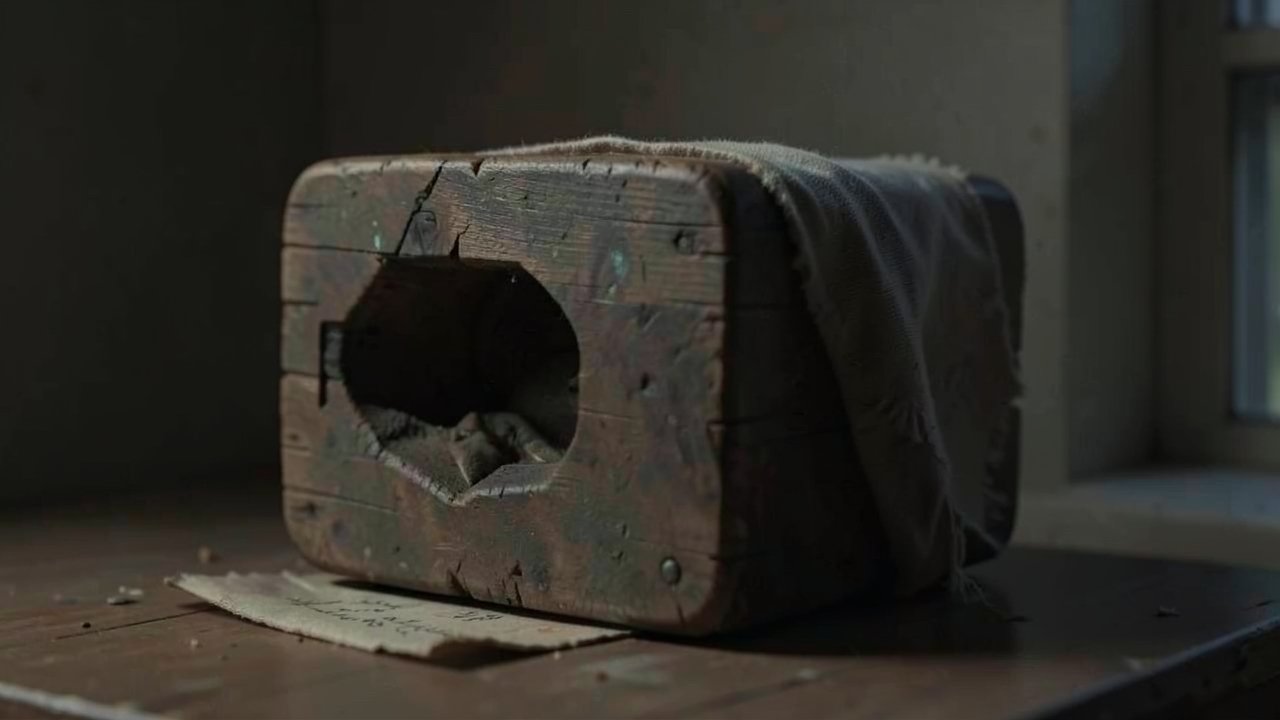
What if you could excavate a lifetime of sorrow, not with paragraphs of explanation, but with the silent testimony of a single, mundane thing? This is the haunting challenge of the flash fiction prompt: to construct a narrative of profound grief using only one hundred words, where the emotion itself remains an unspoken ghost, present only in the shadow cast by a specific object.
The Theory of Emotional Transference
At its core, this exercise is about the art of implication. Directly stating a character’s grief (“She was devastated”) is telling. Placing a dusty, untouched jar of their partner’s favorite jam on the counter is showing. This is the foundational principle of the show, don’t tell doctrine, magnified to a point of exquisite, painful focus. The object becomes a vessel, a reliquary for all the emotion you deliberately omit from the text.
The writer Edgar Allan Poe, a master of concentrated melancholy, understood this principle intimately. In “The Black Cat,” the narrator’s escalating madness is charted through his shifting relationship with the titular animal—a living object of affection turned to hatred and back again. Our constraint is even stricter. We have one object and a finite word count, demanding absolute precision.
Choosing Your Haunted Object
The object you select is not arbitrary; it is the story’s engine. It must possess two qualities: specificity and resonance. It cannot be just “a ring.” It must be a tarnished silver ring with a thumb-smoothed indentation on the band. It cannot be “a book.” It must be a novel with a cracked spine and a coffee ring on page 117, marking a shared favorite passage.
Consider the power of the object in Daphne du Maurier’s Rebecca. The pervasive, suffocating presence of the first wife is felt not through her ghost, but through her monogrammed stationery, the empty room she occupied, the rhododendrons she planted. Your single object must work just as hard. It must be a synecdoche, a part representing the devastating whole of the lost person or past.
The Architecture of Constraint
Writing in exactly one hundred words is not a limitation; it is a crucible. It burns away all fluff, all explanatory narration, leaving only the pure, glowing ember of the story. Every single word must be load-bearing. This economy forces you into the most powerful literary tool of all: the subtext.
The grief does not live on the page. It lives in the white space between your words, in the reader’s inference. Your job is to construct the perfect container—the scene around the object—that compels the reader to pour their own understanding of loss into it.
Common Pitfalls in Grief-Constrained Writing
First, avoid the trap of sentimentality. Overt emotional words (“heartbroken,” “anguish”) are cheap currency in this economy. They deflate the tension. Let the object do the work. Second, beware of over-explaining the object’s significance. If you write, “She picked up the tiny, worn teddy bear, the last gift from her daughter before she died,” you’ve done too much. Show her picking up the bear. Let the reader feel the loss through her hesitation, the way her thumb traces a seam, the fact she only does this at midnight.
As Gillian Flynn demonstrated in Gone Girl, objects carry narrative weight. Amy’s “cool girl” persona was a construct, but her careful curation of her environment was a map to her true, fractured self. In your flash piece, the object is the map. You provide only the terrain around it.
The Last Tin
The kitchen shelf held the last tin of his tea. Peppermint. She opened it each morning, breathing in the ghost of scent, then sealed it tight again. The kettle boiled. She poured water over a single bag from a new box. For six months, she had maintained the ritual: open, inhale, close. The tin’s lid grew loose. Its painted sides faded. Today, the shelf was empty. She’d left the tin at the cemetery, propped against the cool marble. The new tea tasted of nothing at all.An Echo in the Silence
The prompt of the flash fiction grief object is a masterclass in restraint. It teaches us that the most powerful narratives are often the quietest, built not from the roar of emotion, but from the careful placement of a single, resonant note in a vast silence. We’ve explored how this constraint sharpens our focus on object-as-symbol, forces us into the realm of subtext, and demands a precision that can make a hundred words feel as heavy as a novel.
In the end, the object you choose is a mirror. It reflects not only the character’s loss, but the unique shadow of every reader who encounters it. So, when you next face the blank page, ask yourself: what single, silent thing will hold the weight of an entire world of sorrow? And can you bear to describe it in only one hundred words?