
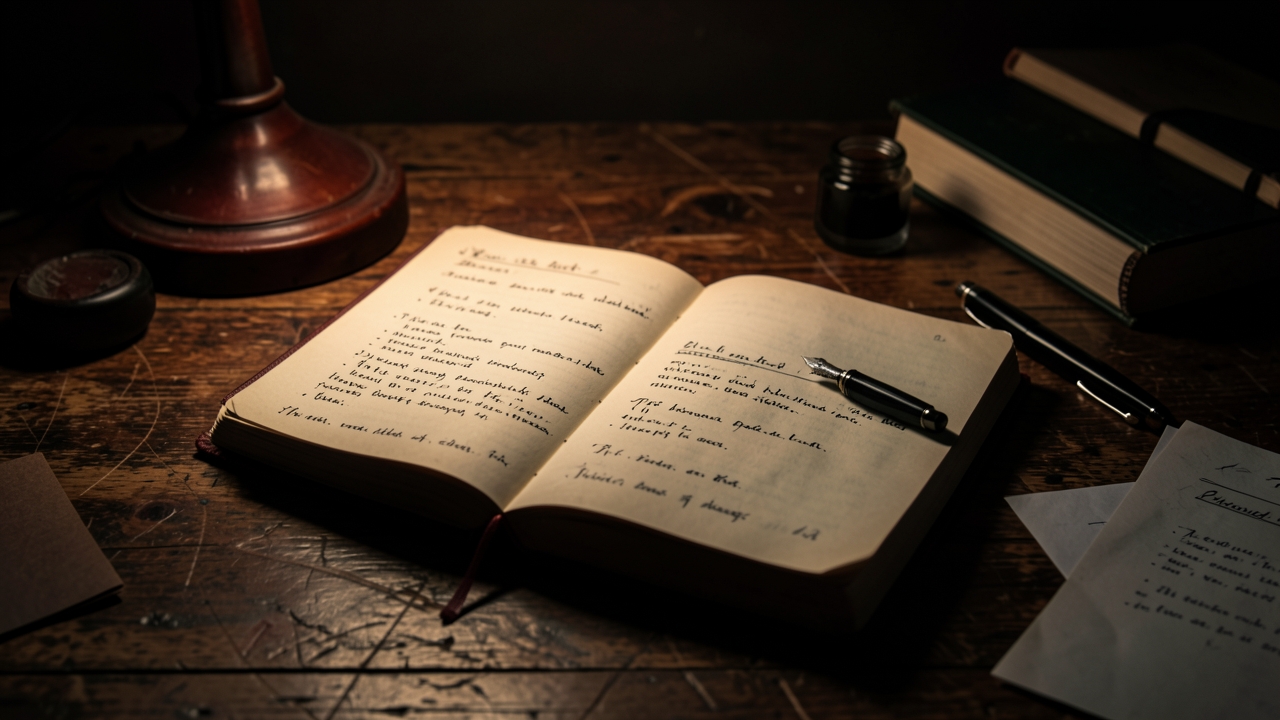
Is the true horror found not in the words written, but in the unsettling voids that surround them? We often discuss dialogue, description, and plot as the sinews of narrative. Yet, a more profound, more primal tool of manipulation lies in the silence of the page itself. I speak, of course, of the strategic white space writing technique. It is the abyss between paragraphs, the jagged break in a thought, the breath held before a scream. This technique transcends mere paragraph breaks for scene changes; it is the deliberate architect of rhythm, a scalpel for the reader’s pulse.
The Anatomy of Silence: Beyond the Paragraph
A novice writer sees a paragraph as a logical container for a topic. An artisan, however, sees it as a unit of pressure. The standard break offers a moment of respite, a narrative comma. But the non-standard break—a single line isolated in white space, a sentence shattered across breaks, a chapter ending mid-scene—these are the deliberate fractures. They are not transitions; they are interruptions. They force the reader’s eye to jump, to hesitate, to feel the sudden weight of what is missing.
Pacing with Silence: The Rhythm of Dread
Consider the relentless, clipped paragraphs of a thriller. Short, active sentences push the reader forward. Now, imagine the same narrative, but after a peak of tension, the author places a single, evocative sentence alone on the page, surrounded by white space. This is a caesura in the visual poetry of the page. The rhythm shatters. The reader’s internal voice stammers. As a result, the emotional resonance of that sentence is amplified, echoing in the void. This is the core of the white space writing technique: controlling the breath of the narrative.
Shirley Jackson, a master of accumulating dread, understood this innately. In “The Haunting of Hill House,” the breaks between Eleanor Vance’s disintegrating thoughts are not just spaces. They are the visual representation of her mind coming undone. Each isolated fragment, pressed into the white, gains a terrifying solidity. Meanwhile, Cormac McCarthy employs line breaks like gasps in his prose. In The Road, the sparse dialogue and stark paragraphs are islands in a sea of ashen white. The space between words becomes the silence of a dead world, making every uttered word a monumental, fragile act of survival.
Common Pitfalls: The Misuse of Void
The power of this technique, like any powerful tool, can be squandered. Overuse drains it of all significance. If every paragraph is isolated, the page becomes a formless static. The reader grows numb, not tense. Furthermore, using white space merely for aesthetic style, without psychological intent, is mere prettification. The break must always answer a narrative question: What does this silence do? Does it isolate a character in their fear? Does it simulate a character’s blackout? Does it build suspense by delaying the next beat? On the other hand, a well-placed break within a sentence can mimic a character’s stammering thought, their denial of what comes next.
Take a lesson from Daphne du Maurier’s Rebecca. The protagonist’s anxious, run-on thoughts often clash with the stark, declarative statements about Manderley. This contrast is a form of rhythmic white space—a tonal break. The void is emotional, not just physical. Therefore, the technique is not about leaving things blank. It is about making the blankness mean something. It is about the weight of the unsaid, the terror of the unseen, pressing against the words from the other side of the page.
Case Study: The Last Page of the Accountant’s Ledger
The ink in my fountain pen was running dry, much like the last glimmers of sanity I possessed. Each entry was a tiny, meticulous lie. REVENUE: 142,000. EXPENSE: 142,000. The balance was always perfect. Always. I drew the line down the page, a cold, neat stroke. The columns stood like headstones in a field of white paper. I prepared the final line, the one that would reconcile the account of a soul.
Then, I heard it.
A whisper, not from the hallway, but from within the fiber of the paper itself. A dry, scratching sound, like a rat gnawing at the roots of a tree. It came from the blank space beneath the last line. It was not a word. It was the sound that words make when they are devoured.
I did not write the final total. I could not. My hand trembled, not with fear, but with a sudden, profound curiosity. What would balance this ledger? What number is equal to the sum of every lie that ever made the world turn? The scratching grew louder, a chorus of unseen mouths. The whiteness at the bottom of the page was no longer blank. It was waiting. It was hungry.
I put down the pen.
I leaned close to the paper.
And I began to listen.