
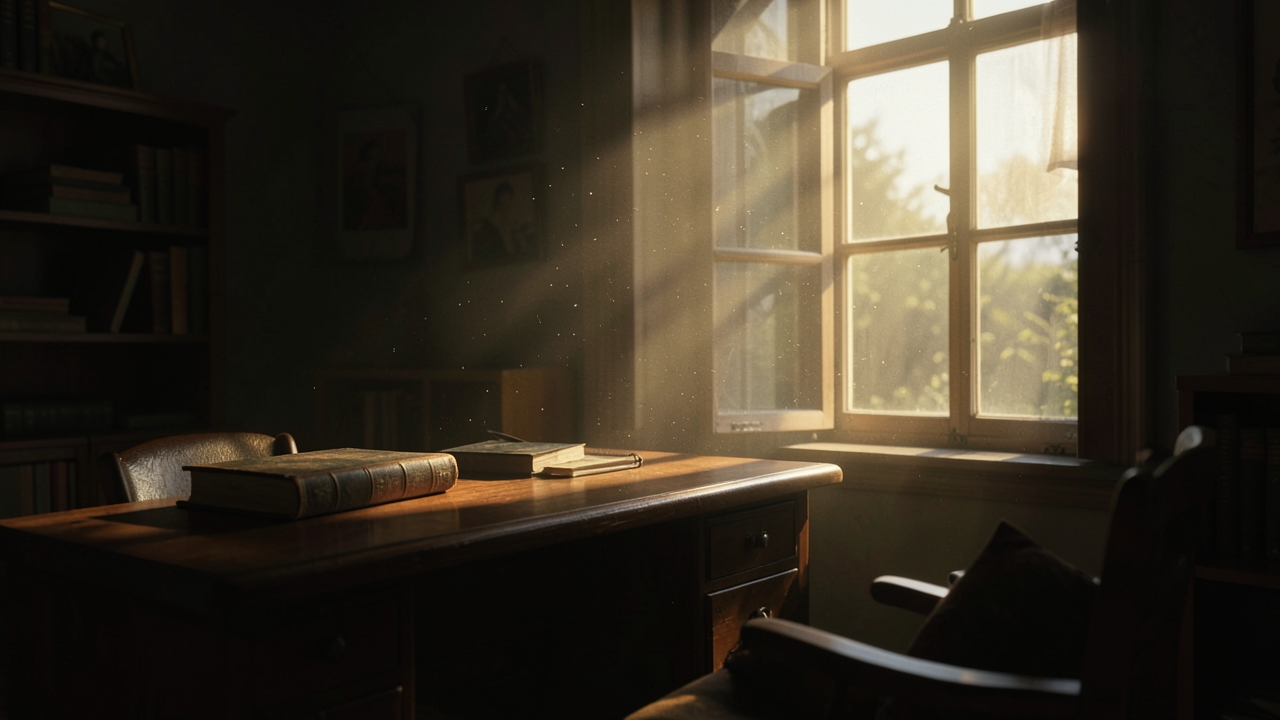
What if the most haunting whispers are those with the fewest syllables? In the vast, echoing chamber of literary craft, a peculiar door leads to a room furnished only with one-word thoughts. This is the realm of the monosyllabic word writing prompt, a severe constraint that strips language to its barest bones. Far from a mere exercise in limitation, it is a dark incantation. It summons power, rhythm, and a terrifying clarity that polysyllabic prose often muffles beneath layers of velvet adjectives.
We associate eloquence with a flood of complex terms. Yet, true resonance often lies in the spare, the blunt, the single beat. Think of the heart’s “lub-dub,” or the final “shh” of a story’s last breath. This prompt forces us to write within that pulse. It compels us to find the most potent verb for “walk,” the most chilling adjective for “cold.” In doing so, we don’t merely restrict our words; we refine our very perception of the narrative world.
The Anatomy of Power: Why Monosyllabic Words Hold Weight
Consider the lexicon of impact. “Break.” “Fall.” “Blood.” “Night.” These words are not merely short; they are fundamental. They carry the weight of archetypes. They connect to primal experiences. When you build a sentence, a paragraph, a whole tale from these bricks, you are constructing with the foundational materials of human storytelling. Consequently, the narrative feels less constructed and more uncovered, like a fossil.
This approach fosters a unique rhythm. Prose written with many long, flowing words can meander. Monosyllabic prose staccato punches. It can mimic a hammer on stone, a heartbeat in terror, or the slow, deliberate steps of a figure in a dark hall. The rhythm becomes an integral part of the suspense, a drumbeat you can feel in the reader’s chest. In addition, this constraint kills the purple prose plague. There is no room for “She was extremely exhausted.” There is only, “She slumped. She slept.” The action speaks with brutal efficiency.
The Lesson from the Barren Plains: Cormac McCarthy
No modern master understands the visceral power of the monosyllable like Cormac McCarthy. In “The Road,” his post-apocalyptic world is described with a lexicon that is often shockingly simple. “The ash.” “The cold.” “The man.” “The boy.” By draining his prose of ornate language, McCarthy doesn’t diminish the world; he amplifies its desolation. The simplicity becomes the style, a relentless march through a stripped landscape. The power lies not in describing the horror, but in the stark, unadorned presentation of it. This is a masterclass in the uncanny Gothic—finding the sublime in the bleak.
The Dignity of Deficit: Samuel Beckett
If McCarthy uses monosyllables to build a world of physical ruin, Samuel Beckett uses them to chart the landscape of existential ruin. In “Waiting for Godot,” the language often shrinks to a core of essential, stammering words. “I can’t go on. I’ll go on.” The famous closing line of “The Unnamable” is a mantra of monosyllabic perseverance. Beckett proves that this constraint isn’t just for action. It’s for the deep, hollow spaces of the mind. It gives voice to the near-void, to the thought that has almost dissolved into silence. For the writer, this is a lesson in using lexical poverty to express spiritual or emotional poverty.
How to Forge Your Narrative with the Monosyllabic Word Writing Prompt
Embracing this constraint is an exercise in creative archaeology. You are digging for the core truth beneath the sediment of complex language. Here is a method:
Step 1: Set the Boundaries
Define your rule. Will you write an entire story, a scene, or a single paragraph? A good starting point is a 300-word scene. The rule: every word must be monosyllabic. Pronouns (I, he, she, it, we, they), articles (a, the), and conjunctions (and, but, or) are your only allowed tools for connection. Use a word-count tool with syllable counters to check your work. For example, “the” is one syllable. “Flowers” is two. “Ethereal” is four and thus forbidden.
Step 2: Conquer the Lexical Hurdles
The first hurdle will be function words. “Because” becomes “for.” “Although” might be rephrased with “but” or a simple period. Verbs in the past tense often remain monosyllabic (“walked,” “saw,” “knew”), which helps. However, many adverbs are your enemy. Instead of “quickly,” you must find a stronger verb: “sprinted,” “dove,” “leapt.” This forces you into more vivid, active language. It is a painful, exhilarating pruning.
Step 3: Embrace the Gaps
What you cannot say directly, you imply through the rhythm and the starkness of what remains. Silence between words becomes part of the text. The gaps, the things unsaid because the vocabulary is too small to hold them, create a powerful subtext. This is where the true gothic chill enters. Like the shadows in an Edgar Allan Poe tale, the dread is in what you can’t quite see, or in this case, what you can’t quite name.
A Case Study: The Watch
The man sat in the dark. He held the watch. Its tick was the sole sound in the house. He had found it in the drawer. She had left it there, he thought. Or she had hid it there. He did not know. He did not wish to know. The hands of the watch would not move. He had wound the stem till it broke. Still, no tick. He brought the watch to his ear. He held his breath. He heard a faint click, then naught. He set the watch on the stone floor. He stood. He raised his heel. The glass would soon break. The tick would be no more. A tear fell on his hand. He did not know why he wept. The house was still. The watch was still. He was still. Then he pressed down. The crack was sharp and clean. He felt no regret. He felt no peace. He felt the weight of the dark. He breathed it in. He breathed it out. He would go on.
Notice how the constraint forces a focus on concrete nouns (man, watch, drawer, heel, glass) and strong, simple verbs (sat, held, wound, broke, press). The emotion—grief, denial, numbness—builds not through direct description but through repetitive, stark action and the final, devastatingly simple conclusion.
The Lingering Echo of Simplicity
We began in a chamber of one-word thoughts. We end there, too, with a newfound respect for the monoliths of our language. The monosyllabic word writing prompt is not a cage. It is a chisel. It chips away the fluff, the ornamentation, the intellectual clutter, to reveal the hard, gleaming narrative bone beneath. It teaches that clarity is not the enemy of depth, but its sharpest instrument. It reminds us that the most profound truths—love, loss, fear, hope—can be spelled with the shortest letters.
So, I ask you, writer in the dim light of your desk: when you strip all else away, what single, hard, monosyllabic word remains at the core of the story you must tell? And what might happen if you began there?