
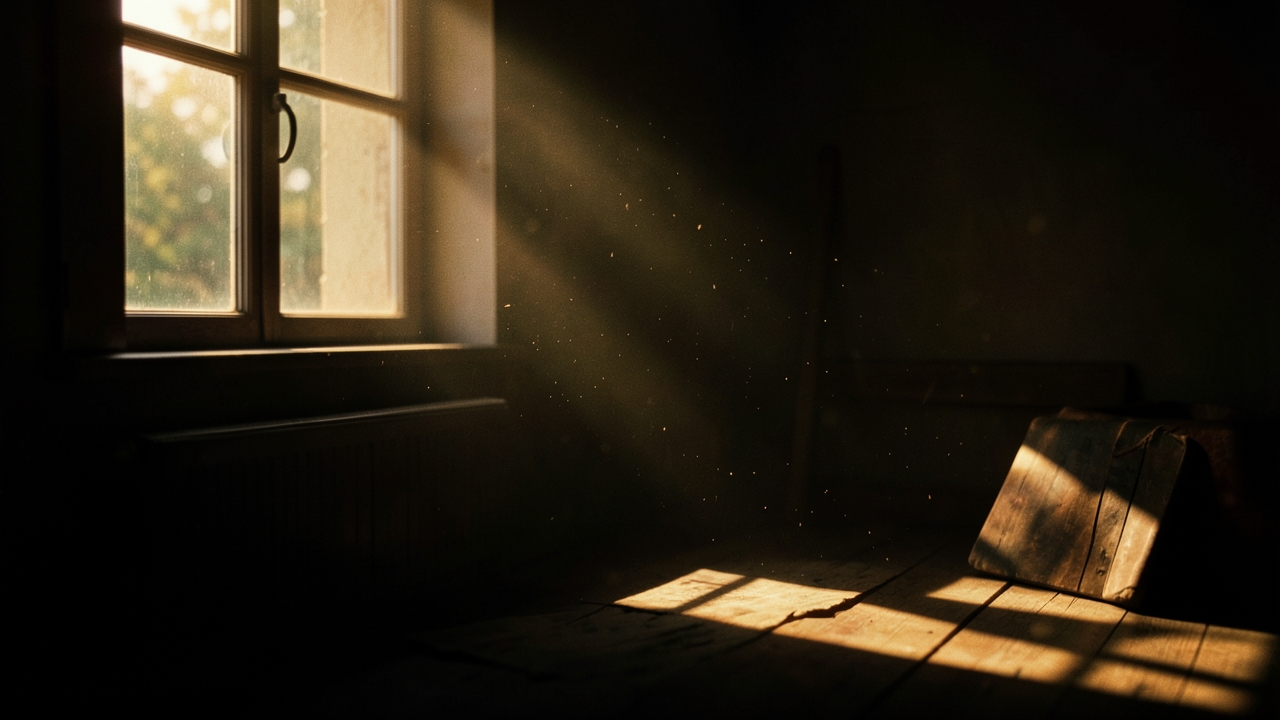
What forgotten relic gathers dust in the hollows of your family’s memory? Consider its silent testimony. For years, perhaps centuries, it has absorbed whispers, witnessed embraces, and felt the tremor of secrets unspoken. Could its silent perception tell a truer story than any human narrator?
The object perspective writing prompt challenges us to abandon the fluidity of human emotion for the fixed, sensory prison of a thing. It is a discipline of constraint. By adopting the limited consciousness of a locket, a rusted tool, or a water-stained book, we uncover a different kind of truth—one etched in wear, polish, and damage. This technique forces a unique form of storytelling, where the narrative is not about what the object feels, but what it is forced to endure.
The Anatomy of the Inanimate Narrator
At the heart of this exercise lies a fundamental paradox: the object is an immortal witness with no consciousness. Our first task, therefore, is to define its boundaries. What are its sensory capabilities? A locket can feel weight, temperature, and the pressure of a clasp. It can register light and darkness. A book can feel the brush of a page turning, the humidity of a room. But it cannot interpret. It cannot judge. Its narrative must be built from raw data.
The Doctrine of Sensory Detail
In place of human thought, we substitute a catalog of physical interactions. For example, a tea-stained ledger does not mourn a fallen soldier. It remembers the exact weight of a hand pressed to its page, the tremor that shook its spine, and the salt of a tear that later pocked its leather cover. This is the essence of the technique: transmuting emotional events into their physical imprints. As Edgar Allan Poe demonstrated in works like The Tell-Tale Heart, profound psychological states are best revealed through obsessive, tangible details—the eye, the ticking clock, the sound beneath the floorboards.
In a similar vein, the object perspective demands a kind of atmospheric realism. The environment must filter through the object’s limited senses. Therefore, a cast-iron skillet does not describe a kitchen’s warmth; it recalls the hiss of grease, the cyclic burn and cool of the stove, and the jarring impact of the cleaver on its surface. This anchors the story in an undeniable physicality.
Hearing the Echoes of Human Drama
An object’s narrative is populated by ghosts—the fleeting, sensory echoes of the humans who interacted with it. It perceives not a character, but a sequence of pressures, temperatures, and sounds. Consequently, a mother becomes a pair of hands that smell of flour and lavender, applying gentle, then frantic, pressure to a baby’s christening gown. A secret affair is not a plot; it is the clandestine slide of a ring from a finger in a dim hall, the unfamiliar warmth of a different hand holding the same object.
This echoes the perspective used by writers like Shirley Jackson in We Have Always Lived in the Castle, where the world is filtered through a profoundly distorted, hyper-focused lens. For our object, however, the distortion is one of sensory limitation, not psychosis. It is a perspective of pure reception, which can be profoundly eerie.
The Restraint of Narrative Voice
The greatest pitfall in this exercise is anthropomorphism. The object does not grow, change its mind, or learn. Its perspective is immutable. Its narrative arc is defined not by its own desires, but by the changing hands that hold it. The story might move from a pocket to a drawer, from a display shelf to a box in the attic. Each transition is a seismic shift in its world. This constraint, however, is its power. It mirrors the way history is often absorbed by places and artifacts—passively, indelibly, and with a silence that screams louder than any confession.
A Case Study: The Hinge
I am a hinge. Specifically, the upper left hinge of the pantry door at Blackwood Manor. My world is defined by the arc of my swing and the two planes of wood I unite: the rough-hewn interior of the pantry and the polished oak of the hall. My duty is simple: to permit or to forbid passage. My story is one of pressure, sound, and the slow seasoning of wood and metal.
For forty years, I knew only the rhythmic pattern of the matriarch, Eleanor. Her touch was firm, her movement predictable. She would grip the brass knob—another object, a silent partner—and pull. I would respond with a low, familiar groan. The pantry air, thick with the scent of dried herbs and dust, would sigh into the hall. Then, the cycle would reverse. Her son, Robert, inherited my care. His movements were quicker, less patient. He did not understand that metal fatigues. He would slam me, a sharp, percussive report that echoed in the hollow space between the walls. I began to record the damage: a microscopic widening of the gap between my plates, a new pitch in my cry.
The silence was the truest narrator. After Eleanor died, the pantry door remained closed for months. I felt the stillness as a hardening of the grease in my core, a settling of dust into my threads. Then came the night of the storm, the night Robert searched for the will. His frantic movements were alien. The beam of his flashlight struck my surface, illuminating the web of scratches his father’s keys had carved decades prior. He did not look for the paper in the pantry. He looked behind it. He ran his fingers along the wall beside me, probing, pressing. I felt the vibrations through the door frame—a rhythmic, desperate tapping. He was searching for a hollow sound. He found it. The rest is a sequence of pressure: a chisel, a pry bar, the yielding of plaster. He pulled forth a metal box. His breath was a warm gust against my surface. The box clicked open. He did not weep or shout. He only stood there, as the silence in the hallway deepened, heavier than any door.
Curating the Curse of Perspective
The object perspective writing prompt is more than a trick. It is a gothic tool for excavation. It allows us to strip away the unreliable narration of human memory and lay bare the physical evidence of a family’s history. By focusing on sensory data—the wear, the stains, the sounds—we invite the reader to perform the emotional interpretation themselves, making the revelation more intimate and haunting.
Thus, we return to our initial question. The objects that surround us are not mere things. They are silent biographers, their pages written in abrasions and echoes. What story does the notched doorframe hold, or the single, cracked button in a sewing tin? Can we learn to listen to the language of wear, and in doing so, hear the truth that lips would never dare to utter?
For further exploration of constrained perspectives, consider our guide on the art of narrative constraint. To delve deeper into the gothic tradition that informs this technique, read our analysis of Poe’s unreliable narrators.
This article explores concepts discussed in literary theory from the Poetry Foundation and gothic narrative analysis.