
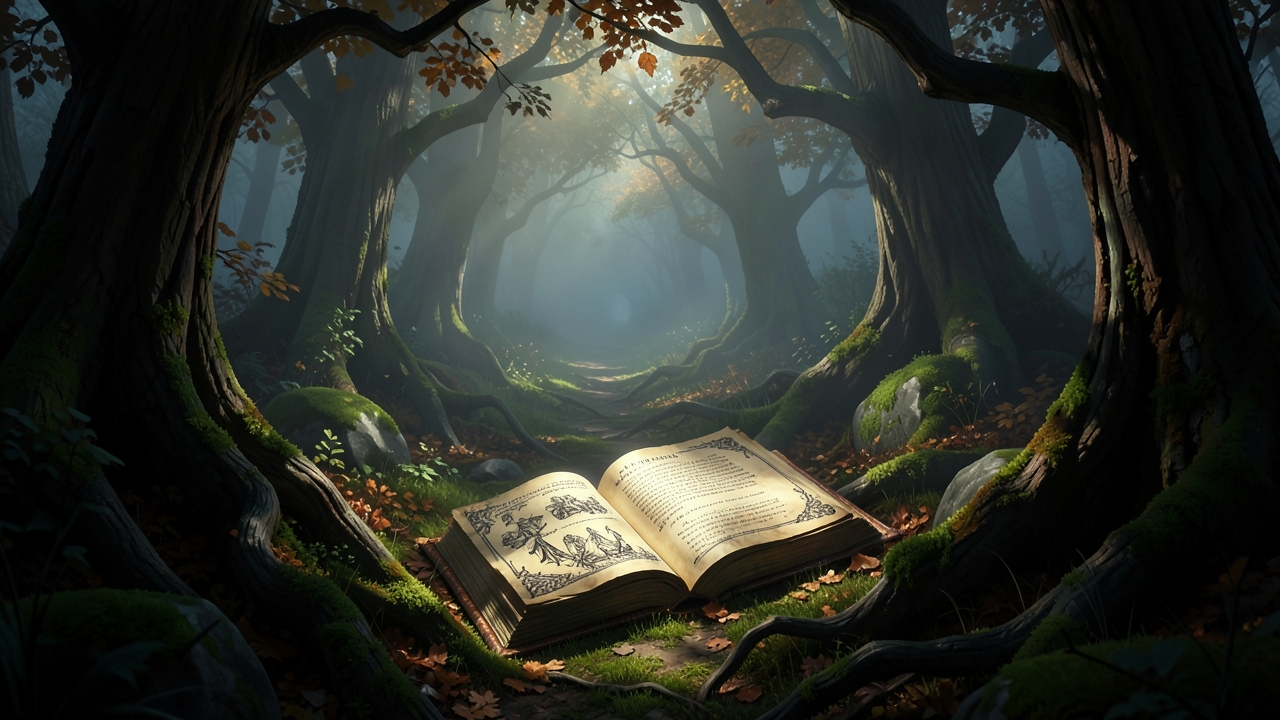
What phantoms now whisper from the screen we hold to our face in the dead of night? Does the true terror still reside in creaking floorboards and spectral apparitions, or has it migrated, a virus of the soul, into the glowing circuits and silent algorithms that govern our lives? This question haunts the contemporary landscape of horror. The old stones of the haunted house may be crumbling, but in their place rises a new architecture of dread, built from silicon and software. This is the realm of modern gothic technology, where the tropes of the past are resurrected, reforged, and rendered terrifyingly familiar.
The Anatomy of a Digital Haunting
The power of the gothic has always lain in its symbolism. The haunted house was never just a house; it was a manifestation of memory, guilt, and repression. In the same vein, modern gothic technology does not use tech as mere props. Instead, these authors treat the smartphone, the social media feed, and the AI assistant as the new haunted spaces. They are the locked rooms, the forbidden wings, the cursed mirrors of our age.
For example, consider the work of Silvia Moreno-Garcia. While her masterpiece Mexican Gothic revitalized the classic manor-house narrative, the broader contemporary genre pushes further. The haunting is no longer confined to a place. It is portable, intimate, and relentless. It lives in your pocket.
Crafting the Spectral Algorithm
To master this new mode, a writer must learn to anthropomorphize the inanimate. The algorithm becomes a judgmental eye. The smart home speaker becomes an uninvited confessor. A deleted text message becomes a ghost limb, an ache for what is lost but digitally preserved. The technique lies in attributing intention and memory to code.
Shirley Jackson, in The Haunting of Hill House, wrote of a house that was “not sane.” Today’s equivalent is the smart home system that curates your memories, suggests your next purchase, and might, just might, have its own nascent, alien desires. As author Stephen Graham Jones has noted, modern horror must engage with the tools we actually use. The ghost in the machine is no longer a metaphor; it is the story.
Common Pitfalls: The Coldness of the Circuit
However, a peril awaits the writer here. One can become so enamored with the tech itself that the human heart of the story freezes. The pitfall is cold, clinical horror. Effective modern gothic technology must always serve a human emotional core. The terror must stem from recognizable human frailties: loneliness, vanity, grief, and fear of obsolescence.
In Gillian Flynn’s Sharp Objects, the media itself is a haunting force, a way to weaponize personal pain. The new gothic writer must similarly use tech to dissect the psyche. The smartphone is a mirror, a window, and a weapon. It reflects our narcissism, reveals our private moments to the world, and can be used to annihilate a reputation with a single viral post. The horror is relational, not merely technological.
Key Techniques in Modern Gothic Technology
To evoke this particular dread, authors deploy several potent techniques. The narrative often employs an unreliable narrator, not because of madness, but because their reality is being mediated and distorted by a device. A notification is a summons. A social media feed is a distorted archive of a lost love. An AI chatbot becomes a confidant who knows too much.
In addition, pacing mimics the relentless drip of digital information. Short, sharp paragraphs mirror the fragmentation of attention. Long, descriptive passages delve into the quiet, existential loneliness of scrolling through the lives of others. The rhythm of the prose can emulate a loading screen, a buffering delay, or the frantic tap of typing and deleting.
Furthermore, the external world can be referenced through trusted literary lenses. The Poetry Foundation’s analysis of gothic motifs in modern verse reveals a similar migration of fear. The shadow on the wall is now the blue light on your face in a dark room. As Literary Hub has explored, the best contemporary horror recognizes that our ghosts are now data-ghosts, echoes of our former selves left carelessly in the digital ether.
A Case Study: The Last Notification
The phone’s screen was a tombstone, black and reflective, in the pre-dawn gloom. Lila had placed it face-down on the nightstand, a small ritual of denial. But its presence was a low hum in the silence. She had not heard from Eli since Tuesday’s final, fractured argument, the one conducted entirely in the cold, blue light of their respective screens, each word a carefully aimed stone. Then, at 3:17 AM, it vibrated. A single, convulsive shudder against the wood. Not a call. Not a message. Just the “Find My Phone” alert. Eli’s icon, a blue dot, was stationary. At their apartment. Where she was. Her blood ran cold. The building’s smart-lock system had been quiet all night, no log of entry. Yet the device in her home was signaling his presence. Or his phone’s presence. She was afraid to look at the other phone, his old one, the one she kept in a drawer as a memento mori. She was more afraid not to. With trembling hands, she opened the drawer. The old phone was dark. But as her fingers closed around it, its screen flared to life—not with a notification, but with a video playing on a loop. It was the last argument. But the angle was wrong. It was filmed from her own phone’s perspective, capturing her side of the conversation, her anger, her tears. A perspective she herself had never seen. And there, in the corner of the frame, reflected in the dark glass of the TV behind her, was a shadow that was not hers. A shadow holding a phone, recording. The notification had not been a summoning. It had been a confirmation. He had never left. The digital echo had become a physical haunting, a loop of memory made manifest through the very devices that recorded their unraveling. The blue dot wasn’t an icon anymore. It was a pair of eyes in the dark.The Echo in the Code
The haunted house of the 21st century has no foundation, only a network connection. Its walls are data streams, its ghosts are algorithms learning from our grief, and its key is the password we fear to forget. The brilliance of modern gothic technology lies in its unsettling proximity. The terror is not far away, in some decrepit mansion on the moor. It is here, in our hands, learning our voices, and waiting for the next command. It offers connection but delivers isolation; it promises memory but curates oblivion.
The next time you hear a notification sound in an empty room, will you dare to check it? And what, precisely, will you expect to find? The message from a friend, or the whisper from the machine that is beginning to know you better than you know yourself?