
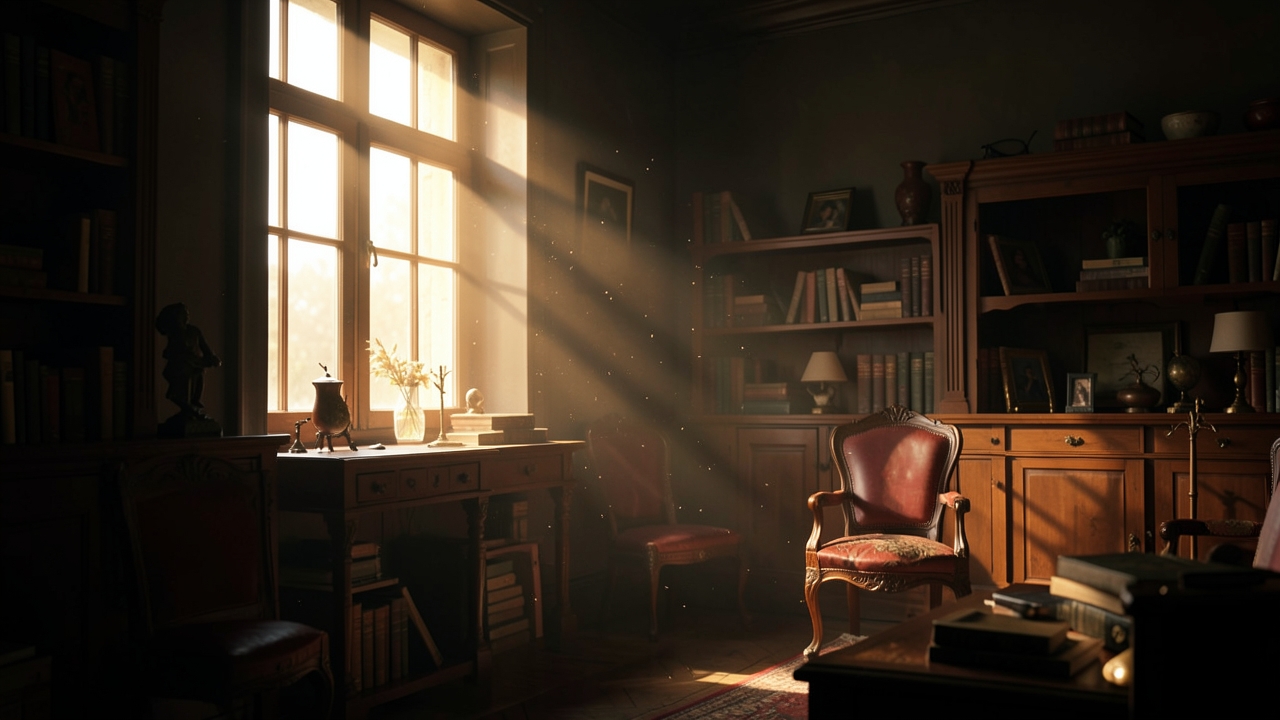
Have you ever held a broken thing and felt it remembering? A chipped plate. A watch that stopped at 3:14. A hospital wristband curled like a dried leaf. Objects do not speak, and yet they keep testimony. Therefore, the object point of view writing prompt dares a stranger question than most exercises: what if the witness were not human at all?
This week’s prompt hands the pen to the porcelain, the rust, the furniture. In doing so, it forces the writer into two disciplines at once: fresh description and unconventional narrative framing. Moreover, it strips away the crutches we lean on most — the human face, the familiar interior monologue, the easy dialogue tag. What remains is pure craft, and the silence around it.

The Object Point of View Writing Prompt: Giving Voice to the Voiceless
Most writers describe objects. Fewer let objects describe them back. Nevertheless, the tradition is older and darker than most workshops admit.
The Lineage of the Living Thing
Consider Kafka’s Odradek, the flat, star-shaped spool of thread in The Cares of a Family Man. It speaks. It laughs. It will not die. In addition, Kafka never explains it, and that refusal is the point. You can trace the same stubborn mystery through the essays collected at Literary Hub, where critics keep returning to this small wooden thing as if it still rattled in a stairwell.
Similarly, Shirley Jackson opens The Haunting of Hill House by declaring the house not sane. That single clause grants architecture a mind. Consequently, every creaking door becomes character rather than scenery. Poe achieves the same effect with the fissure in The Fall of the House of Usher. The crack is not weather. It is a symptom. The Poetry Foundation preserves the poem that made him famous, yet it is this quiet broken house that teaches the sharper lesson about gothic atmosphere.
For a modern instance, Daphne du Maurier makes Manderley a rival for the narrator’s love in Rebecca. Meanwhile, Charlotte Perkins Gilman lets wallpaper become both prison and liberation in The Yellow Wallpaper. Angela Carter fills her rooms with objects that carry appetite. Each of these writers uses the nonhuman to reveal what the human cannot say aloud.
The Anatomy of Object Consciousness
Before you write a word, decide what your object can perceive. A teacup cannot see a face. However, it can feel the tremor of a hand, the heat of a rushed pour, the sudden cold of abandonment. Its sensorium is intimate and severely limited.
Its clock is not the human clock, either. For example, a wristband measures duration in pulses, in the tightening of a wrist, in the slow loosening when the pulse stops. Dust becomes a calendar. Rust becomes grief. Crazing becomes memory.
Furthermore, the object’s knowledge is local. It knows only what occurs within its reach or upon its surface. That limitation is a gift. Indeed, restriction breeds suspense. What the cup cannot witness, the reader must infer — and inference is the engine of dread.
Crafting the Voice: Four Techniques
One. Sense through contact. Replace sight with pressure, temperature, and weight. Virginia Woolf’s Solid Objects turns a lump of glass into a quiet obsession because the thing is felt rather than explained.
Two. Build a lexicon of the physical. Let your object use only the words it could plausibly know. Porcelain thinks in glaze, rim, and crazing. A ledger thinks in blades of afternoon light. In contrast, abstraction kills the illusion — a talking chair should never muse about existentialism.
Three. Let the voice change. One unbroken tone becomes a lullaby. Therefore, let the object age within the scene. Crack it. Chip it. Carry it from mantle to dustbin. A voice should scar.
Four. Remain in active voice. Even a motionless thing can act. It holds. It bears. It waits. It refuses. Passive construction flattens the strangeness, while active verbs make stillness feel like a decision.
Common Pitfalls That Break the Spell
The first pitfall is ventriloquism. This occurs when the object sounds like a human wearing a costume. The cure is restraint. Consequently, delete every line a person could have spoken from a chair.
The second is sentimental overload. Yes, objects are vessels of memory. On the other hand, too much nostalgia turns the exercise into a greeting card. Therefore, cut the longing. Keep the physics.
The third is omniscience. If your teacup suddenly reports events in another city, the frame collapses. In addition, the fourth pitfall is the lecture. An object that explains its own symbolism is no longer an object; it is a footnote with a handle.
Finally, avoid the cutesy trap. An object need not be adorable. It needs to be honest. Borges understood this instinctively; in his stories, things are often more real than the people who catalogue them.
A Ready-to-Use Object Point of View Writing Prompt
Here is the exercise. Use it exactly as written, or