
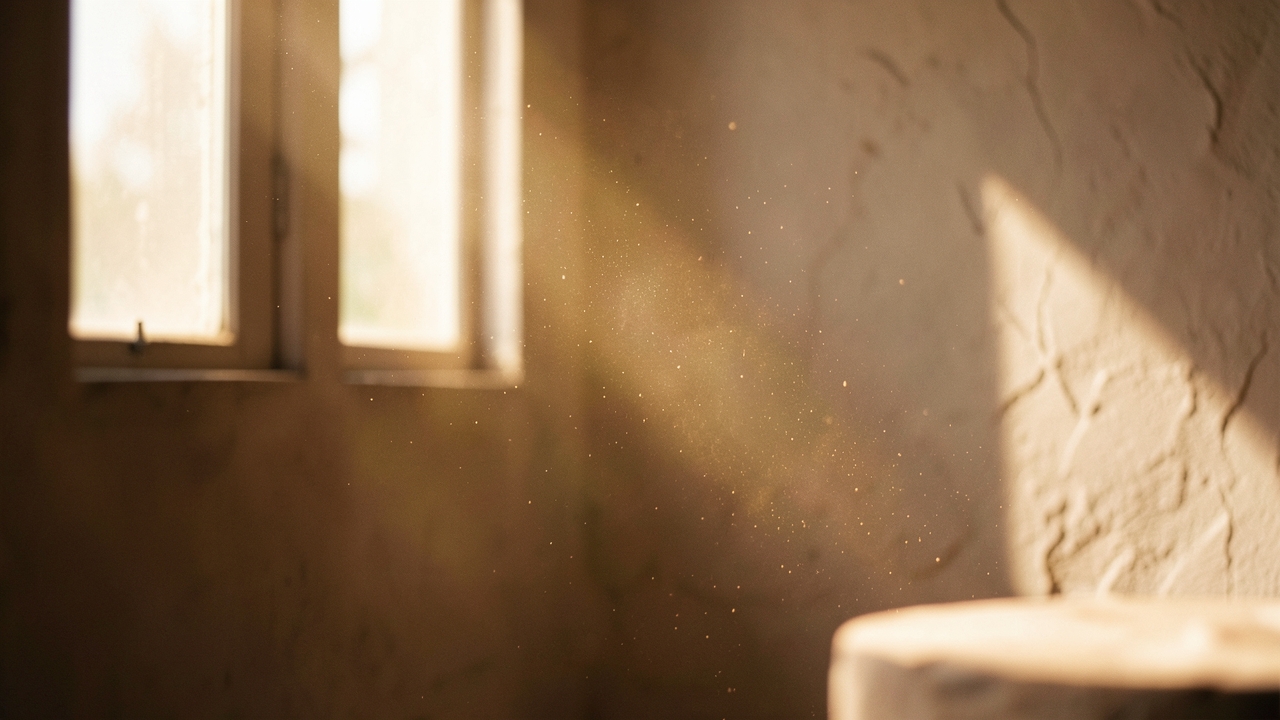
What survives us? Not the breath, nor the heartbeat, nor the fragile architecture of memory that once made us whole. Yet something remains — cold, patient, and mute. On a shelf, in a box, beneath the dust of an abandoned room, an object waits. It carries the fingerprint of the dead without knowing their names.
And in that silence lies an invitation to every writer who has ever feared the familiar. The object point of view prompt asks you to abandon the human skull and inhabit something else entirely — a chipped teacup, a worn coat, a rusting automobile parked where no one will ever return. It is among the most demanding exercises in narrative craft. Yet it is among the most rewarding. Because when you can make an inanimate thing ache with memory, you have learned the deepest secret of storytelling: emotion is not owned by the living.
What Is the Object Point of View Prompt?
At its heart, the exercise is simple. You select an ordinary object. Then you write a story from its perspective — typically one that outlives its owner. The object observes, remembers, and endures. It cannot intervene. It cannot speak. And that impossibility is precisely the point.
The prompt forces a peculiar kind of discipline. You lose access to interiority, to thought, to motive. You cannot write, \”She felt grief.\” You must instead let a cracked glaze and a faded ribbon do the weeping for you. For a deeper exploration of this constraint, see our guide to showing instead of telling.
Writers return to this exercise because it teaches restraint. Restraint, in turn, teaches power. When you cannot name an emotion, you learn to summon it through image alone. That is the entire engine of gothic atmosphere — suggestion over statement, shadow over light.
The Anatomy of a Non-Human Narrator
An object is not a person in disguise. It is a different order of consciousness entirely. To write it well, you must first understand what it can and cannot know.
Sensation Without Senses
A teacup does not see. Yet it experiences. Heat rises through its porcelain. A thumb presses a groove worn smooth by decades of use. Winter seeps into its glaze and makes it brittle. This is tactile narration — the world arriving as pressure, temperature, texture, and weight.
Consider how Shirley Jackson builds dread in The Haunting of Hill House. She rarely names the horror. Instead, she renders it as sensation: a cold hand, a wall that breathes, a doorway that tilts. The house becomes a narrator of sorts. Apply the same principle. Let your object register the world through what happens to it.
Memory as Patina
Human memory is narrative. Object memory is cumulative. A chair remembers every weight that pressed into it. A coat remembers every wind. Its knowledge is layered rather than sequential, like sediment rather than story.
Therefore, resist chronology. An object does not recall Tuesday, then Wednesday. It recalls pressure — the total impression of a life pressed against it. When Edgar Allan Poe wrote \”The Black Cat,\” the cellar wall concealed its secret through plaster and time, not through explanation. The object held the crime because objects hold everything we cannot.
The Limitation as Strength
The object cannot leave the room. It cannot question, accuse, or flee. This paralysis is the source of its tragedy. Like the narrator of Poe’s The Cask of Amontillado, bound by obsession and wall, an object is entombed with what it witnessed.
Consequently, the reader supplies the emotion the object withholds. This is the technique critics call the objective correlative — a term explored brilliantly in T.S. Eliot’s legacy at the Poetry Foundation. The object becomes the vessel. The reader pours themselves in.
Crafting the Object’s Voice
Voice is where this prompt either sings or dies. An object’s diction should emerge from its nature. A sword does not think in lace. A teacup does not rumble.
Match the Material to the Music
A porcelain narrator might be delicate, precise, faintly brittle in cadence. A cast-iron stove would speak in blunt, heavy clauses. A silk ribbon might unravel into long, threadbare sentences. Ask yourself: what is this thing made of, and how does that composition shape thought?
Angela Carter understood material voice intimately. In her fairy-tale retellings, fur and glass and bone each dictate the rhythm of the prose. Nothing is neutral. Everything has grain, and grain has grammar.
Let the Object Misunderstand
One of the exercise’s finest gifts is dramatic irony. An object perceives but does not comprehend. It records a woman packing a suitcase and registers only the disappearance of familiar weight. It hears sobbing as a vibration in the floorboards. It cannot name betrayal, but it can describe a door slamming shut for the last time.
This gap between perception and understanding produces a haunting, elegiac tone. Haruki Murakami exploits it masterfully. His narrators often stand slightly outside human comprehension, watching the world as if through frosted glass. The result feels luminous and strange — exactly the register an object point of view prompt demands.
Common Pitfalls to Avoid
The first sin is over-humanization. If your teacup has anxieties, a mortgage, and a favorite color, you have written a person wearing porcelain. Preserve the alienness. Let it be strange.
The second sin is sentimentality. Because the object cannot emote, writers rush in to emote for it. They flood the page with longing. Resist. Daphne du Maurier never needed to tell us that Manderley was loved; she showed us a woman dreaming of a house she could never reclaim. Restraint aches louder than declaration.
The third sin is inaction. An object cannot act — but the story around it must. People must enter and leave, argue and weep and vanish. The object is the lens, not the plot. Without human turbulence at its edges, the narrative calcifies into mere description.
Why This Prompt Confronts Mortality
Every object that outlives its owner is a small monument to impermanence. The writer who accepts this prompt accepts a difficult truth: we are temporary, but our belongings are not. A coat will hang in a closet long after the shoulders that filled it have turned to dust.
This confrontation produces naturally literary fiction. It is no accident that Tana French builds entire mysteries around objects recovered from the ground, or that Borges filled his stories with mirrors, compasses, and infinite libraries. The thing persists. The person does not. That asymmetry is the essence of elegy.
Furthermore, the prompt teaches empathy for the overlooked. To write from a doorknob’s perspective is to notice every hand that ever turned it. In our weekly writing prompts, we return often to this idea: attention is the highest form of reverence.
A Case Study: The Widow’s Teacup
What follows is an original composition designed to demonstrate the techniques above: tactile narration, patina-memory, miscomprehension, and emotional restraint.
I was painted with blue cornflowers by a girl who never learned to hold me carefully. I remember her fingers — four of them, always four, the fifth curled away as though in prayer. Then the hands grew larger, then rougher, then a man’s hands, and the table beneath me changed from wood to wood but never again from that first oak.
They brought me hot water. Always hot. I learned the shape of heat the way a river learns stone. A thumb in my groove, worn there before I was fired, before I knew I would be a groove at all. She sang while she drank. The sound entered me through my base and stayed. I do not know the song. I only know its vibration, and that it stopped.
Afterward the man came less. The water cooled before it reached my rim. Dust settled in my mouth and I could not spit it out, being porcelain, being patient. He sat across from my empty place and did not drink. Once he lifted me and turned me and read the mark beneath me — a name I had been given before I understood that names were given to things that would be missed.
He set me down too hard. A sound like a small door closing. Now there is a line through me, thin as a hair, thin as the pause before she stopped singing. I hold water still. I hold it badly. The house has gone quiet in a way that noise never quite covered, and the curtains have been taken down, and no one has told me that I am no longer needed, because no one tells objects anything, which is perhaps the mercy of it.
I wait. The dust fills me to the brim. It is the only thing that has never once been poured out.
Final Reflections on the Object Point of View Prompt
The exercise succeeds when the reader forgets they are reading an object. They remember instead a marriage, a loss, a house slowly emptying itself of meaning. The porcelain merely holds the shape of what spilled.
Begin small. Choose something you have kept longer than you can explain — a coffee mug, a paperback with a broken spine, a wristwatch that no longer keeps time. Then ask the only question that matters. What did it witness, and what could it never understand? For further reading on narrative perspective and its disorientations, Literary Hub’s essays on voice offer rich terrain.
Sit with the object tonight. Turn it in your hands. And when the room grows dark and the silence thickens, ask yourself the question that has haunted every shelf since the first hands ever set something down and walked away: what will you leave behind that remembers you when you cannot remember yourself?