
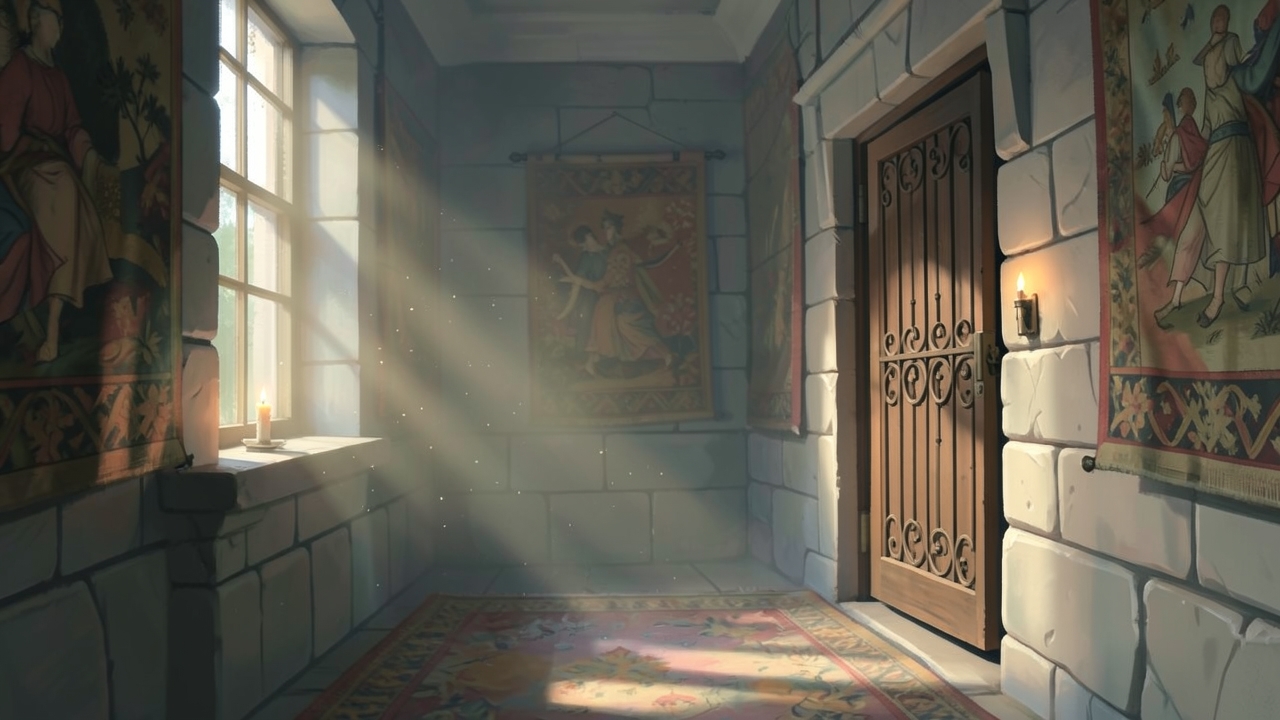
Have you ever turned a key in the dark and felt the lock give too easily? That small, wrong yielding—the handle dipping before your hand has asked it to—is the entire engine of the wrong door writing prompt. One step. One mistaken threshold. And the floorboards of the story shift beneath the reader’s feet.
This exercise asks for a single scene, nothing more. A character opens a door they should not have opened. What they find must be more than a surprise. It must be a revelation that reframes everything they believed about the hallway behind them.
In this guide, we will dissect the machinery of mistaken entry. We will study narrative misdirection as a craft, examine how masters like Poe and du Maurier built their thresholds, and then walk through an original case study that puts the technique on the page.
Why the Wrong Door Writing Prompt Haunts the Reader
A door is the most honest object in fiction. It makes a promise: on the other side, something is contained. A room, a secret, a person, a life. When your character opens the wrong one, that promise is broken—and broken promises are the heartbeat of suspense.
Consider Borges. In The Garden of Forking Paths, every choice opens a corridor and closes a hundred others. The wrong door is simply the choice made visible. Consider Lovecraft, whose narrators are forever descending one staircase too far in The Rats in the Walls. The horror is never the room itself. It is the dawning knowledge that they were never meant to be in it.
Therefore, the exercise is not really about doors. It is about the fragility of assumption. Your reader arrives carrying expectations, and your job is to let them carry those expectations through the wrong threshold—smiling, certain, doomed.
The Anatomy of a Mistaken Entry
Before drafting, understand the three components that make the scene work. Each one must be present, and each one must be slightly out of place.
The Door They Expect
Misdirection requires a target. Your character must want something specific behind a specific door. A rented room. A lover’s apartment. A confession. A body. Name the expectation early, in plain language, and let it sit there gleaming.
Du Maurier understood this perfectly. In Rebecca, the second Mrs. de Winter inherits a house full of doors she is told not to open—the west wing, the boathouse, the closed rooms of the first wife. The expectation is never stated aloud. It does not need to be. The house states it for her.
The Room That Answers Wrong
What waits inside must be almost right. Not a monster. Not a scream. An almost. A room that answers the character’s expectation with a detail too many and a detail missing. That nearness is what unsettles. A wrong room is easy to flee. A nearly-right room follows you home.
Shirley Jackson built an entire novel from this principle. Hill House gives Eleanor exactly what she asks for—company, attention, a home—and then gives her slightly more of it each night. The doors never stop being doors. They simply stop being obedient.
The Detail That Betrays
One object must carry the truth. A coat with a torn cuff. A photograph facing the wrong way. A second teacup. This is where setting detail becomes plot. Choose the object before you write the scene, and let it wait in plain sight.
For deeper work on this, see our guide to gothic setting details that do double duty as characterization.
How to Write the Wrong Door: Four Movements
The scene unfolds in four movements, each one shorter than the last. The compression matters. Dread accelerates.
Movement One — Establish the Expected Room in Three Details
Three details, no more. Your character rehearses the future: the rent, the landlord’s voice, the letter of reference folded twice. These details must be ordinary, because ordinary things make the best graves for expectations.
Avoid explaining the hallway here. Let the reader infer the building from a smell, a stair, a sound. Meanwhile, hold the exposition back. Every withheld fact is a small coiled spring.
Movement Two — Withhold Every Explanation
This is the hardest instruction in the entire wrong door writing prompt, and the most important. When your character steps inside, do not tell the reader why the door was unlocked. Do not tell them whose lamp is burning. The character may wonder. Let them wonder without narrating their conclusions.
Notice how Tana French handles this in In the Woods. Information arrives late, sideways, and always through someone who does not fully understand it. The withholding is not coy. It is architectural.
For a fuller treatment of this discipline, read our essay on the art of withholding exposition.
Movement Three — Let the Setting Speak in Subtext
Subtext is what the room says while the character says nothing. A dish towel over a warm plate. A chair pulled out. A lamp left burning. Each detail whispers: someone expected you. None of them states it.
Angela Carter wrote subtext with the sensuousness of a fever dream. In The Bloody Chamber, the keys, the mirrors, the rooms behind rooms all speak before the narrator does. The prose never explains the danger. It simply furnishes it.
Consequently, your wrong room should be described with restraint. Three objects, arranged. Let the reader build the dread themselves. Readers trust what they construct far more than what they are handed.
Movement Four — The Reveal Must Reframe, Not Explain
The final beat should not deliver a lecture. It should tilt the scene. One line of information, placed precisely, that makes every earlier detail mean something else. The reader should want to reread the hallway, not receive a summary of it.
This is the mechanism Gillian Flynn perfects in Gone Girl. The diary was never a record. It was a performance, and the reveal reframes every page retroactively. Nothing new is introduced. Everything is simply re-lit.
Likewise, Murakami’s The Wind-Up Bird Chronicle repeatedly sends its narrator into a wrong place—a well, a hotel corridor, a vacant house—and the reveal is never a revelation of fact. It is a shift in the shape of the world. Learn from that. Then, for technique, study our notes on narrative misdirection.
Common Pitfalls in the Wrong Door Writing Prompt
Most drafts of this exercise fail in one of four predictable ways. Learn to recognize them in your own pages.
- Explaining the mistake too early. If the character announces that they have the wrong door, the tension evaporates. Let them assume they are right.
- Over-describing the room. Six paragraphs of furniture is a catalogue, not a scene. Choose the three objects that lie.
- Confusing shock with dread. A monster behind the door closes the scene. A detail that should not be there opens it.
- Revealing the wrong thing. The reveal must recontextualize the character’s own assumptions, not merely introduce a stranger.
Moreover, resist the urge to name the emotion. If your character is afraid, describe what they do with their hands. Fear with gloves on is always more convincing than fear announced.
What the Wrong Door Teaches About Subtext
The wrong door is a lesson in restraint disguised as a lesson in plot. Because the character cannot ask questions aloud—who lives here, why is this coat here, who left the lamp burning—the scene must communicate through objects.
Poe knew this instinctively. In The Cask of Amontillado, the vaults are described with catalogued precision, and the horror lives entirely in the gap between what Fortunato believes and what the trowel implies. The narration never winks. It simply keeps walking.
Nevertheless, this economy is not merely a Gothic affectation. The Poetry Foundation’s archive of Poe’s work rewards close reading precisely because his scenes withhold the obvious and dramatize the withheld. The technique transfers to any genre, including the domestic thriller and the literary ghost story.
In addition, the exercise trains you to trust the reader. Silvia Moreno-Garcia’s Mexican Gothic does this beautifully; the house’s wrongness arrives through wallpaper, damp, and the smell of the attic long before anyone says the word curse. Detail first. Explanation last. Always.
A Case Study: The Blue Door on Oriole Street
The landlord’s message said the blue door, and so Marguerite climbed the stairs with the letter of reference folded twice in her pocket, rehearsing her rent. The hallway on Oriole Street smelled of wet wool and old radiators. Two blue doors faced one another, and she chose the left one without thinking, the way people choose a life.
The lock was not locked. That was the first wrong thing. The second was the light—a lamp already burning on a side table, low and patient, as though someone had left it for her arrival. She stepped inside and closed the door behind her. Politeness, she would call it later, though politeness is often only fear wearing gloves.
A coat hung on the hook by the kitchenette. Gray wool. A torn lining at the left cuff. Her father’s coat, with her father’s tear, seven years after the funeral. Dinner for two sat on the table under a dish towel, still warm enough to fog the glass of the window behind it. On the sill rested a blue bottle she had thrown away in another city, in another year, on a Tuesday she had tried very hard to forget.
She did not call out. Some rooms teach you not to. Instead she turned to the wall of photographs—and every frame held the apartment she had locked behind her that morning. Her couch. Her crooked bookshelf. Her own door across the hall, photographed from this side, from the wrong side, by someone standing exactly where she stood now.
The floorboards above her creaked. Then a key turned in the other blue door, the right one, and a voice she knew said her name to someone who was not her. Marguerite looked down at the letter in her hand. It had never been addressed to her. It had never mentioned a room. It had only ever said: come at dusk, and knock twice on the blue door.
She had not knocked. She had simply turned the handle, because it was open, and because the lamp was on, and because some invitations are written in light.
Reading the Case Study
Notice what the scene withholds. The reader is never told who wrote the letter, how long the coat has hung there, or why the photographs exist. Each fact arrives as an object, not an explanation.
Observe also the misdirection. The expectation is ordinary—a rented room, a landlord, a reference letter. The room answers almost correctly. Warm food, a lamp, a place prepared. Only the torn cuff breaks the pattern, and the tear appears before the reader knows to be afraid of it.
Finally, the reveal reframes rather than explains. The letter said to knock. Marguerite did not. The entire scene was never about a room at all, but about an invitation she mistook for a formality. One line, and the hallway changes shape behind her.
The Door You Leave Ajar
We began with the small wrongness of a lock giving way, and we end here, at the same threshold. Every scene of mistaken entry is an argument about knowledge—who holds it, who is denied it, and how long the reader can be made to wait in the dark hallway of not-knowing.
So write your single scene. Choose the door. Choose the three lying objects. Withhold the reason until the final line, and then withhold a little more. For further exercises in building dread through restraint, Literary Hub’s essays on craft offer a worthy companion to your drafting desk.
And when the scene is finished, ask yourself the only question that matters: if you had opened the other door, would you still be the person who turned the handle?