
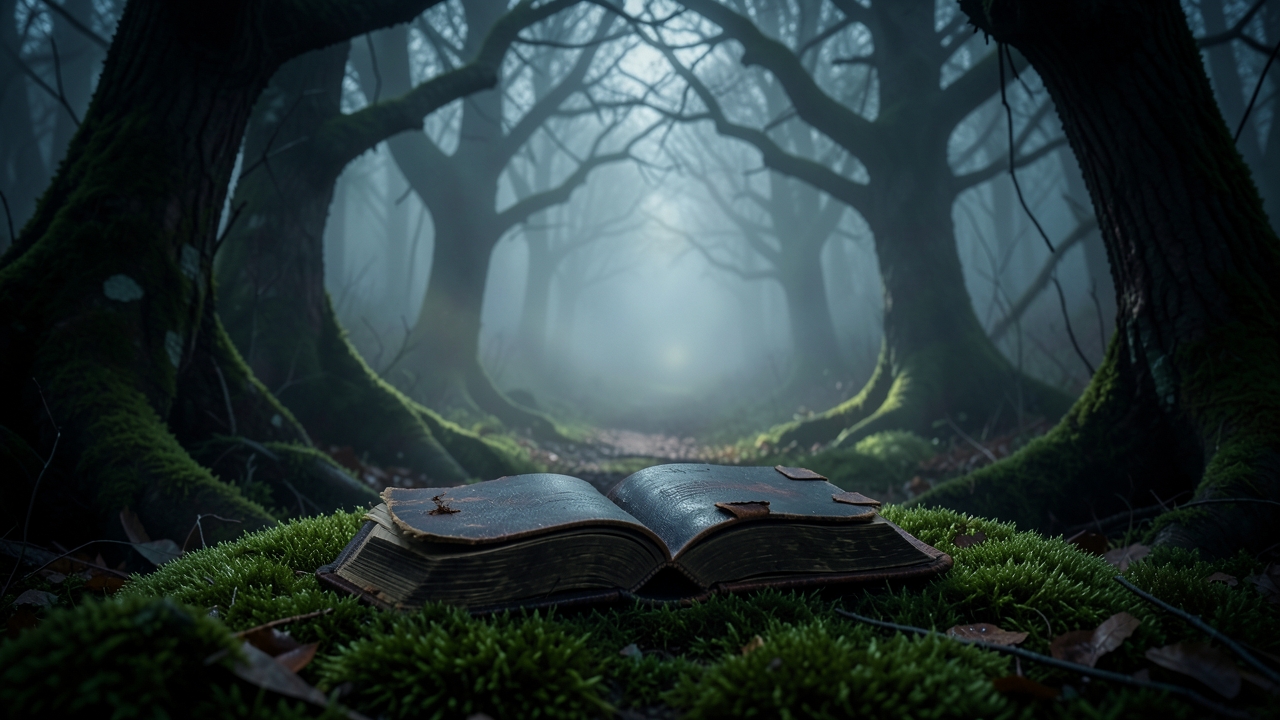
Does a room ever truly belong to us, or do we merely haunt it for a time, waiting for the walls to reveal their own, secret heart? This question breathes in the shadowed corners of Daphne du Maurier’s fiction, where the domestic sphere—the very bedrock of safety and predictability—becomes the primary site of psychological unraveling. To delve into the world of du Maurier uncanny gothic fiction is to step into a landscape where the familiar turns feral, where a marriage, a garden, or a family home morphs into a labyrinthine trap from which the mind may never escape.
The Anatomy of Dread: Crafting the Uncanny Domestic
The power of du Maurier’s technique lies not in overt monsters or supernatural shocks. Instead, she masters the art of the uncanny—that Freudian concept of the unheimlich, the strangely familiar that has become menacing. She takes the heimlich, the homely and comforting, and allows a fissure to appear within it. This fracture, this subtle wrongness, is where the true horror festers. For example, in her most famous novella, Rebecca, the narrator’s entire identity is consumed by the oppressive presence of the first Mrs. de Winter, not as a ghost, but as a curated absence that saturates every inch of Manderley.
The House as a Living Organism
In du Maurier’s universe, houses are never passive backdrops. They are characters with moods, memories, and malicious intentions. Manderley itself is a jealous entity. It “holds” its mistress’s memory, its rooms echo with her footsteps, and its very architecture seems to conspire against the second wife. This is a crucial lesson for the writer of psychological horror: give the setting a will. Let the creak of a floorboard become a judgment. Let a draft from a supposedly sealed room feel like a sigh of disappointment. As H.P. Lovecraft understood, the true terror is often the atmosphere itself, the sense that the environment is aware and malevolent.
Therefore, when crafting your own domestic labyrinth, ask: What does this house want? What memory does it refuse to relinquish? In “The Blue Bell,” du Maurier transforms a simple English country village into a claustrophobic web of silent judgment, where the landscape itself seems to turn its back on the protagonist. The natural world, usually a pastoral comfort, becomes a complicit accomplice to dread.
The Marriage as a Gilded Cage
Another hallmark of du Maurier uncanny gothic fiction is the weaponization of intimate relationships. Marriage, the ultimate symbol of shared domesticity, is frequently depicted as a subtle prison. In “Don’t Look Now,” the Venice-set story of grieving parents, the uncanny intrusion of the psychic and the prophetic shatters the marital bond, revealing its fragility under pressure. The husband and wife, once a unit, become isolated in their own separate, terrifying visions. Consequently, the shared home becomes two separate prisons, the silence between them louder than any scream.
Consider, too, the story “Kiss Me Again, Stranger.” The protagonist’s budding romance is twisted into something sinister when the object of his affection is revealed to be a ghost. The domestic future he imagined—a shared apartment, a life together—is retroactively haunted. Du Maurier teaches us that the most effective gothic dread is often preemptive. It is the horror of a future that is already poisoned, the realization that the domestic life you are building is a facade over a void.
Techniques for Weaving Subtle Horror
How, then, does one replicate this slow-burning dread? Du Maurier provides a masterclass in restraint and specificity.
Focus on the Sensory Detail: Dread lives in the almost-imperceptible. It is the scent of a different perfume lingering in a supposedly empty room. It is a photograph on the mantelpiece that seems, at different moments, to change expression. In “The Birds,” the horror isn’t just the avian attack, but the violation of the home’s perceived safety—the birds finding entry through chinks and keyholes, turning the refuge into a sieve.
Weaponize Routine: Make the daily ritual feel like a rite of impending doom. The morning walk, the afternoon tea, the evening stroll—all can be framed as steps in a inevitable, horrific progression. Shirley Jackson, a spiritual successor in this vein, mastered this in “The Haunting of Hill House,” where the house’s “journeys” in the night become a terrifying routine. Du Maurier does this with the repetitive, draining life of the narrator in Rebecca, trapped in a cycle of inadequacy that feels as inescapable as the fog around the estate.
Employ Narrative Isolation: Trap your characters, and your reader, within a subjective perspective. Du Maurier often uses a first-person narrator whose perceptions become increasingly unreliable. We fear for the narrator, but we also fear their mind. This technique, used so effectively by Gillian Flynn in Gone Girl, ensures the reader is locked inside the labyrinth with no objective guide. We question what is real and what is projection, and that uncertainty is the ultimate uncanny space.
A Case Study: The Thicket
The house remembered her hands. It remembered the exact pressure of her fingers on the banister, the rhythm of her steps on the worn stair runner. Elias felt it now—a phantom weight beside him in the hallway, a displacement of air where Isobel should not be.
He had married the house as much as her. That was the unspoken truth of it. Her laughter had seeped into the plaster, her sighs lingered in the velvet drapes of the drawing room. After the accident, they were all that remained. Not ghosts, precisely. Imprints. The garden, too, had changed. The rosemary she loved grew thorny and invasive, its scent overwhelming, medicinal. It clawed at the flagstones, seeking the light of the windows, as if trying to force its way inside. One evening, he found a single, perfect pearl earring lying in the mulch of the herb bed. It was hers. He had buried it with her, a mile away, in the damp earth of the churchyard. That night, he heard the tap running in the downstairs lavatory. A gentle, steady stream. He crept down, his heart a frantic bird against his ribs. The porcelain basin was bone dry. But the smell—that crisp, floral scent of her soap—was so potent it made his eyes water. He reached for the door handle, not to open it, but because it was warm to the touch, as if a hand had just let go. The house was not haunted. It was remembering. And its memory was a more terrible, more patient ghost than any spirit he could have imagined.Conclusion: The Echo in the Empty Room
Daphne du Maurier’s enduring legacy in du Maurier uncanny gothic fiction is her profound understanding that the deepest labyrinths are not made of stone, but of memory, habit, and expectation. She reveals the cracks in our domestic facades and shows us how easily we can fall through them into a darkness that was always there, waiting patiently beneath the rug. By transforming the garden, the house, and the marriage into stages for psychological horror, she forces us to confront the fragility of the “safe” spaces we construct.
She leaves us, ultimately, with her signature haunting question—a question for any character, and any reader, who has ever felt the familiar twist into the fearful: After the door has closed and the silence settles, are you certain the room is truly empty? Or do you only hear the echo of your own, frightened breath, a sound that has always belonged to the house?
For further exploration of the psychological landscape in fiction, consider our analysis of the unsettling reliability of unreliable narrators or our deep dive into how place becomes character in northern gothic fiction. Both examine the tools du Maurier used to masterful effect. For broader literary context, the Poetry Foundation’s entry on the unheimlich provides excellent theoretical grounding.