
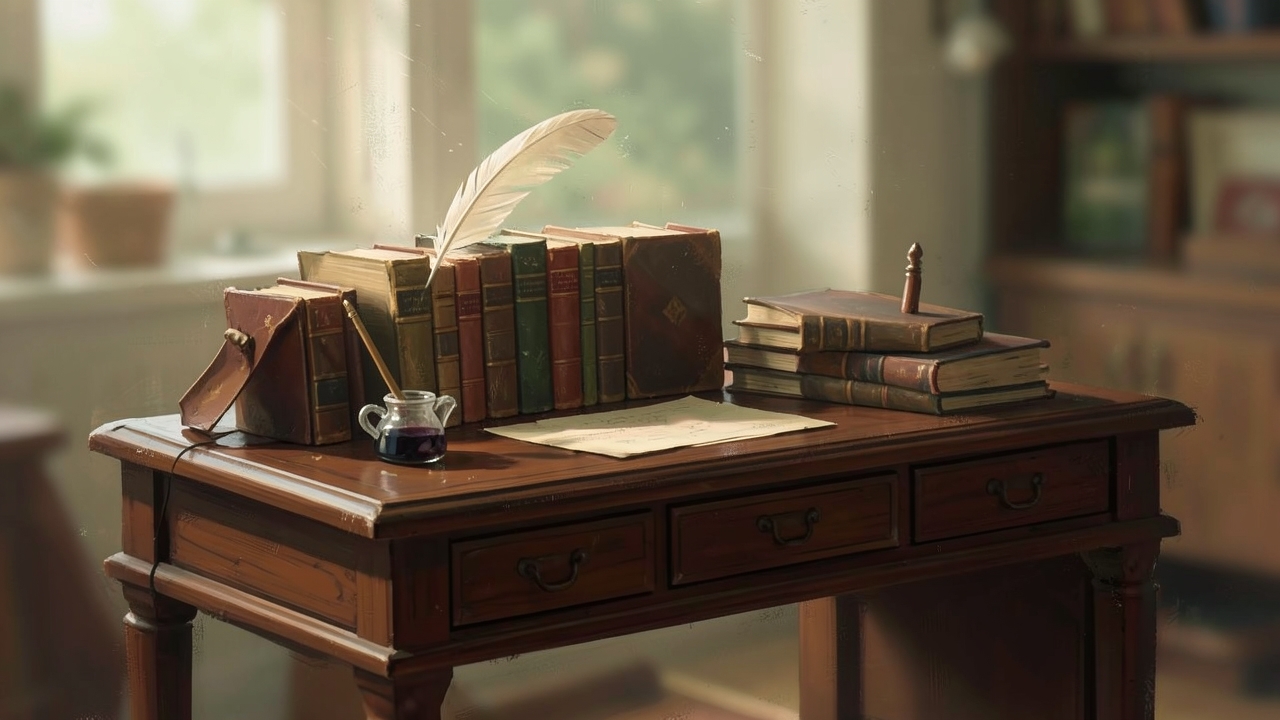
Have you ever stumbled upon a bundle of letters, each whispering secrets that chill the spine? In the shadows of Gothic literature, the epistolary novel technique transforms mere correspondence into a vessel of intimacy and dread, positioning the reader as an unwary discoverer of fragmented truths.
This ancient craft, where narrative unfolds through journals, letters, and notes, does more than tell a story. It crafts an eerie intimacy, as if we hold the very soul of the narrator in our hands. Yet, it simultaneously builds dread, for in the gaps between words, silence breathes. Today, we delve into the anatomy of this technique, exploring how masters like Mary Shelley and Wilkie Collins wield it to haunting effect.
The Epistolary Novel Technique: An Introduction
The epistolary novel technique is not merely a stylistic choice; it is a psychological trap. By presenting the story through personal documents, authors blur the line between fiction and reality. The reader becomes a voyeur, privy to intimate thoughts that characters might never voice aloud. Consequently, suspense builds not from external events alone, but from the slow unraveling of hidden motives.
In Edgar Allan Poe’s works, though not strictly epistolary, the confessional tone in stories like “The Tell-Tale Heart” mimics this effect. The narrator’s direct address creates a chilling closeness. Similarly, the epistolary novel technique amplifies this by fragmenting perspective. We see only what each writer chooses to reveal, leaving gaps that our imagination fills with dread.
For example, in Mary Shelley’s Frankenstein, the layered letters of Robert Walton, Victor Frankenstein, and the creature construct a narrative mosaic. Each document adds a new layer of unreliability. Therefore, the reader must piece together the truth, a process that generates profound unease.
Crafting Intimacy Through Personal Correspondence
Intimacy in the epistolary novel technique stems from immediacy. Letters are written in the present tense, often raw and unedited. They feel like stolen whispers, inviting us into the writer’s inner world. In Wilkie Collins’s The Woman in White, the various epistles—from Marian Halcombe’s diary to Walter Hartright’s narrative—forge a bond with the reader. We become confidants, sharing in their fears and suspicions.
This closeness is essential for dread. When we care deeply about a character, their peril becomes ours. Daphne du Maurier, though not strictly epistolary, captures a similar intimacy in Rebecca through first-person reflection. However, the epistolary novel technique intensifies it by making the reader an active participant in discovery.
Consequently, the technique demands precision in voice. Each letter must sound distinct, reflecting the writer’s personality and emotional state. For instance, Tana French in The Witch Elm uses fragmented records to build intimacy with the protagonist, Toby. As we read his thoughts, we feel his growing paranoia, making the eventual horror more palpable.
Building Dread with Fragmented Perspectives
Dread arises from uncertainty. The epistolary novel technique thrives on fragmented perspective, offering only partial truths. Each letter is a piece of the puzzle, but pieces are missing. Therefore, the reader must navigate contradictions and silences, which heighten suspense.
In Shirley Jackson’s The Haunting of Hill House, the journal entries of Eleanor Vance are unreliable, blending reality with delusion. This fragmentation mirrors the epistolary style, where the reader questions every revelation. Similarly, in Silvia Moreno-Garcia’s Mexican Gothic, letters and documents reveal the house’s secrets piecemeal, building a suffocating dread.
Moreover, the technique allows for dramatic irony. The reader often knows more than the characters, as we see multiple correspondences. In Frankenstein, Walton’s letters to his sister frame the story, yet he remains unaware of the full tragedy. Thus, we anticipate doom, creating a haunting tension.
Common Pitfalls in Epistolary Writing
However, mastering the epistolary novel technique is fraught with challenges. A common pitfall is inconsistent voice. If all letters sound alike, intimacy collapses. For example, in lesser works, journals may feel mechanical, breaking the immersive spell. Therefore, writers must cultivate unique linguistic rhythms for each document.
Another pitfall is over-explanation. Dread thrives on subtlety; too much exposition dilutes mystery. In H.P. Lovecraft’s tales, the epistolary elements—like in Dracula by Bram Stoker—work because they leave much unsaid. Stoker’s use of letters, clippings, and diaries in Dracula creates a documentary feel that amplifies the uncanny.
Furthermore, pacing must be carefully managed. Letters can slow narrative momentum if not interspersed with action. For instance, in Angela Carter’s The Bloody Chamber, the epistolary influences are subtle, weaving into the prose to maintain rhythm. Hence, balance is key—intimacy without drag, dread without stagnation.
A Case Study: Letters from the Hollow
To illustrate the epistolary novel technique in action, consider this original short story. It demonstrates how fragmented letters can build intimacy and dread, positioning the reader as a discoverer of secrets.
The first letter was discovered between the pages of a moth-eaten book. It was addressed simply to “The Keeper of Secrets,” and the handwriting trembled like a dying flame. “I write to you from Thornfield Manor,” it began, “where the walls whisper names of the lost. I fear I am becoming one of them. The woman in the mirror—she is not me, yet she smiles when I weep. If you receive this, do not seek me out. Burn these words and forget I ever existed.” The paper smelled of lavender and ash, a paradox that clung to the air like a phantom.
The second letter was found months later, hidden in a loose floorboard. It was from a different hand—sharper, more controlled. “To whoever holds the first letter,” it read, “I am Elara’s brother. She vanished three weeks after writing that note. The authorities called it madness, but I know better. The manor feeds on solitude; its corridors are veins of darkness. I have deciphered part of her diary—entries about a painting that breathes at night. Do not trust the clocks; they run backward here. I am coming to find her, but if I do not return, the truth lies in the attic, beneath the false floor.” The ink was smudged, as if tears had fallen upon it.
A third note, merely a scrap, was pinned to a crumbling wall. It was in Elara’s hand again, but the words were frantic, disjointed. “He does not understand. The painting is alive—it shows me doors I should not open. I hear footsteps at dusk, but no one is there. The mirror woman, she promised to set me free if I give her my name. I am so tired. If you read this, look for the key under the third stone by the river. It unlocks the music box that plays our lullaby. Please, remember me as I was.” The paper was damp, stained with something that might have been blood or rust.
These fragments were all that remained of Elara Vane’s correspondence. The reader, upon assembling them, becomes not just an observer but an investigator. Each letter deepens the intimacy—we feel her terror, her desperation—while the gaps between them breed dread. What happened in the manor? Who is the mirror woman? The answers lie in silence, in the unwritten spaces. As the pieces come together, a chilling realization emerges: the letters are a trap, a cycle of confession that binds the discoverer to the same fate. In the end, the reader holds the truth, but at what cost?
The Enduring Power of Epistolary Dread
The epistolary novel technique remains a potent tool in Gothic fiction. It merges intimacy with isolation, as characters reach out through words yet remain alone. This paradox resonates deeply, tapping into our fear of being both known and unknown. In works like Frankenstein and The Woman in White, it shapes narratives that linger in the mind, echoing long after the final page.
For modern writers, the technique offers endless possibilities. In the digital age, emails, texts, and social media posts can serve as contemporary letters. Gillian Flynn in Gone Girl uses diary entries to manipulate perspective, a nod to the epistolary tradition. Therefore, the core principle stands: fragmented perspective fosters suspense, and intimacy breeds dread.
As we reflect on this craft, consider how Jorge Luis Borges might approach it—his labyrinthine stories often mirror the epistolary structure. Or how Haruki Murakami infuses everyday objects with uncanny meaning, much like a letter in Gothic lore. The epistolary novel technique is a mirror to the soul, reflecting our hidden fears and desires.
In conclusion, the art of epistolary writing is a dance with shadows. It demands precision in voice, subtlety in revelation, and courage to embrace the unknown. For those who wield it, the rewards are stories that haunt, that whisper in the reader’s ear long after the candle is blown out.
So, as you pen your next tale or delve into a Gothic classic, remember: the most terrifying secrets are those delivered in a personal hand, addressed to you alone. Will you dare to open the envelope?