
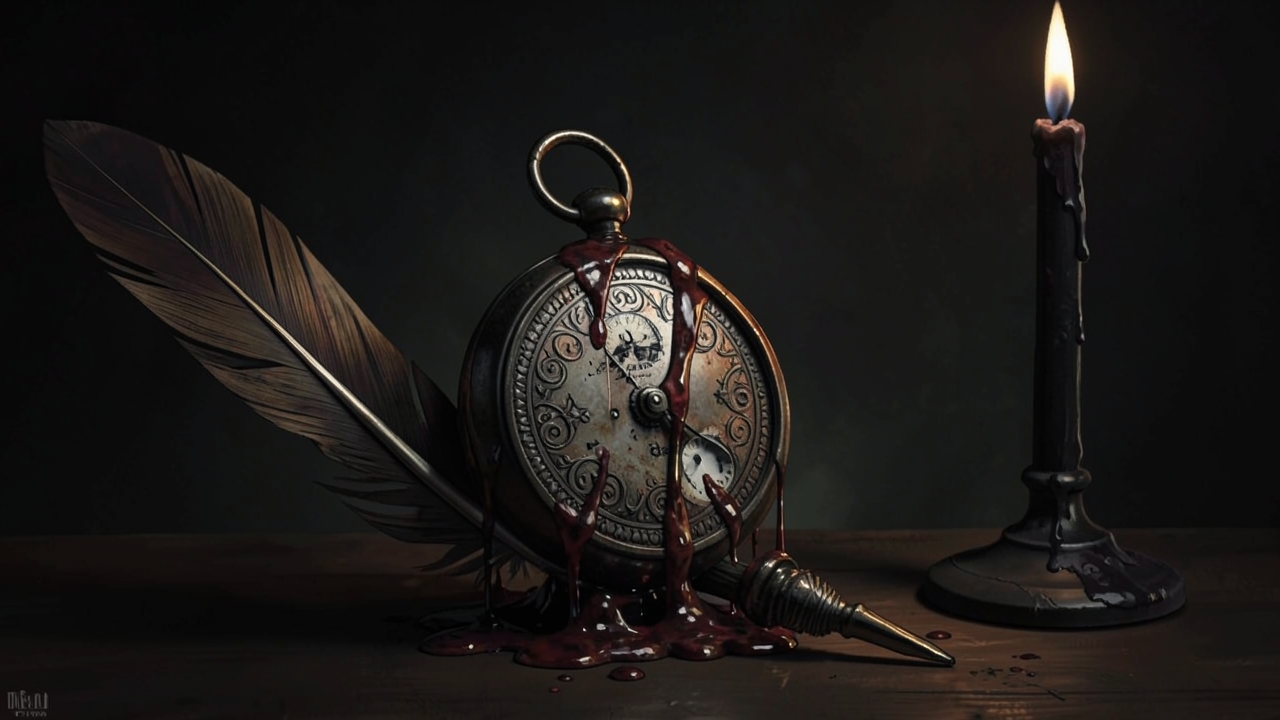
Can a entire universe of heartbreak, terror, or revelation be contained within a breath? Can a story, like a perfectly cut gem, reveal infinite facets in a single glance? This is the haunting challenge—and the profound magic—of flash fiction. In an age of perpetual distraction, the art of mastering flash fiction techniques has never been more vital, offering a beacon of concentrated narrative power.
The Alchemy of Brevity: Core Flash Fiction Techniques
The first principle of this dark art is understanding that flash fiction is not a novel in miniature. It is its own creature, alive with purposeful absence. Every word must be a deliberate choice, every silence a loaded chamber.
The Architecture of the Incomplete
Consider the genius of Jorge Luis Borges in tales like “The Library of Babel.” He does not describe every hexagonal gallery; instead, he presents the terrifying concept and lets the reader’s mind populate the abyss. Your opening line must function as a key turning in a lock. It should not merely set a scene, but imply a door that has just been opened—or perhaps, one that should never have been touched. Establish the essential conflict or change within the first thirty words. As Edgar Allan Poe argued in his philosophy of the short story, every component must contribute to a preconceived effect. In flash, this is not a suggestion, but an iron law.
Embracing the Constraint as Catalyst
A common pitfall is viewing the word limit as a cage. The master writer sees it as a crucible. For example, imposing constraints—like telling a story without dialogue, or from the perspective of an inanimate object—forces you away from familiar paths. Tana French often builds worlds through meticulously selected details; in flash, you must select one detail so potent it suggests the entire world. Let the limitation be your Muse. Consequently, your language must become dense with implication. Verbs should crackle with energy. Nouns should be singular and specific. Therefore, eliminate every adjective that does not fundamentally alter the meaning of its noun.
The Economics of Emotional Resonance
Your goal is not to narrate an emotion, but to create the conditions for it to bloom in the reader’s chest. This is achieved through the “iceberg theory,” famously associated with Hemingway but perfected in micro-fiction by masters like Lydia Davis. The story’s true weight lies beneath the surface. For instance, a piece about a character meticulously sorting laundry might, by its final, odd item, reveal a grief that shatters the mundane scene. In contrast, stating “she was sad” achieves nothing. Furthermore, the ending is paramount. It must resonate. It can be a quiet twist of perspective, a chilling revelation, or a single image that reframes everything that came before it. Never end with a summary; end with a whisper that becomes an echo.
A Case Study: The Clockmaker’s Debt
The last gear in Elias’s collection was not made of brass, but of bone. He’d found it in his father’s workshop, hidden inside a pocket watch that never ticked. Now, at his own bench, the final commission lay complete: a clock for the mayor, its face inlaid with mother-of-pearl. He held the bone gear. It was perfectly shaped. It would fit.
Elias thought of the mayor’s daughter, her laugh like wind chimes. He thought of the fever that had taken her last winter. The mayor’s request had been specific: a clock that measured not hours, but heartbeats. A memorial. Elias had crafted it flawlessly. All it needed was the right escapement to regulate the rhythm.
With a steady hand, he placed the bone gear into the intricate mechanism. It meshed with a soft, organic click. The clock’s delicate hands began to move, not in a steady sweep, but in a faint, staggered pulse. Tick. A pause. Tick. A pause. As if measuring a breath held just before a sob.
Elias delivered the clock. The mayor wept upon hearing its quiet, hesitant beat. “It is perfect,” he whispered. “It sounds just like her final hours.” Elias accepted the gold, the weight of it cold in his palm. That night, in his silent workshop, he picked up his father’s old pocket watch. He wound it. For the first time, it ticked.
But Elias did not feel triumph. He felt a hollow echo, as if he’d traded one ghost for another. The bone gear was gone, but the debt—the quiet, specific weight of another’s sorrow—now ticked inside him, relentless and own.
The Resonant Silence: Conclusion
To craft flash fiction is to engage in a form of literary séance—to conjure a powerful spirit with only a handful of salt and a spoken word. You have learned that the constraint is your collaborator, that implication is your ink, and that the most profound stories often live in the spaces between the lines you write. The tale of Elias demonstrates how a single object (the bone gear) can carry the entire thematic weight, how a specific, sensory detail (the staggered pulse) can evoke a vast emotional landscape, and how an ambiguous ending can linger far longer than any explicit conclusion.
As you return to your own writing desk in 2026, faced with the blank page and the ticking clock, remember this: the most haunting stories are not the ones that tell us everything. They are the ones that leave us with a question, a chill, or a silence that we must fill with our own understanding. So, when you next sit to write, will you pour out a flood, or will you craft a single, perfect drop of poison to linger on the tongue?
For further exploration of narrative density, see our guide on Mastering Atmosphere in Short Fiction. To understand the architecture of a complete story arc in miniature, consult Structure Beyond the Three-Act. For an external perspective on the genre’s evolution, The Poetry Foundation’s overview provides valuable context.