
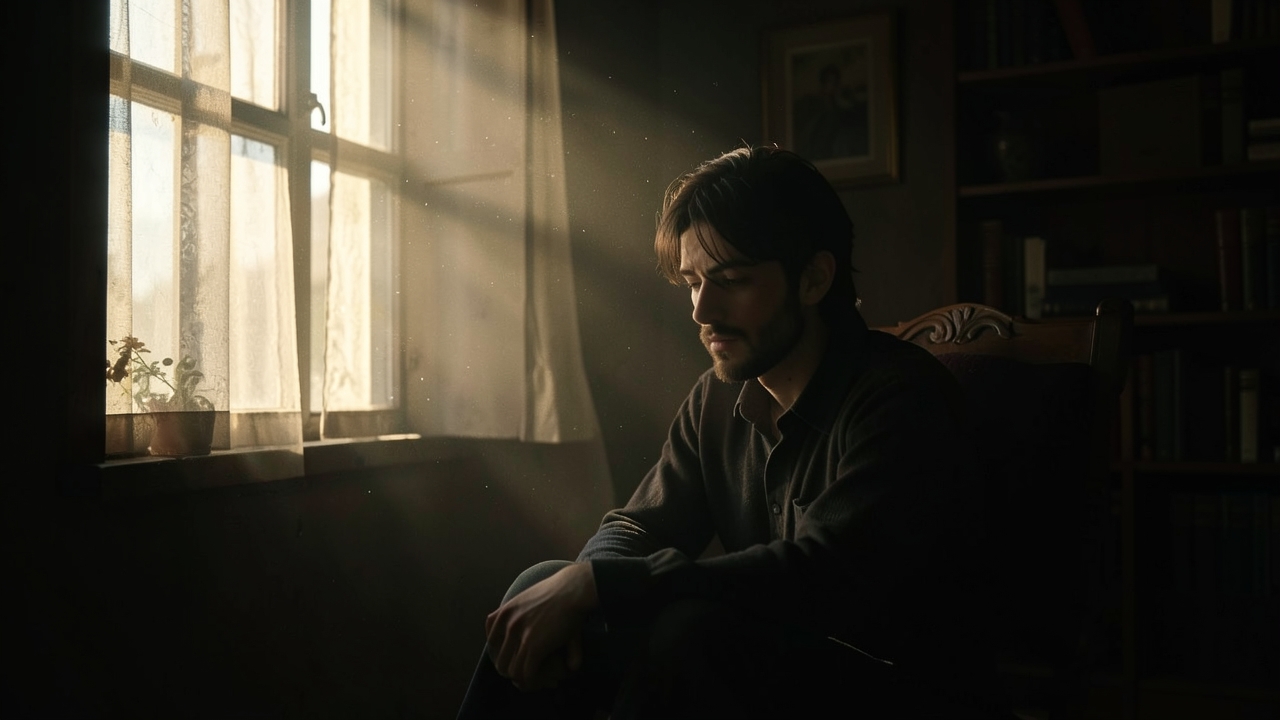
What if the shadow that haunts your character is not a ghost, but a diagnosis? Not a vague dread, but a visceral, physiological reaction to a specific trigger—perhaps the sight of a cluster of holes, or the impossible stretch of an open plaza? In the dim corridors of literary fiction, a phobia-driven character arc offers a potent, grounded source of conflict, transforming a psychological condition into the very engine of the narrative. It moves beyond the generic “afraid of the dark” to explore fear with a scalpel’s precision, revealing the deepest fractures in a human soul.
The Anatomy of Fear: Why a Specific Phobia Creates Superior Fiction
General fear is atmospheric. Specific phobia is architectural. It provides a concrete, measurable obstacle. A character with arachnophobia doesn’t just fear spiders; they fear the eight-legged scuttle, the silken thread, the chaotic pattern of their legs. This specificity is the writer’s gift. It generates immediate, tangible stakes. Will they enter the basement? Will they open the old trunk? Each scene becomes a potential minefield.
Moreover, a diagnosed phobia (like Glossophobia—fear of public speaking, or Acrophobia—fear of heights) lends authenticity and pathos. It internalizes the conflict magnificently. As Edgar Allan Poe masterfully demonstrated in “The Fall of the House of Usher,” the environment can mirror and amplify a character’s psychological decay. A phobia does this from the inside out. The character’s own mind becomes the haunted house.
Technique 1: Weave the Trigger into the World
The key is to make the trigger unavoidable for the plot to progress. Consider Shirley Jackson’s “The Haunting of Hill House.” Eleanor Vance’s fragile psyche is triggered by the house’s oppressive geometry and sounds, which externalize her internal turmoil. Similarly, design your world so the phobic trigger is constantly, subtly, or overwhelmingly present. If the fear is Trypophobia (fear of irregular patterns), the antagonist’s wallpaper, the victim’s wounds, or even the structure of a secret code could feature clusters of holes. The world itself becomes the antagonist.
Technique 2: The Physiology of Dread is Your Dialogue
Phobias are not just thoughts; they are full-body rebellions. Sweat, paralysis, hyperventilation, a racing heart—these are the raw materials of your scenes. Don’t just tell us she was scared. Show us the cold sweat on her neck, her lungs refusing to draw breath, the tunnel vision as the trigger appears. This grounds the fear in a reality the reader can feel. In her novel The Haunting of Hill House, Jackson writes of Eleanor’s feeling of being “held, suspended,” a perfect encapsulation of a phobic response freezing the will.
Common Pitfalls to Avoid
First, do not reduce the character to their phobia. They must be a whole person with desires, flaws, and virtues unrelated to the fear. The phobia is a profound aspect, not the totality. Second, avoid using the phobia as a cheap plot device or a mere quirk. It must be integral to the theme. What deeper truth about vulnerability, control, or trauma does it illuminate? Third, research the phobia with respect. Understand its clinical reality to avoid stigmatizing or trivializing a real human struggle. As H.P. Lovecraft knew, the most effective fear often comes from the collision between human fragility and an uncaring, complex cosmos—a cosmos that can be represented by the terrifying, indifferent patterns of the world.
For further inspiration on crafting psychological depth, explore our analysis of Masters of Psychological Horror, or delve into the concept of the unreliable narrator, a tool often intertwined with phobic perception.
The Geometry of Dread — A Case Study
Elara’s flaw was not cowardice. It was acrophobia, diagnosed and documented, a terror of heights that made her stomach lurch at the sight of a tall ladder. This flaw became her cage when she inherited her great-aunt’s tower apartment. The apartment was a marvel of glass and steel, perched above the city, but for Elara, it was a prison cell suspended in the sky. Each morning, she slid along the wall to the kitchen, her eyes fixed on the floor. The plot turned on a simple, devastating imperative: the deed to the building, hidden in a safe at the very top of the tower’s spire, would be lost to a predatory developer by dusk. To save her inheritance, she had to ascend. The climb was not a action sequence, but a slow, meticulous dissection of her psyche. The spiral staircase was the vertebrae of a giant beast, each step a grinding vertebra. Her palms slicked on the rail. The city below was no longer a map but a swirling, abstract painting of light and distance. Her breath came in sharp, shallow gasps—the physiological truth of her fear. She saw the trigger everywhere: in the gaps between the steps, in the vast emptiness of the stairwell, in the distant, tiny cars. The world had become the geometry of her terror. Yet, with each forced step upward, something else surfaced: a flicker of her aunt’s stubbornness, a memory of a childhood promise to be brave. The phobia did not vanish; it screamed. But alongside it, another voice whispered of defiance. The internal conflict was not against the stairs, but within herself. At the top, breathless and trembling, she did not find triumph. She found a single, fragile victory over her own mind. Securing the deed, she looked out not at the sprawling city, but at the vast, open sky itself—the ultimate trigger. For a moment, she did not flinch. The fear was still there, a cold stone in her gut, but it was now accompanied by a profound understanding: her cage was also her vantage point. She had not conquered her phobia; she had, for one critical moment, learned to hold it in her hand without letting it define her entire world. Her arc was not about erasure, but about integration—carrying the fear forward, but now with a conscious, hard-won agency.The Echo of the Abyss
A story built upon a real-world phobia does not merely frighten; it illuminates. It takes the private, silent struggle of millions and holds it up to the light, not to stare it down, but to understand its shape. The phobia-driven character arc forces a narrative to the very edge of human tolerance, exploring the exquisite, painful line between breakdown and breakthrough. It reminds us that our deepest flaws are often our most honest teachers.
So, ask yourself: what if the thing that terrifies your protagonist most is not a monster from the id, but a recognized, catalogued entry in the DSM-5? How might that specificity unravel them, and in doing so, reveal the haunting, resilient architecture of their soul?