
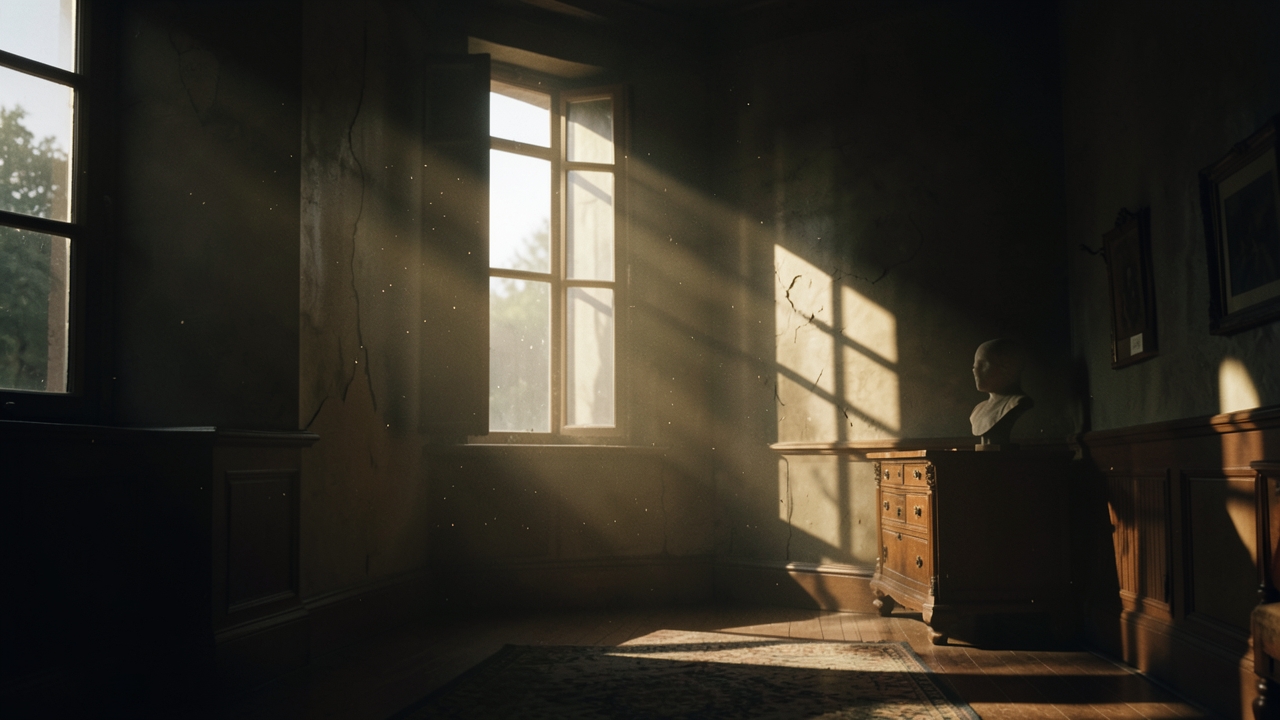
What forgotten scent can summon a ghost from the ether of memory? What texture, described on a page, can make a reader’s own skin prickle with phantom sensation? As writers, we often lean upon the crutch of sight, cataloguing colors and forms. Yet, the most haunting tales are those that ensnare us through the other, more primal gateways of perception. To truly captivate, we must learn the art of the sensory writing prompt, a weekly ritual designed to isolate and heighten a single, non-visual sense, forging stories that resonate in the body before they ever reach the mind.
The Theory of the Unseen Sense
The foundation of a powerful sensory prompt lies not in mere description, but in strategic omission and amplification. We deliberately place a blindfold over the writer’s primary sense—the visual—and force them to navigate the narrative landscape with other tools. This constraint is not a limitation; it is a liberation. It frees the imagination from the tyranny of appearance and compels it to挖掘 the visceral.
The Anatomy of an Isolated Prompt
A purposeful sensory prompt contains two essential components: the anchor and the conflict. The anchor is the hyper-specific sensory detail—the smell of burnt sugar and wintergreen, the gritty feel of volcanic sand, the sound of a single, slow drip in a cistern. The conflict is the human or narrative context in which this sensation occurs, creating dissonance or deepening meaning.
Consider how Edgar Allan Poe masters this in “The Fall of the House of Usher.” The narrator’s first sensory assault is olfactory. He notes a “faintly oppressive odor” from the decayed furnishings, a scent that becomes inextricable from the psychological decay of the Usher lineage. The smell is the anchor; the crumbling house and its tormented master are the conflict. The sense becomes the story’s atmosphere.
Crafting the Anchor: Beyond the Obvious
Do not simply prompt, “Write about the smell of a hospital.” That is a label, not a sensation. Instead, craft an anchor that demands engagement. Try: “Write the moment a character enters a room. The primary clue to what has just happened here is the lingering smell—not of antiseptic, but of copper and wilted lilies.” This specific, contradictory detail instantly sparks curiosity and narrative possibility.
Similarly, for touch, avoid “Describe a rough surface.” A more potent anchor would be: “Your character’s fingers trace a groove in a wooden table. The groove is not smooth from years of use, but is filled with a fine, dry residue that powders their skin.” Here, the writer must investigate the residue’s origin, its implication, transforming a tactile detail into a plot point.
Common Pitfalls in Prompt Creation
The most frequent error is vagueness. Prompts like “Explore sound” offer no handhold for the imagination. Another pitfall is over-directing the outcome. The purpose of a weekly prompt is to generate discovery, not to fulfill a predetermined plot. Finally, avoid clichés. The “cold touch of a corpse” is a trope. The “unexpected warmth of a hand left on a stone statue in autumn sunlight” is a discovery. The goal is to jolt the writer’s perception into fresh territory.
As Shirley Jackson demonstrated in “The Haunting of Hill House,” the most terrifying entities are often felt before they are seen. The house itself groans, pushes, and whispers. Jackson understood that a well-deployed auditory or tactile detail could generate more unease than any visual specter. Our prompts should seek that same potent, unseen influence.
Sensory Writing Prompts: A Weekly Ritual
To master this craft, one must practice it. Implementing a weekly regimen of focused sensory prompts can fundamentally alter your writer’s toolkit, honing your ability to render the unseen with breathtaking clarity.
The Method: Anchor, Conflict, Release
Structure your weekly exercise simply. Week One: Olfactory. Anchor: The scent of ozone and hot metal. Conflict: A child’s first memory of a lightning strike hitting the oak tree outside their bedroom. Release: Write the 500-word scene from the child’s perspective, where the smell is the primary narrator. Week Two: Auditory. Anchor: The sound of a silk thread snapping under tension. Conflict: A tailor hearing this sound from their workbench, connected to a larger, ominous failure. Week Three: Gustatory. Anchor: The taste of salt and copper pennies. Conflict: A sailor’s first sip of seawater after a shipwreck, a moment that is both defeat and, strangely, survival.
This method trains you to build narrative from the ground up, from the sensory foundation, not from the abstract idea downward. It teaches you, as Angela Carter did so brilliantly in her dark fairy tales, that sensation is the first language of the psyche.
A Case Study: The Archivist’s Tactile Memory
The archive was cold, but the cold was not the first thing Elias registered. It was the texture beneath his gloved fingers—a page of vellum that felt less like skin and more like the dried wing of some immense, forgotten moth. The grain was uneven, holding a faint, granular dust that spoke of centuries of neglect. As his digit traced the edge of a faded ink cartouche, the vellum did not yield; it resisted, brittle and proud, a tactile testament to its survival. He could almost feel the chill of the scriptorium in its fibers, the hurried press of the monk’s hand, the weight of the silence it had endured in this vault. This was not merely old paper; it was a solidified whisper, a thing that had absorbed time itself through its pores, and now, in the silence of the archive, it was pressing that accumulated silence back into his own fingertips.
This brief sketch, born from the prompt “Describe an object’s history through the sensation of touching it,” demonstrates the principle. The anchor is the specific, resistant texture of the vellum. The conflict is the archivist’s professional duty versus the overwhelming, almost animate, history he feels. The sense of touch becomes a conduit for time, memory, and atmosphere, achieving more than a visual description of the page ever could.
The Lingering Impression
We write to evoke, not merely to inform. By crafting and responding to deliberate, isolated sensory writing prompts, we learn to bypass the superficial and touch the marrow of experience. We learn that a story’s true power often lies in the chill that crawls up a character’s spine, the phantom taste of ash on the tongue, or the exact pitch of a floorboard’s groan. These are the details that bypass intellectual critique and lodge directly in the reader’s nervous system, creating a memory of the story that feels as real as their own.
Therefore, I pose this question to you, fellow weavers of shadows: which forgotten sense will you dare to awaken in your next tale, and what haunting will follow in its wake?
For further exploration of atmospheric craft, consider our deep dive into the art of building gothic atmosphere, or discover how psychological tension is cultivated through subtle detail.
As a master of the suggestive, the poet Edgar Allan Poe understood that the true genius lies in what is half-shown and half-hidden, a principle perfectly applied to the realm of sensory writing.