
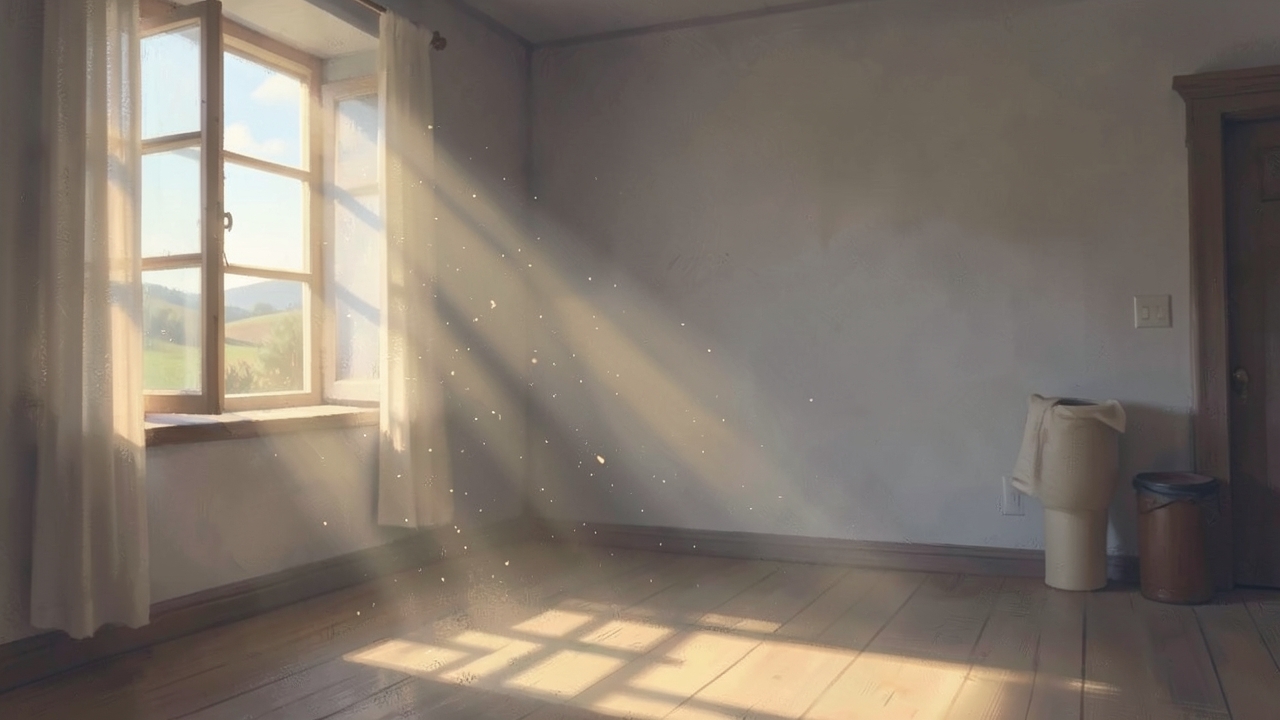
What if the walls themselves were the antagonist? What if the air in a room grew thick with unspoken history, pressing upon a character until the psyche fractured? This is the whispered promise of the single-setting story prompt: a creative crucible where limitation becomes liberation, and a single, vivid location becomes a universe of narrative possibility.
In an age of sprawling epics, there is a potent, almost primal appeal to the constrained narrative. It forces us to find depth in stillness, conflict in silence, and character in the echoes of a contained space. For the writer, especially one drawn to the atmospheric and the eerie, these single-setting story prompts are not mere exercises; they are incantations, summoning stories from the very grain of the floorboards.
The Crucible of Place: Why Limitations Ignite the Creative Flame
Creative constraints are, paradoxically, a form of freedom. They relieve the paralysis of infinite choice and compel us toward ingenuity. Consider Edgar Allan Poe. In works like “The Fall of the House of Usher,” the decaying mansion is not a backdrop; it is a mirror to Roderick Usher’s mind, a character in itself. The story’s entire emotional and psychological weight is concentrated within its bounds. By limiting the physical canvas, Poe magnified the internal drama to operatic proportions.
Therefore, a single-setting prompt demands we ask different questions. Instead of “What happens next?” we must ask, “What is already happening here?” The setting must be a pressure cooker for plot, a repository for secrets, and a catalyst for transformation.
Anatomy of a Compelling Space
A location becomes a story when it possesses three key elements:
1. History: The space has lived before the character entered. It bears scars, remnants, and ghosts of its past. In Shirley Jackson’s The Haunting of Hill House, the house’s history of “wrongness” is palpable from the first sentence, actively shaping the present narrative.
2. Sensory Detail: Every sense must be engaged. The specific chill of a cellar, the scent of dust and forgotten books, the persistent drip of a leak—these are not mere description. They are tools for building dread, memory, or desire.
3. Symbolic Potential: The setting must function on a metaphorical level. A locked room can symbolize repressed memory; a labyrinthine library can represent a confused mind. As Jorge Luis Borges masterfully demonstrated, a single library can contain infinity and existential terror.
Techniques for Spatial Tension in a Single-Setting Narrative
With your confined stage set, how do you sustain momentum? How do you ensure the story unravels with purpose?
The Architecture of Conflict
Conflict in a single setting often moves inward or becomes environmental. For example:
Character vs. Self: The primary battlefield is the protagonist’s mind. The setting triggers memories or forces confrontations with a hidden truth. Gillian Flynn’s work often traps characters in psychological spaces where the real threat is their own unraveling perception.
Character vs. Environment: The location itself becomes hostile. It may be physically deteriorating, supernaturally active, or functionally oppressive. H.P. Lovecraft excelled at this, making ancient crypts or isolated lighthouses extensions of cosmic dread.
Character vs. Character (in a Cage): When two or more characters share a confined space, tension simmers through dialogue, subtext, and shifting power dynamics. Consider the claustrophobic duels in Tana French’s police interrogation rooms, where the truth is squeezed out drop by drop.
The Unfolding of Revelation
Since action is limited, revelation becomes your primary engine. Structure your story like an archaeological dig or a slow unlocking of doors:
The Layered Discovery: Have the character uncover secrets within the setting in stages—a hidden letter in a desk, a peculiar stain on the floor, a loose brick in the fireplace. Each revelation must reframe the story and raise the stakes.
The Atmospheric Drip: Let the setting release its whispers gradually. Daphne du Maurier’s Rebecca is a masterclass in this. The house of Manderley is saturated with the presence of the first wife, Rebecca, and every room drips with her insidious, unseen influence, slowly poisoning the narrator.
Pacing Through Sensory Shifts
Without scene changes, you control pace through changes in perception. A shift in light from day to night can accelerate time. A sudden silence after a constant noise can freeze it. This technique mirrors the way our own awareness heightens in moments of fear or anticipation.
Consequently, your narrative pacing is tied to the character’s sensory and psychological experience of the room, not to travel between locations. This creates an intensely intimate, and often claustrophobic, reading experience.
A Case Study: The Collector of Silence
Below is a short story demonstrating the techniques of the single-setting narrative—a complete arc contained within one room, using atmosphere as both plot and pressure.
The room smelled of dry paper and old metal. Elias did not so much enter it as succumb to its gravity. It was a sound archive, they had told him, a vault of whispers. Shelves lined every wall, not with books, but with glass spheres, each the size of a human skull. Inside each sphere, a faint, silvery vapor swirled like captured nebulae.
His task was simple: to catalogue. But as he lifted the first sphere from its velvet cradle, a sound escaped it—a sigh, not of air, but of memory. He saw a young woman saying goodbye on a foggy train platform. The sphere in his hand grew warm. The clerk’s notes on the desk simply read: “Sphere 032: 1947, Fogg, Farewell.” Elias felt a hollow ache in his chest, an echo of a grief not his own.
He worked through the night. Sphere after sphere breathed its captured moment into him: a child’s first laughter in a sun-drenched garden; the crackle of a fire as a secret was whispered; the devastating, silent pause after a gunshot. The room grew colder, but the spheres in his hands burned. His own memories—the sterile smell of the hospital, his wife’s last, ragged breath—began to fray at the edges, replaced by this torrent of other lives.
Dawn was a thin, grey wound at the window when he reached the final shelf. A single sphere, larger than the rest, sat alone. It was black, opaque. His fingers trembled as they touched it. It did not whisper. It screamed. Not with sound, but with absolute, tidal silence. He saw nothing. He felt nothing. It was the void that followed all noise, the collector at the heart of the collection. He understood then what the archive truly held. It was not memories. It was the silence that comes after.
Elias carefully placed the black sphere back on its shelf. He did not write a note. He simply sat on the floor, his back against the shelves, and waited. The glass spheres around him began to glow, one by one, pulsing with the soft light of a thousand stolen moments. He listened to the beautiful, terrible quiet, and for the first time since his wife had died, he felt completely, and finally, alone.
The Echo in the Chamber: Your Prompt, Your Prison, Your Paradise
We have traversed the confined corridors of craft, from the theory of the literary crucible to the practical techniques of building tension within walls. We have walked through an example that sought to make a single room a vessel for memory, loss, and quiet revelation. The power of single-setting story prompts lies in this focused alchemy: transforming the mundane into the momentous, the static into the dynamic.
You, the writer, are now the architect. Choose your room. Let it be a stage, a cell, a reliquary. Fill it with history and shadows. Now, ask yourself: what truth has been waiting, silent and patient, in the very air of this place, for your character to finally breathe it in?
For further exploration of atmospheric technique, consider our deep dive into the art of atmospheric writing. To discover more exercises in creative constraint, explore our archive on weekly narrative prompts. And for a foundational understanding of the gothic elements we employ, the Poetry Foundation’s analysis of Poe’s philosophy remains an essential text.
Will you build your next world within the confines of a single, unforgettable door?