
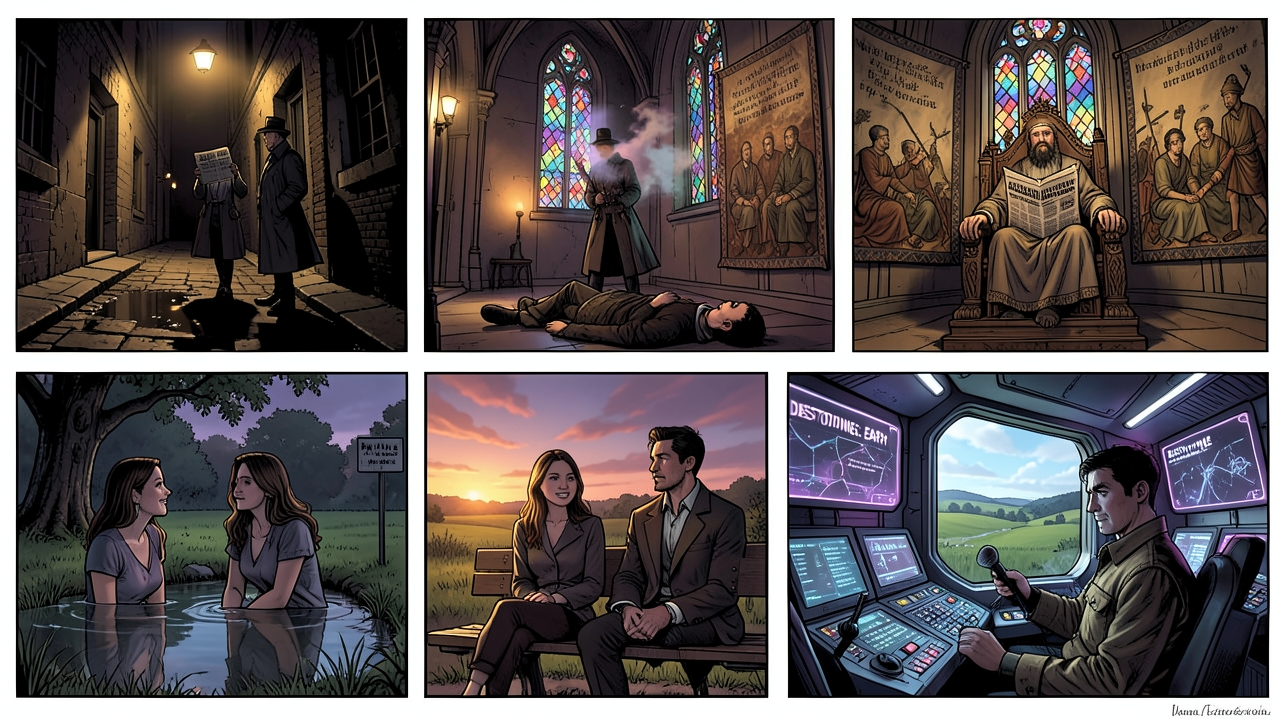
What if the voice that guides you through a tale is not a beacon but a labyrinth, designed to mislead? In literature, the unreliable narrator genres serve as shadowy puppeteers, manipulating perception and truth. As we traverse different narrative landscapes, the technique of unreliability shifts, adapts, and reveals itself in distinct structural mechanics. This exploration delves into how unreliable narrator genres function across literary fiction, horror, and memoir, dissecting the anatomy of deceit and the art of the reveal.
First, let us establish the foundation. An unreliable narrator is a storyteller whose credibility is compromised, intentionally or not. This device creates tension, invites skepticism, and forces readers to engage actively. For instance, in Edgar Allan Poe’s “The Tell-Tale Heart,” the narrator’s frantic insistence on sanity underscores his madness, a classic example of unreliable narration. But how does this technique evolve when applied to different genres? Let us examine the theory behind unreliable narrator genres in detail.
Unreliable Narrator Genres: How Technique Varies Across Fiction
The core of unreliable narration lies in the gap between what is told and what is true. However, the purpose and execution of this gap change depending on the genre. In literary fiction, the focus often rests on psychological complexity. In horror, it amplifies dread. In memoir, it questions memory itself. By analyzing these variations, we uncover the structural mechanics that make each reveal impactful.
Literary Fiction: The Psychology of Deceit in Gone Girl
In literary fiction, unreliable narrator genres thrive on character study. Gillian Flynn’s Gone Girl exemplifies this, using dual narratives to unravel perceptions. Amy Dunne’s diary entries paint her as a victim, but the truth emerges as a chilling fabrication. Here, the structural mechanic hinges on a gradual reveal, often through plot twists or character contradictions. For example, Flynn employs time shifts and perspective changes to fracture the narrative, forcing readers to question both narrators. This technique mirrors the psychological depth seen in works by Daphne du Maurier, whose Rebecca uses a naive first-person narrator to obscure truths about the past. The unreliable narrator genres in literary fiction thus serve to explore human psychology, where the reveal is not just about plot but about self-deception and identity.
Moreover, authors like Tana French in In the Woods use unreliable narration to blur memory and trauma. The narrator’s fragmented recollections create a sense of unease, where the unreliability stems from emotional repression. Consequently, the reveal often comes through subtle clues, such as inconsistencies in dialogue or descriptions, which attentive readers can piece together. This approach aligns with the broader tradition of literary fiction, where the unreliable narrator genres become a tool for introspection, much like Jorge Luis Borges’ labyrinths of perception in his short stories.
Horror: Supernatural Unreliability in The Haunting of Hill House
In horror, unreliable narrator genres amplify fear by merging psychological and supernatural elements. Shirley Jackson’s The Haunting of Hill House presents Eleanor Vance, whose sanity unravels as the house exerts its influence. Her narration blurs reality and hallucination, making the reader unsure whether events are supernatural or imagined. The structural mechanic here often relies on ambiguity and open-ended reveals. For instance, Jackson uses eerie descriptions and internal monologue to create a pervasive doubt, where the horror lies in the unknown. This technique echoes H.P. Lovecraft’s cosmic horror, as seen in “The Color Out of Space,” where the narrator’s deteriorating perception mirrors the inexplicable threat. In horror, the unreliable narrator genres serve to heighten suspense, with the reveal sometimes withheld entirely, leaving readers in a state of perpetual uncertainty.
Similarly, in Angela Carter’s The Bloody Chamber, fairy tale retellings use unreliable narration to subvert expectations, blending gothic horror with psychological insight. The narrators often deceive themselves, and the reveal comes through symbolic imagery or plot twists that reframe the story. Therefore, in horror, unreliable narrator genres focus on atmosphere and dread, where the mechanics of the reveal prioritize emotional impact over clarity, creating a lingering sense of unease.
Memoir: Memory and Truth in Personal Narratives
Memoir presents a unique challenge for unreliable narrator genres, as it blurs the line between fact and fiction. Here, the unreliability often arises from memory’s fragility or the narrator’s subjective lens. For example, in Mary Karr’s The Liars’ Club, the author recounts childhood trauma with vivid detail, yet acknowledges the gaps in her memory. The structural mechanic involves direct admissions of uncertainty, where the reveal is not a plot twist but an ongoing dialogue between truth and perception. This approach contrasts with literary fiction, where deception might be intentional. In memoir, unreliable narrator genres serve to explore authenticity, as seen in works like Haruki Murakami’s What I Talk About When I Talk About Running, where the narrator’s reflections intertwine personal experience with philosophical musing, creating a layered narrative.
Consequently, in memoir, the mechanics of the reveal often come through self-correction or external verification, such as including letters or documents. This technique adds depth, making the unreliability a poignant reminder of human fallibility. Therefore, unreliable narrator genres in memoir emphasize truth-seeking, where the narrator’s flaws become part of the story’s integrity.
Common Pitfalls and Masterful Techniques
When crafting unreliable narrators, writers must avoid overused tropes that diminish impact. For example, a twist reveal without foreshadowing can feel cheap. Instead, masterful authors like Poe or Jackson plant seeds early—through inconsistencies, subtle clues, or thematic echoes. In addition, varying the type of unreliability—whether due to mental illness, intentional deceit, or limited perspective—adds nuance. For instance, Gillian Flynn uses multiple narrators to complicate the unreliable narrator genres, while Silvia Moreno-Garcia in Mexican Gothic employs a protagonist whose cultural alienation enhances her unreliable perception. As a result, the technique remains fresh and engaging.
Therefore, understanding the structural mechanics across genres allows writers to wield unreliability effectively. Whether through psychological depth in literary fiction, atmospheric dread in horror, or memory’s maze in memoir, the key lies in balancing revelation with ambiguity, ensuring the reader’s journey is both perplexing and rewarding.
For further insights into narrative voice, consider exploring our guide on mastering narrative voice, or delve into gothic mystery in modern literature for more atmospheric techniques.
A Case Study: The Whisper in the Walls
The house had always spoken in whispers, but only I listened. Or so I believed. My name is Eleanor, and as I pen this account, I sense the words unraveling like mist at dawn. The whispers began after my sister’s disappearance—a sound like silk tearing in the dark. I told the police it was the wind, but they saw the fear in my eyes. They saw the fracture in my truth.
Nights blurred into days as I wandered the corridors, each shadow holding a secret. The whispers grew louder, weaving tales of guilt and longing. I remembered childhood games, where we’d hide in closets and count to ten, but this was no game. This was a confession. I claimed innocence, yet my hands trembled when I touched the cold doorknobs. The police returned, their questions like knives. They found her locket in my drawer. I said it was a mistake, but my voice wavered—a hollow echo in the silence.
In the end, the house revealed its truth. Not through the whispers, but through the stillness. I stood in the attic, where dust danced like forgotten souls, and realized the whispers were mine all along. My sister had vanished into my memories, a ghost of my own making. The police left without charges, but the walls held my secrets. Now, as I write this, I wonder: was the house unreliable, or was I? The answer drifts in the twilight, unanswered.
This case study illustrates the application of unreliable narrator genres across genres. Eleanor’s narration blends psychological unease with horror elements, akin to Jackson’s work, while the self-reflective tone echoes memoir’s introspection. The structural mechanic here uses gradual clue revelation—the locket, the waver in voice—to build suspense, culminating in an ambiguous reveal that leaves questions lingering. For example, the shift from external whispers to internal confession demonstrates how unreliable narrators can blur reality, much like in literary fiction. Consequently, this technique engages readers by inviting them to decipher the truth, embodying the essence of unreliable narrator genres.
To deepen your understanding, refer to resources like the Poetry Foundation’s analysis of Edgar Allan Poe, which explores narrative deception in classic literature, or this insightful piece from Literary Hub on modern unreliable narrators.
The Echo of Unseen Truths
In conclusion, unreliable narrator genres are not merely literary devices but mirrors to the human condition. From the psychological labyrinths of Gone Girl to the supernatural chill of The Haunting of Hill House, and the memory-laced confessions of memoir, the technique evolves to suit each genre’s demands. The structural mechanics—whether through foreshadowing, ambiguity, or direct admission—determine the power of the reveal, shaping how we perceive truth and fiction. As we navigate these shadowy narratives, we are reminded that trust is a fragile thing, easily fractured by the whispers of doubt.
Thus, the next time you encounter an unreliable narrator, ask yourself: in the echo of their words, what truth hides beneath the surface, waiting to be unearthed? The answer may lie not in the story told, but in the silence between the lines.