
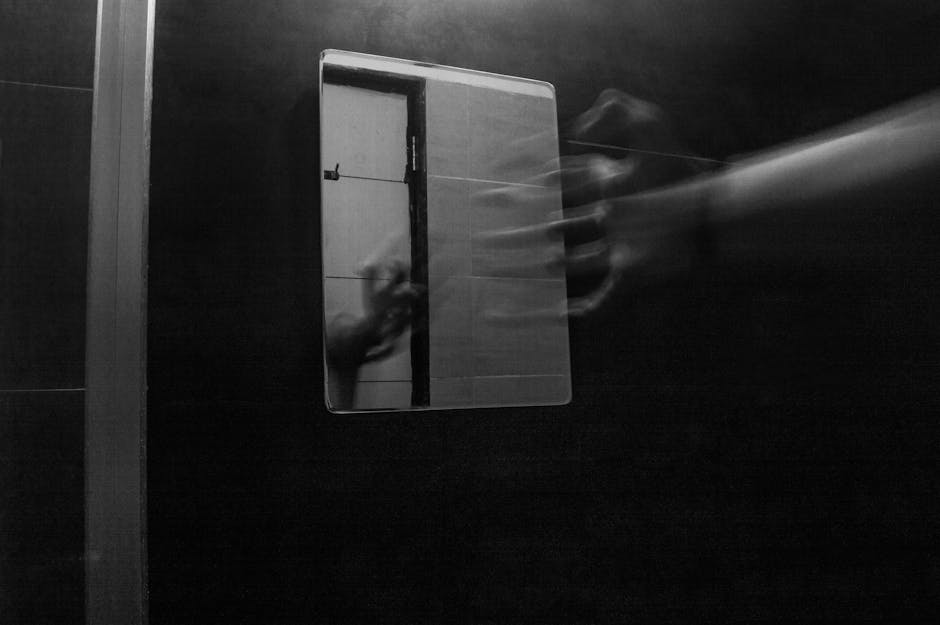
What if the voice guiding you through a story is not a lighthouse, but a labyrinth? What if the storyteller is the ghost in their own machine, the architect of a beautiful, terrible lie? This is the seductive, perilous domain of the unreliable narrator, a literary device that does not merely tell a tale, but questions the very nature of truth itself. It is the whisper in the dark that asks you not just to listen, but to doubt.
The Anatomy of Deception: Why We Doubt the Narrator
The unreliable narrator is not a flaw in the storytelling, but its beating, complicated heart. It is a conscious fracture in the narrative lens. We encounter this technique across genres, but its roots run deepest in gothic soil, in tales of memory, madness, and the monstrous spaces within the human psyche. The device forces the reader into an active role—less a passive receiver, more a detective sifting through testimony for the glint of reality.
Purpose and Power: Beyond Simple Lies
The power of an unreliable narrator extends far beyond a simple plot twist. It creates a unique form of dramatic irony and psychological tension. When we suspect the narrator, every detail becomes a clue. The atmosphere thickens. We read between the lines, searching for the inconsistencies, the Freudian slips, the omissions that scream louder than words. This complicity between text and reader forges a bond of thrilling, uneasy intimacy.
Consider the narrator in Shirley Jackson’s We Have Always Lived in the Castle. Merricat Blackwood’s perspective is so wholly her own that reality warps around her childish, vengeful logic. The horror arises not just from her actions, but from the chilling beauty of her delusional worldview, which the reader is forced to inhabit. Similarly, in Gillian Flynn’s Gone Girl, Amy Dunne’s meticulously crafted diary entries construct a reality so persuasive that its unraveling feels like a personal betrayal. The device becomes a weapon of character.
Tools of the Unreliable Trade
How, then, does a writer construct such a masterful deceiver? Several key techniques emerge:
- The Subjective Filter: The narrator perceives the world through a distorted lens—through trauma, obsession, narcissism, or mental illness. Their emotional state dictates the narrative’s texture. The prose itself might mirror their instability: fragmented, overly ornate, or unnervingly simplistic.
- Omission and Emphasis: What a narrator chooses to ignore is often more telling than what they describe. A character might obsess over a trivial object while glossing over a pivotal, damning event. This selective focus reveals their subconscious priorities.
- Conflicting Evidence: The writer plants clues that contradict the narrator’s account. A described serene smile might be paired with a trembling hand. The world outside the narrator’s perspective insists on a different truth, creating a dissonance the attentive reader cannot ignore.
- The Unraveling Thread: Often, the narrative itself contains the seeds of its own exposure. A slipped phrase, a repeated symbol, a memory that resurfaces with a slight, terrifying variation—these are the threads that, when pulled, begin to dismantle the narrator’s constructed world.
Common Pitfalls: When the Unraveling Fails
Mastery here is delicate. A poorly executed unreliable narrator frustrates rather than engages. The most common pitfall is the unearned twist, where the revelation feels like a cheat, not a culmination. The reader must be given the tools to doubt; the inconsistency must be seeded, however subtly. Another failure is the inconsistent voice. If the narrator’s distortion is not deeply embedded in their characterization and prose style, the device feels like a gimmick rather than an organic element of the story’s fabric.
As Edgar Allan Poe knew, the true genius lies in making the confession itself a source of profound unease. In “The Tell-Tale Heart,” the narrator desperately insists upon his sanity while meticulously describing the very madness that defines him. The proof of his guilt is the frantic, unhinged music of his own words.
“True! — nervous — very, very dreadfully nervous I had been and am; but why will you say that I am mad?” — Edgar Allan Poe, The Tell-Tale Heart
A Case Study: The Curator of Dust
The room smells of old paper and a slower kind of decay. He calls it his archive, but I know better. I have watched him for hours from my place among the silent, shelved histories. He is a gentle man, the Curator. His hands, when he touches the brittle spines, are careful, reverent. He speaks to them, you know. Soft words of cataloguing and preservation. A protector of memory.
I must be precise in my account. The dust motes dance in the slanted light from the high window, each a tiny, chaotic galaxy. He says they are the stories escaping. Today, he unrolled the vellum scroll from the forgotten shelf. His brow furrowed. He traced the faded, angular script with his fingertip. A name. A date. A location I do not recognize. He grew pale, his breath catching in a way that disturbs the quiet equilibrium of our sanctuary.
“Fascinating,” he murmured, though his voice was thin, stretched. “Just a forgotten local dialect. Means nothing.” But he rolled the scroll tightly, too tightly, his knuckles white. Then he placed it not back on the shelf, but into the small iron stove in the corner. The match flared. I watched the names turn to ash, the dates crumble into black flakes. He did this for a reason, I am certain. He protects the order. The dust settled again, thicker now, obscuring the light. The silence that followed was not peaceful. It was the heavy, waiting silence after a secret is buried.
Conclusion: The Echo in the Chamber
The unreliable narrator holds up a funhouse mirror to the human condition. We all edit our memories, justify our actions, and construct narratives that place ourselves at the forgiving center of our own stories. To write from such a perspective is to explore the vast, shadowy territory between perception and reality, between the story we tell others and the story we tell ourselves.
It is a device that trusts the reader. It offers not a smooth path, but a set of clues, and invites you to walk the darker, more rewarding trail alongside it. Therefore, the next time you open a book and feel that first, faint whisper of doubt about the voice within, lean in closer. For the most haunting tales are not those that simply scare us, but those that make us question the very ground beneath our feet. In the end, is the truest horror not the lie we are told, but the lie we choose to believe?
Further Reading: Explore the shadowy corridors of Shirley Jackson’s narratives in our essay on the architecture of dread, or delve into the psychological labyrinths of classic unreliable protagonists.
For a deeper historical context on the evolution of narrative perspective, consult this overview from literary criticism archives.