
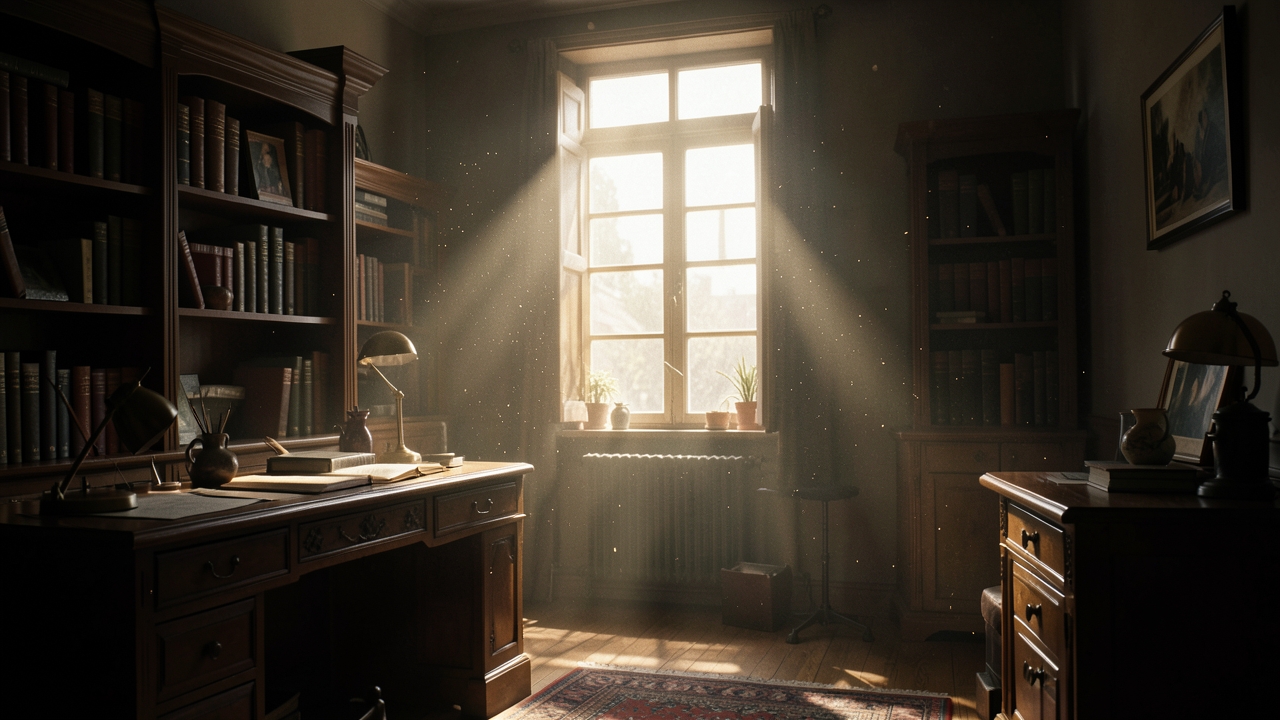
Do you ever feel the weight of words left hanging in the air of a room, the ghost of a sentence that was never uttered? What if you could give those spectral phrases a form—not for the world, but for the stark privacy of the page? This is the profound, unsettling power of the unsent letter writing prompt, a craft tool that invites you to channel the very spirits of unfinished conversations.
The Theory of Writing with Ghosts: Why the Unsent Letter Works
The unsent letter is a liminal space. It exists between the internal monologue and the spoken word, between confession and silence. It is a confession booth for the self. In this realm, the writer is unshackled from the fear of consequence, allowing a raw, unfiltered voice to emerge. This is not mere journaling; it is the act of addressing a specific, phantom audience—a lost love, a departed parent, a former self—with brutal honesty.
As literary masters have shown, this form is a vessel for potent emotions. Consider the chilling, self-addressed ramblings in Edgar Allan Poe’s “The Black Cat,” where the narrator’s confession feels like a letter to a jury he both fears and despises. The unsent nature amplifies the madness. Similarly, in Shirley Jackson’s *We Have Always Lived in the Castle*, the protagonist’s internal confessions feel like correspondence with a world that has wronged her. The key, therefore, lies in this private audience. It provides a focus for the emotion, transforming vague grief or anger into a targeted, narrative force.
Anatomy of the Unsent Confession
A successful unsent letter story isn’t just a rant. It has a narrative arc, a change in the narrator’s psyche, however subtle. The writer should begin with an intention—perhaps to blame, to apologize, to remember—and should end in a different place: in understanding, in deeper sorrow, or in cold resolution. For example, Gillian Flynn’s characters, like Amy Dunne in *Gone Girl*, craft narratives of self with a specific, if twisted, recipient in mind, showing how a constructed letter, even if fictional within the fiction, reveals a character’s true self.
You must build the ghost of the recipient on the page. We don’t need a full biography, but we need to feel their presence in the lines between the words. What does the narrator assume about this ghost? What shared history is referenced without explanation? This creates a web of intimacy that pulls the reader in, making them feel like they are peering at something sacred and forbidden.
Crafting the Void: Techniques for the Unsent Letter Prompt
To channel this prompt effectively, one must cultivate a specific mindset. First, embrace the lack of an audience. Write as if no one—absolutely no one—will ever read these words. This is the key that unlocks the door to the censor’s chamber. Second, anchor the letter in a sensory detail. A scent, a song, a texture. This grounds the abstract emotion in a concrete, storytelling moment. In Daphne du Maurier’s *Rebecca*, the unnamed narrator is constantly haunted by sensory details of the first Mrs. de Winter, a ghost she writes to in her mind constantly.
Consider also the power of what is unsaid. The most devastating lines are often the ones the narrator starts and then abandons. Use ellipses, dashes, or abrupt paragraph breaks to simulate a thought too painful to complete. This technique, used masterfully by Tana French in her psychological mysteries, creates a hollow space on the page that the reader’s imagination must fill, often with something more disturbing than the writer could articulate.
Common Pitfalls in the Shadow
However, caution is needed. One common pitfall is the descent into unadulterated melodrama. The power is in specificity, not in vague, shouted adjectives. Another pitfall is making the letter purely explanatory; it should be exploratory. The narrator isn’t telling the ghost something they don’t know; they are discovering what they themselves truly feel by writing it down. As Jorge Luis Borges might suggest, the letter becomes a labyrinth the writer enters to find a truer, darker version of themselves.
The Draft in the Desk Drawer
My Dearest Elara, The autumn leaves are performing their annual, gorgeous suicide on the lawn. You always called it “gorgeous.” I never could see it that way until now. It feels more honest. I am writing because I found the key to your old writing desk. The one you said you’d lost. It was in the drawer of the nightstand, under the copy of that Borges collection you loved. The brass key is cold. It feels like a secret, and I suppose that’s what it was. A key to the box I never knew existed, the one containing all the letters you wrote and never sent. To me. To your mother. To the version of yourself that got on that train in Lisbon and never looked back. I am not angry anymore. That’s what I thought this letter would be—a torrent of blame for the silence, for the abandonment. But seeing your handwriting, the slant of it, the way you crossed out “my” and wrote “our” future, something has shifted. I am not writing to you, I think. I am writing to the ghost of the person who would have sent these, the person who held a pen and trembled with the need to speak. I understand that tremor now. It is the vibration of a heart that feels too much, that believes its own truth would shatter the world. I forgive you. Not for you—for me. This letter, this… thing I am crafting in the dusk of your memory, is not a weapon or a plea. It is a burial shroud for my own resentment. I am sewing it shut with words you will never hear. The real conversation, I see now, was never meant to be heard. It was meant to be survived. And here I am, surviving it, by finally letting you speak, here in the silence where you always were. Yours, in the after, (And this is where I would sign my name, but I think, perhaps, I will leave it blank. A final, fitting silence.)The Echo in the Conclusion
The unsent letter is an act of reclamation. It takes the haunting energy of an unresolved past and gives it form, a body made of ink and confession. It allows us to speak to our ghosts, not to change them, but to finally be heard by ourselves. In the end, the most important recipient is the one holding the pen. The act of writing it is the catharsis; the letter remains, a secret testament to a conversation with the void.
You now hold the key to a desk drawer in your own mind. What spectral conversation waits in the dust for you to give it voice? What truth, locked away for fear of its echo, might finally be laid to rest if you simply wrote it down, sealed it with silence, and let it be? The prompt is before you. The ghosts are listening.
For more on crafting atmosphere and emotional depth, explore our guide on Weaving Gothic Atmosphere into Modern Prose or examine the role of unreliable narrators in Gothic fiction. Further reading on the epistolary form can be found at the Poetry Foundation.