
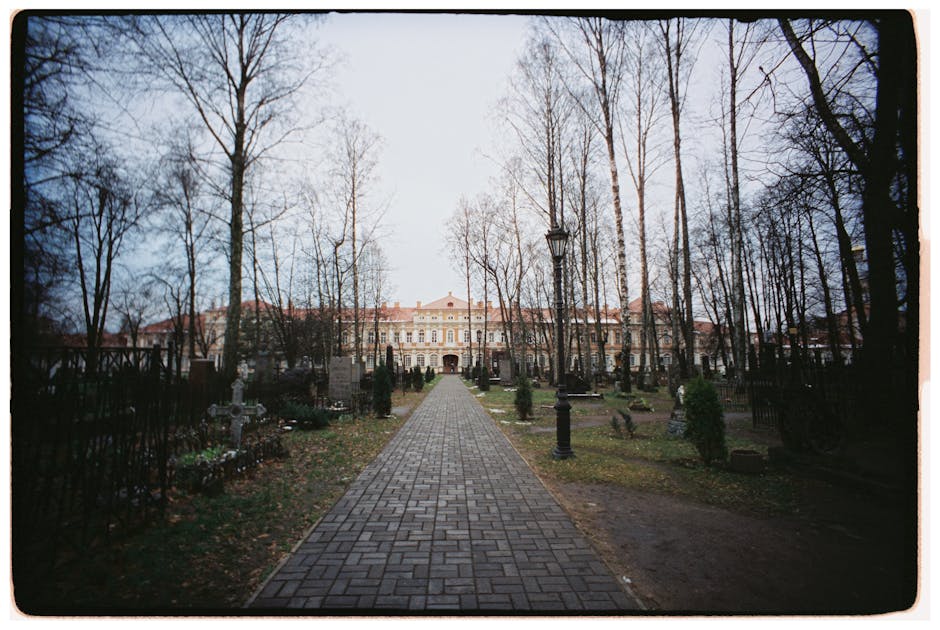
What if the setting itself could whisper the story’s terrible secret? What if the very air in a room could feel heavy with unspoken history? This is the profound challenge and the exquisite pleasure of crafting a gothic atmosphere. As we continue our weekly journey into the craft, this writing prompt asks you to make the environment your most potent character.
In Part 1, we examined the skeleton of plot. Part 2 gave voice to our characters. In Part 3, we learned to distrust the very words on the page. Now, we turn outward, to the shadow-drenched stage upon which our tales unfold. We learn to build not just a setting, but a mood; not just a place, but a pervasive, unforgettable dread.
The Anatomy of a Gothic Atmosphere
A true gothic atmosphere is more than a list of dark descriptors. It is an alchemical fusion of setting, sensory detail, and emotional resonance. It is the palpable feeling that the ordinary world has been peeled back to reveal something ancient and unnerving beneath.
Sensory Seduction: Beyond Sight
Novice writers often rely on sight alone: shadows, darkness, decay. But a master craftsman like Daphne du Maurier, in Rebecca, engages every sense. The scent of azaleas and the damp chill of Manderley’s corridors are as crucial as the visual gloom. The atmosphere enters the reader’s body.
Therefore, when building your world, ask: What does the air taste of? (Dust? Damp stone? Old perfume?) What does the silence sound like? (The groan of settling wood? The distant, muffled sea?) What does the velvet on the chair feel like? (Frayed? Cold? Laced with someone else’s sweat?) This sensory weaving is the first thread of your atmospheric tapestry.
The Memory of Walls
Every space holds memory. As Tana French masterfully demonstrates in The Haunting of Hill House, a location is a palimpsest. It is written over, but the old inscriptions show through. The wallpaper pattern that echoes a scream, the scuff mark on a floorboard from a long-gone argument, the faint indentation on a cushion where a beloved phantom once sat. Your task is to unearth these traces. They transform a house into a repository of lingering sorrow.
Whatever walked there, walked alone.
— Shirley Jackson, The Haunting of Hill House
This famous line isn’t about a ghost; it’s about the atmosphere of loneliness the house itself exudes. The architecture of dread is built from such quiet, suggestive details.
Emotional Resonance: The Atmosphere Within
The external atmosphere must mirror or counterpoint the internal state of your protagonist. In Frankenstein, Mary Shelley uses the sublime terror of the Alps not merely as a backdrop for Victor Frankenstein’s chase, but as a direct reflection of his monumental, isolated ambition and horror. The landscape is his soul made manifest.
Consequently, your atmospheric choices should serve a psychological purpose. A character drowning in guilt might perceive the sunlight as accusingly bright. One teetering on the edge of madness might find a strange, seductive order in the chaotic patter of rain on a window. For example, the meticulously described, decaying opulence of Casa Lacan in Silvia Moreno-Garcia’s Mexican Gothic directly ties to the family’s rotting legacy and Noemí’s suffocating entrapment. The atmosphere is a physical manifestation of thematic decay.
The Prompt: Your Exercise in Crafting Dread
This week’s challenge is to exercise these atmospheric muscles. Your prompt is a scenario, but the true test is in the telling.
Weekly Prompt #4: A character inherits a remote, coastal home from a relative they never knew. Upon arriving, they find the house is not empty. It is filled with hundreds of uncanny, handmade objects—each one exquisitely crafted, each one slightly wrong. Write the first 1,000 words of their first night alone in the house.
Do not focus on plot twists or dialogue. Instead, your primary goal is to build an atmosphere so thick the reader can feel the salt air and the creeping unease on their skin. How does the house smell of brine and lacquer? How does the wind whistling through a poorly fitted window sound like a sustained, mournful note? What forgotten emotion do the objects seem to radiate?
A Case Study: The Lacquer and the Lullaby
Below is a demonstration of these principles in action, using the prompt as its seed.
The air did not simply smell of the sea; it tasted of brine and old lacquer, a sticky, sweet tang that coated the back of my throat. Each step on the warped floorboards released a different sigh—one groaned in a low register, another gave a high, splintering complaint. I had expected emptiness. I had expected dust. Instead, the parlour was populated.
On a side table sat a ship in a bottle. But its sails were not cloth; they were stitched from what looked like fine, grey fingernail clippings, and the bottle held not water, but a viscous, yellow fluid that clung to the glass. Above the mantle, a dozen small portraits were arranged. They depicted, I assumed, various relatives. Yet in every painting, the sitter’s mouth had been subtly altered by the artist. Some were sealed with a thin, gold seam. Others were twisted into a silent ‘O’ of surprise. Not one was allowed to smile, or frown, or speak.
I touched the cool porcelain of a music box on the sill. The lid was engraved with a wave pattern that seemed to move when I looked at it from the corner of my eye. My fingers, trembling, found the crank. A tune tinkled forth—a lullaby, perhaps, but the notes were just slightly flat, warbling like a drowned thing trying to sing. It did not comfort. It announced. It said, quite plainly: you are not the first to turn this crank. You are not the first to listen.
The wind shifted, bringing a new scent: damp earth and something else. Something like hot metal and iron. A single, perfect seashell rested on the arm of a chair. As I stared, a dark, wet patch began to bloom on the upholstery beneath it, spreading slowly, as if the shell itself were weeping. I did not pick it up. I did not move. I simply stood there, in the center of that room, feeling the walls of wrongness press in, understanding that this inheritance was not of property, but of presence. The house was awake, and it had been waiting.
Conclusion: Where Setting Becomes Sentence
As we have seen, a gothic atmosphere is a deliberate, crafted thing. It is built from the ground up, with sensory bricks and mortar of memory. It serves the story’s emotional core, wrapping the reader in a veil of beauty and dread. By mastering this craft, you learn that setting is never passive. It is an active, haunting force.
Your turn, then, to descend into that inherited house. What will the walls whisper to you? And what terrible, beautiful story will unfold from their silence?
For further exploration of mood, consider our deep dive into The Shadow Between Words: Subtext in Fiction.