
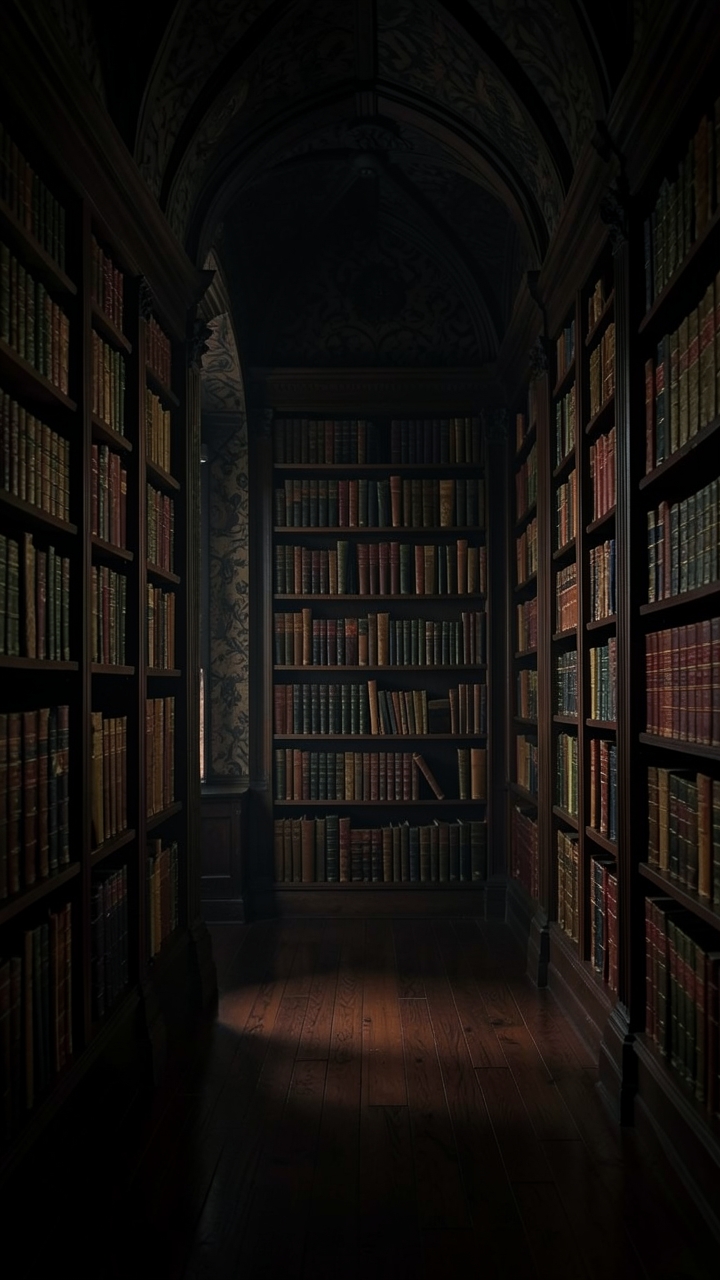
What whispers in the dark corners of the human soul, and how does one capture its echo on the page? This is the perpetual question haunting the writer who dares to delve into the shadows. Crafting gothic fiction is not merely about cobwebs and crumbling manors; it is about excavating the architecture of dread, the geometry of fear, and the haunting silence between heartbeats. It is an alchemy of setting and psyche, where the external world becomes a terrifying mirror of internal ruin.
Therefore, to master this potent genre, one must understand its anatomy. For example, Edgar Allan Poe did not simply write haunted houses; he built prisons of the mind, like in “The Tell-Tale Heart,” where the beating heart is the ultimate unreliable narrator. Similarly, Daphne du Maurier wove coastal winds into sentient, jealous forces in Rebecca, proving that atmosphere itself can be the antagonist. In this guide, we will dissect the essential components that make gothic tales endure, echoing from the crypts of the 19th century to the modern thriller.
The Anatomy of a Haunting Atmosphere
The foundation of crafting gothic fiction lies in atmosphere. It is the first character introduced, the mood that seeps into the reader’s bones. Think of the sentient storms in Wuthering Heights or the oppressive, fog-choked London of Charles Dickens. This atmosphere is built through meticulous sensory detail—not just what is seen, but what is felt, heard, and smelled.
Sensory Palette: Beyond Sight
Engage all senses to create immersion. For instance, H.P. Lovecraft, in stories like “The Shadow over Innsmouth,” uses olfactory descriptions of brine and decay to evoke cosmic dread. He makes the reader physically recoil. Similarly, describe the “clammy chill of stone” or “the scent of ancient dust and forgotten secrets.” These details are the mortar of your haunted world. Furthermore, silence is a potent tool. As Shirley Jackson demonstrated in The Haunting of Hill House, the absence of sound can be more terrifying than any shriek, allowing the reader’s imagination to fill the void with its own horrors.
The Unreliable Narrator and Psychological Terror
Gothic fiction excels at blurring the line between reality and madness. The narrative perspective is your most crucial weapon. An unreliable narrator forces the reader into a state of paranoia, questioning every revelation. Poe was the master of this, as seen in “The Black Cat,” where the narrator insists upon his sanity while confessing to horrific acts.
Fostering Doubt and Disorientation
To achieve this, craft a narrator who is in denial, who rationalizes the irrational. Moreover, use fragmented syntax or obsessive repetition to mirror a fracturing mind. This technique creates a claustrophobic intimacy. For example, the protagonist in Charlotte Perkins Gilman’s “The Yellow Wallpaper” descends into psychosis through a narrative that slowly detaches from objective reality. The lesson here is clear: make the reader complicit in the narrator’s unraveling, trapping them inside the same suffocating perspective.
Symbolism and the Architecture of Dread
Objects and settings in gothic tales are never merely decorative. They are loaded with symbolic weight, foreshadowing doom or embodying a character’s inner turmoil. The house in “The Fall of the House of Usher” is not just a setting; it is Roderick Usher’s mind made manifest, its fissures mirroring his sanity.
Mirrors, Portals, and Decaying Structures
Choose symbols with dual potential for beauty and terror. For example, a mirror can reflect truth or conceal a ghostly presence. A labyrinthine hallway represents a confused psyche. Furthermore, consider the works of Angela Carter, who reimagined gothic symbolism in The Bloody Chamber, transforming fairy-tale tropes into visceral critiques of power and gender. She shows us that decay can be both physical and moral. Therefore, every object in your story should serve a symbolic purpose, deepening the narrative’s resonance.
Common Pitfalls in the Shadowy Craft
Many writers falter when crafting gothic fiction by relying on cliché or neglecting emotional core. Simply placing a ghost in a castle is insufficient. The horror must feel earned and unique.
- Over-reliance on gore: Psychological terror often outweighs graphic violence. The unseen, like the creature in Mary Shelley’s Frankenstein, often haunts more than the explicitly described.
- Neglecting character motivation: The supernatural should externalize an internal conflict. In Tana French’s In the Woods, the haunted forest is a metaphor for repressed trauma.
- Static settings: The environment should interact with the plot. Gillian Flynn masterfully uses the crumbling Southern manor in Dark Places to unravel a family’s secrets, making the house an active participant in the mystery.
A Case Study: The Whisper in the Walls
Below is an original short story that demonstrates the principles of atmosphere, unreliable perspective, and symbolic decay discussed above.
I heard the whisper first in the library, where the spines of books formed a silent, judging audience. It was not a sound, precisely, but a pressure against the ear—a sibilance woven from the draft under the door and the settling of the ancient oak shelves. My family has always said the manor, Blackwood Grange, was merely old. But age implies mere passage of time. This house felt arrested, stuck in a permanent dusk of its own making. Since my father’s death, I had been cataloging his effects in that library, surrounded by the leather-and-dust scent of his intellect. The whisper grew clearer each night, not in words, but in intent: a summons.
It led me to the west wing, a section of the house I’d been forbidden to enter since childhood. The air here was colder, the silence denser. A portrait of my great-aunt Elara hung at the end of the corridor, her eyes seeming to follow not my body, but some hollow space behind me. The whisper became a murmur, and the murmur a soft, insistent pulling. I found the door it emanated from—unlocked, though the key had been lost for decades. Inside was a nursery, preserved in a state of eerie perfection. A rocking horse stood mid-rock. A mobile of carved moons turned slowly, though there was no breeze. The symbol was clear: a preserved innocence, a arrested development. The room was not haunted by a ghost, but by a memory so potent it had saturated the very plaster.
In the corner, a small diary lay open on a child’s desk. My great-aunt Elara’s diary. I read of her terror, of a presence she called “The Quiet Friend” who whispered promises of secrets from behind the nursery wallpaper. She wrote of her father, my great-grandfather, dismissing her fears as fantasy. The last entry described her plan to make the Friend leave by covering every inch of the walls with her own drawings, a barrier of art against the intangible. I looked up. The walls were indeed covered, not with drawings, but with intricate, frantic pencil etchings—thousands of tiny, interlocking eyes and mouths. The horror was not supernatural, but profoundly human: a child’s absolute terror, ignored and left to fester until it physically remade her world. The whisper I’d heard was the echo of that unanswered cry, a resonance trapped in the architecture of neglect.
I did not run. I sat on the small chair, the diary in my lap, and finally listened. The whisper did not cease, but its meaning transformed. It was no longer a summons to madness, but a request for acknowledgement. I picked up a pencil from the desk. I would not cover the walls. I would add to them, carefully, deliberately. I would translate the frantic etchings into something coherent, a testament. In crafting gothic fiction of my own—this act of recording—I would finally give the whisper a form it could live in, and perhaps, allow it to finally rest.
The Enduring Echo: Why We Write the Darkness
The techniques of atmosphere, psychology, and symbolism are tools, but the heart of crafting gothic fiction is an exploration of eternal human questions. What do we fear when we are alone? What secrets do we bury in the cellars of the mind? Like Poe, who explored the boundaries of guilt and madness, we write these tales to stare into the abyss, as Nietzsche warned, aware that it may stare back. Yet, in that mutual gaze, there is a strange form of understanding. We use the shadows not to hide, but to illuminate the darkest, most complex corners of what it means to be alive.
So, the writer sits in their quiet room, the cursor blinking like a distant lighthouse in a sea of darkness, and asks: what truth will I unearth from the shadow today?