
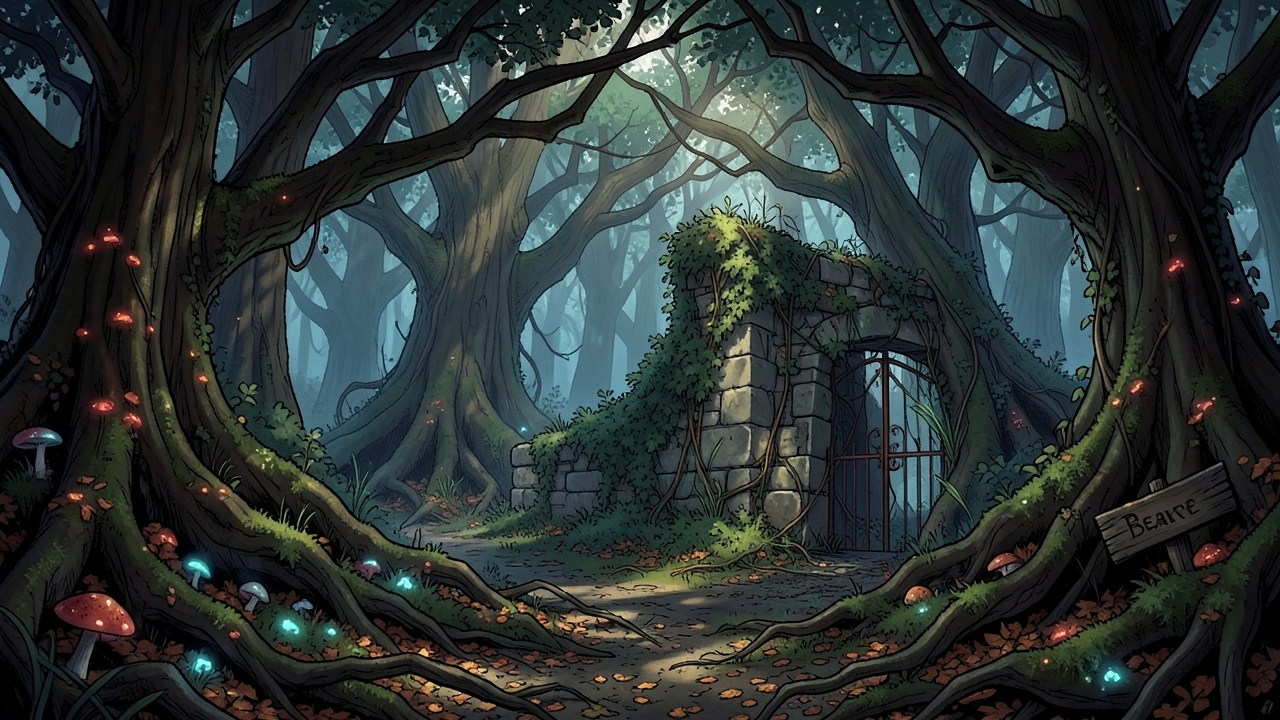
Does the true locus of terror no longer lie within crumbling manors, but within the crumbling ozone layer itself? In 2026, the ghosts we fear are not specters of the past, but portents of a future we have poisoned. This is the domain of eco-gothic fiction, a potent evolution of the genre that weds traditional dread with the acute, systemic horror of climate collapse. Its techniques do not merely use the environment as a backdrop; they make the environment the antagonist, the victim, and the vengeful judge. To master eco-gothic fiction techniques is to understand how our oldest narrative fears can be resurrected to confront our most modern anxieties.
The Theory of Poisoned Places: Core Eco-Gothic Fiction Techniques
The traditional haunted house operates on a principle of containment. The evil is localized, historical, and often personal. Eco-gothic fiction techniques, however, shatter these walls. They distribute the haunting across entire watersheds, atmospheres, and food chains. The horror is no longer contained; it is systemic, pervasive, and inescapable. Let us dissect the core craft of this modern affliction.
Technique 1: The Landscape as a Sick Organism
A fundamental shift lies in rendering the setting as a living, breathing, and suffering entity. This goes beyond pathetic fallacy. In eco-gothic fiction techniques, the polluted river is not merely “angry”; it is septic, fevered, and muttering its own fluid curses. Consider the toxic marshlands in Silvia Moreno-Garcia’s work, where the ecosystem’s illness infects the community’s psyche. To write this effectively, personify the environment with visceral, biological language. A forest does not just “stand”; it “broods.” A coastline does not “erode”; it “bleeds sediment.” The landscape becomes a character with a desperate, wounded agency.
Technique 2: Natural Revenge as Inevitable Consequence
The classic ghost seeks vengeance for a specific, personal wrong. The eco-gothic entity, however, enacts a form of diffuse, karmic retribution. Its revenge is not for a murder in the parlor, but for a century of emissions, for plastic that chokes the deep, for silence where birdsong once was. This is a key differentiator among eco-gothic fiction techniques. Andrew Michael Roberts, in his analysis of the eco-gothic, notes how it explores “our anxiety about our own agency” in ecological destruction (Poetry Foundation). The horror emerges from a grim sense of natural justice. For example, a community poisoned by industrial runoff might find their crops yielding a bitter, hallucinogenic fruit. The revenge is not a specter; it is a bio-accumulated toxin in the food chain.
Technique 3: Polluted Spaces and the Uncanny
The uncanny—that unsettling feeling of the familiar made strange—is central to the gothic. Eco-gothic fiction techniques weaponize this by applying it to our most familiar spaces: a park, a beach, a backyard stream. The horror lies in the minute, wrong details. A rainbow sheen on a puddle that smells of chemicals. A forest floor carpeted not with leaves, but with non-biodegradable waste that crunches unnaturally. This is “the polluted uncanny,” as theorized by literary scholars. It transforms the mundane into a source of profound disquiet. Your task as a writer is to linger on these details, forcing the reader to recognize the alien in their own backyard.
Common Pitfalls to Avoid
Beware the didactic sermon. Eco-gothic is not a research paper or a polemic. It is a story of human terror. Therefore, the climate anxiety must be the engine of the plot, not its thesis. The decay should be felt in the characters’ lungs, tasted in their water, and feared in their dreams. For a masterclass in blending personal and planetary dread, study the way Shirley Jackson used the isolated community in We Have Always Lived in the Castle to explore insidious corruption—now imagine that corruption seeping from the very soil beneath their feet.
A Case Study: The Last Tide
The salt had died. Mara knew it before she reached the cove, tasting the air—a thin, chemical tang that coated the throat. Where her father once taught her to read the brine’s depth and promise, now only a stagnant stillness lay. The water, a bruised purple, did not lap at the shore; it seeped, leaving a slime that glowed faintly in the dusk. It was the color of a dead thing’s veins.
Her net came up heavy, not with silver flip, but with a clotted mass. The fish were there, but fused. Scales merged into smooth, plastic-like flesh. Eyes, dozens of them, blinked from a single, tormented face. They did not flop; they pulsed, a wet, rhythmic shudder that vibrated up the twine into her bones. The sea was no longer birthing life; it was stitching together nightmares from our castoff sins.
Mara stumbled back to her shack, the image branded on the inside of her eyelids. That night, she did not dream of her father’s fishing boat. She dreamt of a vast, tidal mouth, made of sludge and discarded bottles, chewing slowly on the horizon. She woke to a soft, insistent knocking at her door. No one lived for miles. The knocking came from beneath her floorboards, a wet, patient tapping, as if the poisoned cove had come to call.
Conclusion: The Echo in the Ecocide
Eco-gothic fiction techniques do not offer the clean scare of a slamming door. They offer the slow, creeping dread of a door that has swelled shut, warped by a world that no longer fits the shape of our expectations. They force us to see our hauntings not as aberrations from the past, but as the inevitable echoes of our actions reverberating forward. In this age of ecological grief, the most terrifying haunted house is the one we are building, molecule by molecule, in our own atmosphere.
So, as you craft your next tale of terror, ask yourself: will the monster come from the closet, or will it rise from the rising tide? For in the bleak lexicon of the modern gothic, the truest ghost is the one we have created from the world itself.
For further reading on crafting atmospheric dread, explore our guide to describing gothic settings. To understand how classic tropes are subverted, see our analysis of the modern horror protagonist.
(Sources and further inspiration: Poetry Foundation’s “Eco-Gothic”; Literary Hub’s essays on climate fiction; Andrew Michael Roberts’ academic work on the eco-gothic imagination.)