
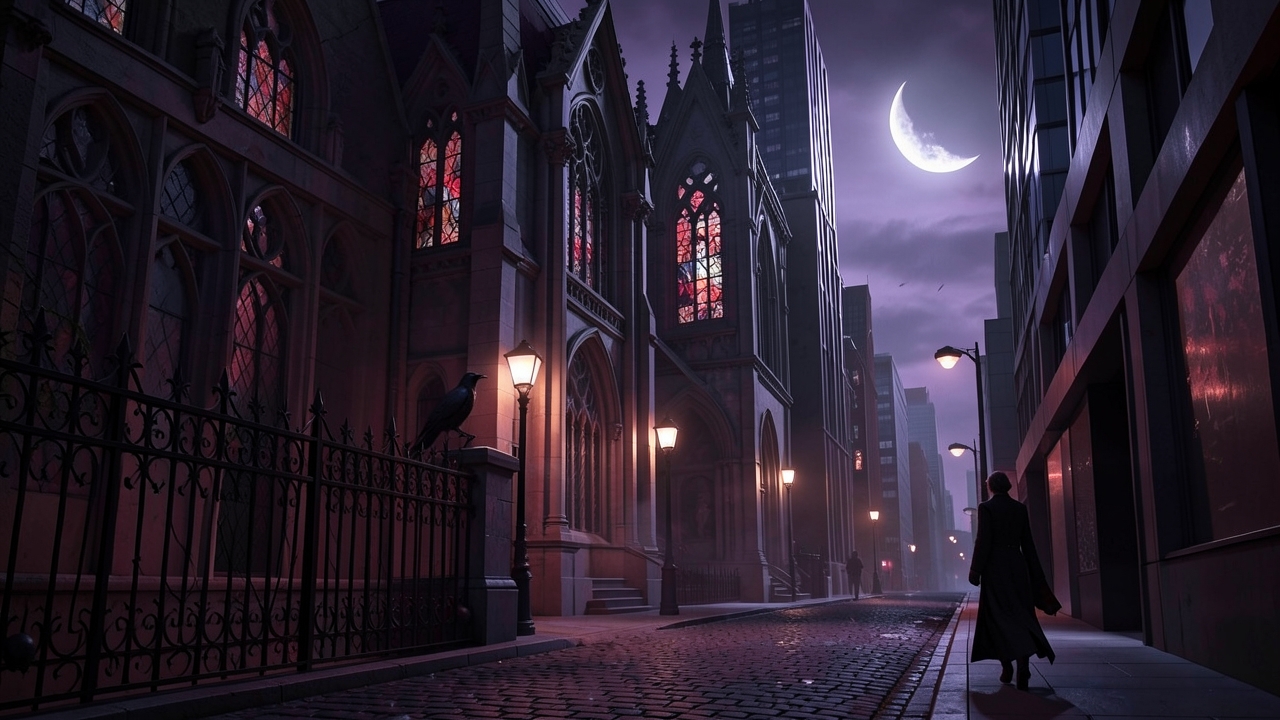
Is there a more potent symbol of the crumbling self than a grand, silent house? In the hands of the modern gothic author, decaying estates cease to be mere backdrops. They become active, breathing metaphors. They are the psyche laid bare—its memories trapped, its foundations fractured, its rooms dark with unspoken history. This use of modern gothic symbolism does more than set a spooky mood. It maps the very architecture of psychological decay in our hyper-connected yet profoundly isolated digital age.
Theory of the Haunted House: Crafting Metaphor from Masonry
The classic haunted house, a trope perfected by masters like Shirley Jackson in The Haunting of Hill House, was often a vessel for personal or familial ghosts. The modern gothic writer, however, often rewires the symbolism. Today, the decaying estate frequently mirrors a mind besieged by digital noise, historical trauma, or existential fragmentation. It is no longer just haunted by the past; it is actively rotting from the inside out, a condition of the present.
Anatomy of the Ruin: Specific Architectural Metaphors
To wield this symbolism effectively, a writer must treat the house as a character with a psychology. Every cracked window and overgrown garden is a detail of its—and the protagonist’s—inner state.
Consider the crumbling foundation. This is not merely structural failure. It represents the unstable ground of identity, the erosion of core beliefs in a world of shifting digital realities. The sagging roofline suggests a mind under immense pressure, unable to keep the elements—grief, anxiety, information overload—at bay. For instance, in Silvia Moreno-Garcia’s Mexican Gothic, the very walls of the house sweat and pulsate with a colonial sickness, making the corruption visceral and environmental.
Meanwhile, rooms full of dust and abandoned objects become museums of stagnant thought. They hold the debris of memory—letters, photographs, obsolete technology—that the narrative mind cannot discard. In contrast, the encroaching wilderness, vines forcing through floorboards, symbolizes the subconscious or repressed desires violently reclaiming territory.
The Digital Age Haunting: New Layers of Decay
Modern gothic symbolism uniquely captures contemporary anxieties. The house’s isolation can mirror social media echo chambers—a grand, self-referential space cut off from the real world. Flickering lights or sudden cold spots might evoke the unstable connection of a video call, the ghost in the machine made literal. As a recent article on Froie.com explored, technology itself becomes a new form of haunting, and the estate becomes its physical manifestation.
Writers must therefore ask: what is the specific poison in this particular house’s air? Is it legacy guilt, like in a Henry James story? Or is it the paralysis of endless choice, a labyrinth of doors (or browser tabs) with no clear path forward? The decay must feel specific to its era’s psychological wounds.
Common Pitfalls in Depicting Decay
One common failure is letting atmosphere overwhelm meaning. A decaying estate must serve the theme, not just the aesthetic. Every peeling wallpaper should resonate with character or plot. Another pitfall is incoherence; the symbolism should feel organic to the house’s imagined history, not randomly applied. As noted by literary critics at The Guardian, the best gothic tales achieve a seamless blend of the external and internal.
Furthermore, avoid cliché. Do not rely solely on cobwebs and thunderstorms. Let the decay be more insidious. For example, a house where the wallpaper pattern subtly shifts when unobserved can symbolize a fracturing perception of reality more effectively than a simple ghostly apparition. The decay should feel alive, a process, not a static condition.
A Case Study: The Signal House
The house did not so much stand as lean, a tired old man perpetually bracing against the coastal wind. Its windows, film-blinded with salt and age, stared out at the grey Atlantic with a cataract gaze. Eleanor, the last keeper’s daughter, now its sole inheritor, felt the structure’s exhaustion in her bones. The decay was not a sudden collapse but a slow, humid rot, a seeping of the past into every joist and beam.
She found the true wound in the library. Here, the former keeper had amassed a towering, chaotic archive of shipwreck logs and local obituaries, all digitized onto decaying hard drives that now cluttered the room like metal tombstones. This was the house’s brain—a mind choked with unprocessed data. Every morning, she logged into the old network, a digital séance to keep the data alive, to prevent the final, catastrophic deletion. The house, with its failing wiring and moaning pipes, seemed to groan in sympathy with the whirring drives. Its physical decay was the perfect mirror for the information rot within, a legacy of memory she was tasked with curating into senselessness.
The Echo in the Empty Hallway
The decaying estate, therefore, is the ultimate canvas for modern gothic symbolism. It allows the writer to externalize the invisible fractures of the human psyche with tangible, atmospheric force. From the sagging floors of mental instability to the data-choked rooms of digital overwhelm, these houses are not just places where stories happen; they are the story.
As we navigate a world of increasing abstraction and dislocation, the need for such grounding metaphors grows. The crumbling mansion remains, ironically, a sturdy framework for our most fragile fears. So, when you next sketch a dark house on the page, ask yourself this: whose mind is this, truly, and what forgotten thing is now forcing open the door?