
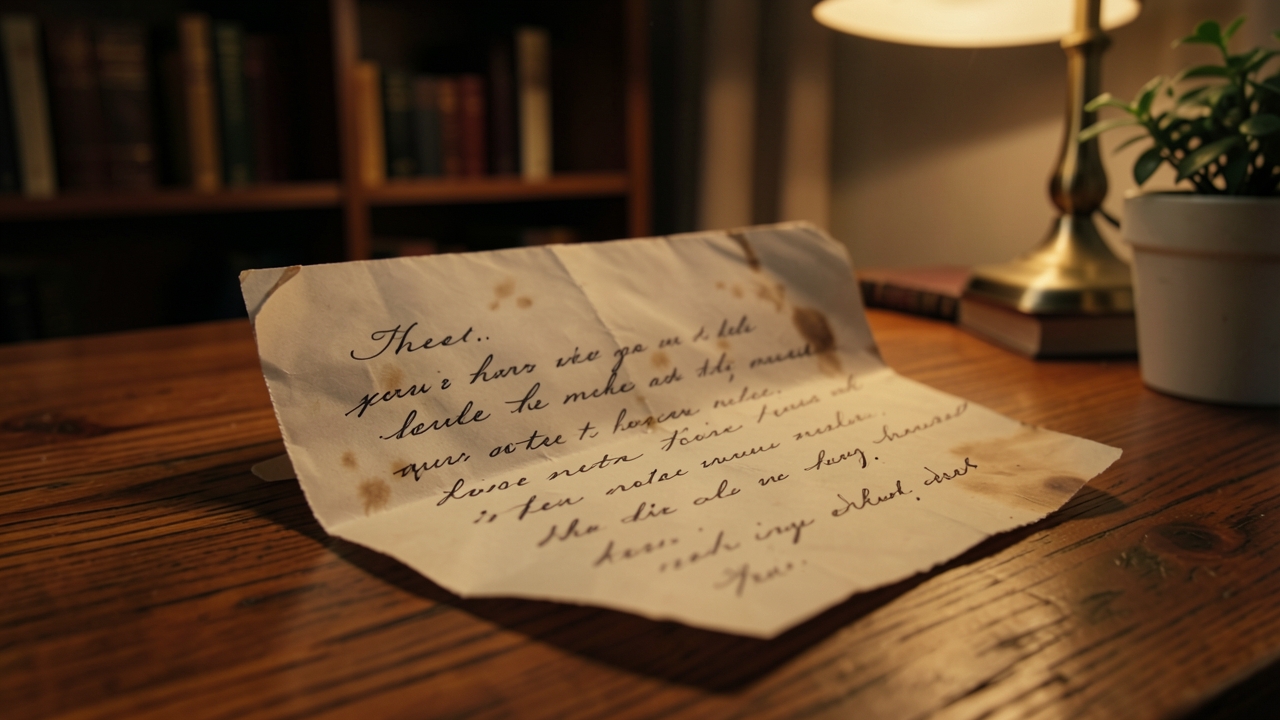
Have you ever held a letter in your hand, one poured from the deepest recesses of your soul, only to feel the weight of its unsent silence? The unsent letter prompt invites writers into such shadowy corridors, where words linger in the air, charged with postponed communication. In the realm of storytelling, this device becomes a potent tool for psychological excavation, revealing what characters dare not say aloud. Therefore, let us delve into the art of crafting these spectral communications, where every unspoken syllable hums with dramatic irony and unresolved tension.
The Psychology of the Unsent Letter Prompt
An unsent letter exists in a liminal space—neither fully expressed nor entirely suppressed. Consequently, it becomes a mirror to the human psyche, reflecting desires, regrets, and fears that characters may hide from the world. For instance, in Edgar Allan Poe’s “The Tell-Tale Heart,” the protagonist’s internal monologue functions like an unsent confession, spiraling into madness. Similarly, the unsent letter prompt forces writers to tap into this interiority, crafting narratives where silence speaks louder than words.
This prompt thrives on postponement. Communication is delayed, perhaps forever, creating a vacuum where dramatic irony flourishes. Readers often know more than the characters, heightening emotional stakes. Moreover, the act of writing but not sending can signify isolation, fear, or self-censorship. In Daphne du Maurier’s Rebecca, letters serve as cryptic clues to the past, echoing the unsaid tensions between characters. Thus, the unsent letter becomes a metaphor for the human condition—our constant negotiation between expression and restraint.
Crafting Unresolved Tension
Unresolved tension is the lifeblood of gothic and psychological fiction. When a character writes a letter they never send, the narrative gains a layer of potential energy—words that could change everything but remain dormant. Therefore, writers must carefully balance revelation with secrecy. For example, in Shirley Jackson’s We Have Always Lived in the Castle, the protagonist’s unspoken thoughts build a pervasive dread. Similarly, an unsent letter can heighten suspense by leaving outcomes uncertain.
To master this, focus on specific techniques. First, use visceral details to convey emotion—describe the quill scratching parchment, or the ink smudging from tears. Second, employ contrasts: a letter filled with love might sit beside a weapon, symbolizing hidden motives. In addition, consider the physical object itself—a sealed envelope tucked in a drawer, its edges worn from handling. This tangible element anchors the abstract tension, making it palpable for readers.
Dramatic Irony as a Narrative Tool
Dramatic irony occurs when the audience possesses knowledge that characters lack. The unsent letter prompt naturally engenders this, as readers glimpse the full text while other characters remain unaware. For instance, in Tana French’s In the Woods, secrets withheld from protagonists create layers of irony. Similarly, an unsent letter can reveal a character’s true intentions, while other characters in the story operate under false assumptions.
To enhance dramatic irony, ensure the letter’s content contrasts sharply with the character’s public persona. A timid librarian might write a furious, unsent missive to a critical boss. This discrepancy invites readers to question reality, deepening engagement. Furthermore, use the unsent letter to foreshadow events—perhaps a prophetic warning that goes unheeded, leading to tragedy. As a result, the narrative gains prophetic weight, echoing the fatalism of Poe’s “The Masque of the Red Death.”
Character Revelation Through Silence
\p>What remains unspoken often defines a character more than dialogue. The unsent letter becomes a vessel for hidden truths, allowing writers to reveal vulnerabilities without explicit confrontation. For example, in H.P. Lovecraft’s stories, protagonists frequently document unspeakable horrors in journals they fear to share, mirroring the unsent letter’s taboo. Therefore, use this prompt to expose inner conflicts—a character’s longing for reconciliation, or a confession of guilt.Consider Silvia Moreno-Garcia’s Mexican Gothic, where letters unravel family secrets. Similarly, an unsent letter can serve as a confessional, laying bare desires or shames. However, avoid melodrama; subtlety is key. A single, well-placed line—such as “I forgive you, though you never asked”—can resonate more than pages of exposition. In addition, the act of composing the letter can reveal habits, like meticulous handwriting or frantic scribbles, adding texture to character portrayal.
Common Pitfalls and How to Avoid Them
While the unsent letter prompt offers rich possibilities, it can falter if mishandled. One common pitfall is overexplanation. Writers might dump exposition into the letter, slowing the narrative. Consequently, keep the letter’s content focused and evocative, not merely informational. Another pitfall is contrivance—the letter must feel organic to the character’s journey, not inserted for effect. For instance, in Angela Carter’s The Bloody Chamber, letters are woven seamlessly into gothic tales, enhancing rather than disrupting flow.
Additionally, avoid resolving the tension too neatly. The power of the unsent letter lies in its incompleteness. Therefore, leave some questions unanswered—perhaps the letter is destroyed, or discovered too late. This ambiguity lingers, much like the unresolved chords in a piece by Haruki Murakami, where reality blurs with the surreal. Finally, ensure the letter advances plot or character development; it should not be a static artifact but a dynamic force in the story.
A Case Study: The Whispered Words
Below is an original short story demonstrating the techniques discussed. Notice how the unsent letter functions as a tool for psychological depth and dramatic irony. The letter lay on the mahogany desk, its edges yellowed like old bone. Elara had written it three years ago, after the fire that took her sister, Lyra. Now, in the dim light of the library, she traced the ink: “I should have told you the truth about the will. I should have said I was afraid.” The words were a whisper, never meant to travel beyond these walls. She sealed the envelope that night, but it remained here, a ghost among leather-bound books. Meanwhile, her brother, Julian, moved through the house, his footsteps echoing like accusations. He believed Lyra’s death was an accident, but Elara knew better. The letter held her confession—she had hidden the will, fearing disinheritance. Dramatic irony hung thick: Julian searched for clues, unaware that the answer sat mere feet away, sealed in wax. Each day, Elara considered burning it, but the act felt like erasing Lyra’s memory. The tension unraveled slowly, a fracture in the family’s facade. One evening, Julian entered the library as Elara hovered near the desk. “I found something,” he said, holding a charred fragment—proof of a second fire, one she had set to destroy evidence. Her heart hollowed. The unsent letter had become a double-edged sword: its silence had protected her, but now, with Julian’s discovery, the words inside might condemn her. She imagined the envelope splitting open, spilling truths into the air like ash. Yet, she remained still, her voice a murmur: “What is it?” As Julian explained, Elara’s mind wandered to Lyra’s laughter, now a distant echo. The letter was her only true communication, a space where she could speak without consequence. But in that space, she had also unraveled herself. She realized the letter’s power lay not in its sending, but in its existence—a monument to postponed honesty. With a decisive movement, she reached for the envelope, intending to tear it apart. But her fingers trembled, and it slipped, falling to the floor. Julian bent to retrieve it, his eyes widening at the sealed flap. “What’s this?” he asked, and in that moment, the tension peaked—a silence that screamed.Embracing the Echo of Unsent Words
The unsent letter prompt is more than a writing exercise; it is a portal into the human soul’s shadowed corners. By crafting these postponed communications, writers harness dramatic irony to reveal character psychology and build unresolved tension that haunts readers long after the page is turned. For further exploration of gothic techniques, consider our guide on mastering atmospheric prose. Additionally, the Literary Hub offers insightful articles on dramatic irony in modern literature.
In the end, every unsent letter is a whisper from the void—a testament to the words we hold back, and the stories they silently tell. As you sit down to write, consider this: what truths might lie in your own unsent letters, waiting to be unearthed, only to dissolve into the dusk?