
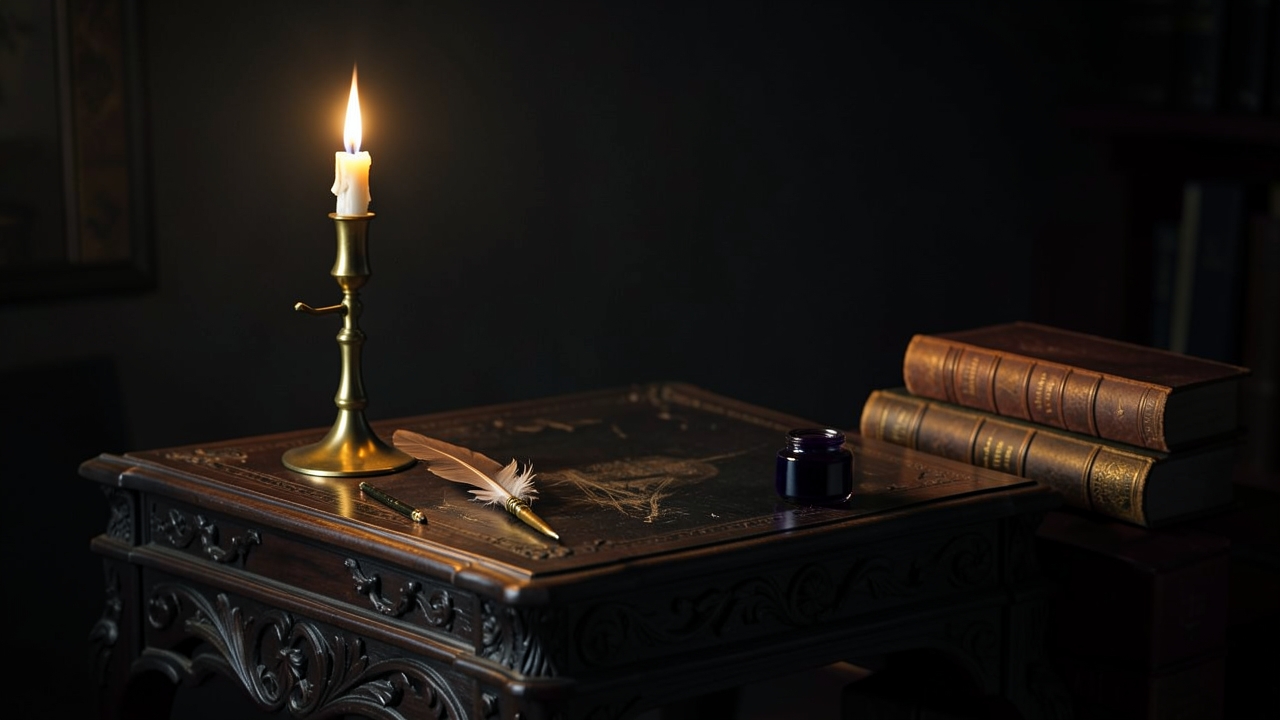
Have you ever felt the weight of an unspoken confession, the itch to address your deepest thoughts to an unseen confidant? In the realm of creative nonfiction, this very impulse finds its voice through epistolary essay techniques, where the essay transforms into a performed letter to an unknown reader, weaving intimacy into structure. This form, echoing the intimacy of correspondence, allows writers to explore the shadows of the self with a delicate, haunting precision.
The Anatomy of the Epistolary Essay
At its core, the epistolary essay borrows from the conventions of letter-writing to create a narrative that feels both personal and universal. This form emerged from a long tradition, but in modern creative nonfiction, it serves as a bridge between the writer’s inner world and the reader’s empathetic ear. For example, in the gothic shadows of Edgar Allan Poe’s works, letters often unravel psychological fractures, as seen in his story “The Unparalleled Adventure of One Hans Pfaall.” Similarly, epistolary essay techniques harness this legacy to craft essays that murmur secrets directly to the reader.
Crafting Intimacy Through Direct Address
One key epistolary essay technique is the use of direct address. By writing as if to a specific “you,” the essayist creates an immediate bond. This mimics the intimacy of a private letter, yet the reader becomes that “you.” Consequently, the narrative feels less like a monologue and more like a whispered conversation. For instance, in Letters to a Young Poet, Rainer Maria Rilke uses this method to profound effect, offering advice that echoes across time. In modern essays, writers like Gillian Flynn might employ this to draw readers into a dark, reflective dialogue, blurring the lines between confession and performance.
Moreover, this technique often involves a tone of vulnerability. The writer may share doubts or fears, as if trusting the reader with a fragment of their soul. However, it requires authenticity; otherwise, the intimacy feels hollow. For example, in gothic storytelling, direct address can amplify suspense, making the reader complicit in the unraveling of secrets.
Structure and the Rhythm of Correspondence
Epistolary essays often follow a structure of salutations, body, and closing, which provides a familiar framework. This structure, however, can be manipulated for emotional effect. In Daphne du Maurier’s Rebecca, letters are pivotal to the plot’s murmur of mystery. Therefore, the essayist might use section breaks to mimic pauses in thought, or vary letter formats to convey shifts in mood. For instance, a shift from formal salutations to fragmented notes can mirror a character’s descent into confusion, much like in the works of modern Gothic authors.
In addition, the rhythm of correspondence—short bursts of thought, followed by reflection—creates a cadence that engages the reader. This contrasts with traditional essays, which may flow continuously. As a result, the epistolary form imposes a deliberate pace, allowing ideas to echo and linger. Consequently, writers can explore themes of memory and identity with a structured, almost ritualistic, cadence.
Common Pitfalls and How to Avoid Them
However, epistolary essay techniques are not without their shadows. One pitfall is overusing formal salutations, which can feel contrived and distance the reader. Instead, blend conventions with organic prose. For example, in Shirley Jackson’s We Have Always Lived in the Castle, epistolary elements are subtle, woven into the narrative without overt markers. Therefore, balance is key—maintain the letter’s essence without sacrificing the essay’s flow.
Another common error is neglecting voice consistency. The letter form demands a strong, recognizable voice; otherwise, the narrative might unravel like a frayed thread. For instance, Tana French’s works, though not strictly epistolary, use narrative voices that are intimate and consistent, drawing readers into a psychological labyrinth. In contrast, a disjointed voice can break the spell. Consequently, writers must craft a voice that feels authentic throughout, using transitions like “however” or “meanwhile” to maintain coherence.
A Case Study: The Unseen Correspondent
Below is an original short story that demonstrates epistolary essay techniques in action. Notice how the letter format creates intimacy and structures the narrative, echoing the theory discussed above.
My Dearest Stranger,
As I write this by the flicker of a candle, the shadows dance like old friends. I address you, though I know not your name, for in the anonymity of words, we find a curious solace. This letter is not merely a message but a fragment of my soul, offered to the void. In these moments, the epistolary form becomes a veil between loneliness and connection.
Do you recall the first time you felt utterly alone? For me, it was on a night much like this, when the rain whispered secrets against the windowpane. I penned my fears into a diary, but it felt insufficient. Thus, I began writing to you—an unseen correspondent who might understand the fractures in my heart. This act of addressing an unknown reader mirrors the essay’s core, where vulnerability meets structure.
In these pages, I explore the echoes of memory. Each word is a step into a labyrinth, where every turn reveals a shadow of the past. I wonder, do you too wander these corridors? The act of writing to you imposes order on chaos, much like how a letter organizes thoughts into a coherent flow. Meanwhile, the rhythm of the prose—short sentences, then longer reflections—creates a cadence that feels like a murmur in the dusk.
As I conclude, I leave this letter unsealed, for it is meant to drift until it finds its reader. May it bring you a moment of reflection, a whisper in the silence. In the end, this exchange is a testament to the power of epistolary essay techniques: they transform solitary thoughts into shared experiences.
Yours in shadow,
The Anonymous Writer
The Lasting Echo of the Unsent Letter
In the end, the epistolary essay reminds us that all writing is, in essence, a letter to someone—a reader we may never meet but whom we address with honesty. By mastering epistolary essay techniques, we craft narratives that resonate with intimacy and order. For example, the form allows writers to explore themes of identity and memory, as seen in the works of gothic literature analysis. Therefore, it is a tool not just for storytelling, but for self-discovery.
As Poetry Foundation notes, the epistolary tradition has long influenced literary forms, from novels to essays. Consequently, in modern creative nonfiction, this technique continues to evolve, offering new ways to connect with readers. However, it requires a delicate touch—a balance between form and feeling. For instance, writers like Silvia Moreno-Garcia might use epistolary elements to layer narratives with gothic suspense.
So, as you pen your next essay, consider: who are you writing to, and what secrets will your words unveil? In the shadow of the page, the letter waits to be read, a echo that bridges the solitude of creation with the warmth of understanding.