
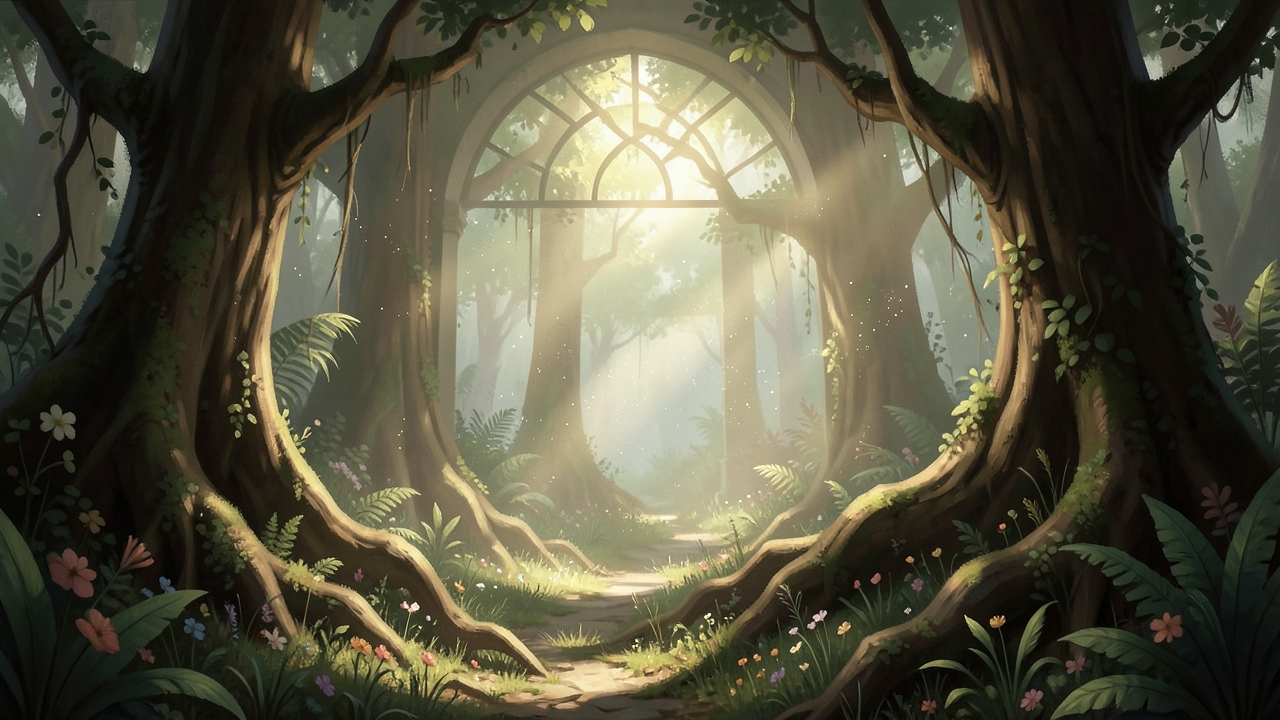
How does one capture a world without simply naming it? How do we convey the oppressive, breathing reality of a rainforest without ever uttering the word? The challenge lies not in description, but in translation—translating raw sensation into the ink and echo of prose. This is the heart of the rainforest sensory writing prompt: a discipline in atmospheric immersion, where the writer’s pen becomes an antenna for the wild.
The Theory of Writing: The Unseen Architecture of Sensation
Traditional exposition acts as a guide, labeling the world for the reader. Sensory immersion, however, makes the reader a participant. It builds the architecture of the scene through direct experience. As Edgar Allan Poe knew, the terror of “The Pit and the Pendulum” comes not from being told the room is dark, but from the “damp walls” and “blackest darkness of despair” that the narrator physically feels. The rainforest is a perfect, demanding stage for this technique.
Anatomy of a Saturated World
To begin, you must catalogue not objects, but sensations. The rainforest is a symphony of the senses. First, consider sound: it is layered and deep. There is the constant, low hum of insects—a sound you feel in your teeth. Above it, the sudden, sharp crack of a branch, or the distant, mournful cry of a howler monkey that seems to vibrate in the hollows of your own chest. Meanwhile, the drip of water from a broad leaf is a percussion instrument, steady as a heartbeat.
In addition, scent is your most powerful tool for memory and mood. It is the smell of petrichor—that electric, mineral scent of imminent rain on dry earth. It is the cloying sweetness of decaying orchids, a sweetness so thick it feels like a velvet cloak over the face. Contrast this with the sharp, clean scent of a freshly crushed ginger leaf or the loamy, fungal perfume of the soil itself, teeming with life and rot in equal measure.
\p>Do not neglect touch and texture. The air is not empty; it is a warm, wet weight. A vine brushed against the arm might leave a gritty, ant-covered residue. The bark of a strangler fig feels like coarse, living sandpaper. For example, in Angela Carter’s “The Company of Wolves,” the texture of the wolf’s fur and the physical sensations of the forest floor ground the fantastical in visceral reality. Your reader must feel the humidity clinging to their skin, the sudden, shocking cold of a shadow after blistering sun.Crafting Atmosphere: The Pitfalls of Over-Labeling
A common pitfall is to translate sensation back into concept. Instead of writing “the air was humid,” describe the sensation: “The air pressed thick against the lips, a taste of mud and green.” Instead of “loud insect noises,” write “a whine drilled behind the eyes, rising from the mulch.” The goal is to evoke the image in the reader’s mind without naming the source directly.
Therefore, your writing must be active and present. Use strong, evocative verbs. Water doesn’t just “fall”; it “weeps from the canopy,” it “stitches the shadows together.” Leaves don’t just “rustle”; they “whisper conspiratorially” or “shush the intruder.” Consider how Haruki Murakami builds mundane scenes into uncanny atmospheres through precise, sensory detail. He demonstrates that the mundane, felt keenly, becomes magical—or menacing.
A Case Study: The Verdant Threshold
The air was a held breath. A weight of water and heat that clung to the skin like a second self. Below, the soil yielded with a wet sigh, each step sinking into a dark, loamy memory. Above, a canopy stitched green shadow to green shadow, through which light fell not as sun, but as a slow, golden ooze, spotting the ferns with trembling coins. A drone rose from the mulch—the million-voiced hymn of the unseen. It vibrated in the hollows of the bones, ancient and indifferent. Then, a crack. Sharp as a bone snapping. Somewhere, a branch gave way to the patient strangler, and the silence that rushed back in was louder, a hollow thing filled with listening. The scent of something sweet and rotting drifted near, a ghost of a flower long dead. From the wet leaves, a cold drip found the back of the neck. A shock. A single, liquid finger tracing a path of sudden, thrilling chill down the spine. A call echoed—long, ascending, a question with no answer. It was answered by a chatter of something small and alarmed, the rustle of escape. The skin pricked. Not from cold, but from the sudden, intimate knowledge of being watched by a thousand hidden eyes. The breath, held so long, finally escaped in a soft, audible sigh that was swallowed whole by the listening green.The Lingering Echo: Your Invitation to the Green Dark
The exercise is a haunting. You are not telling a story about a place; you are evoking its ghost. You are building a memory in the reader’s body. By stripping away the familiar labels and surrendering to the raw data of the senses, you create something far more potent: a felt truth. The rainforest ceases to be a setting and becomes an experience.
Therefore, take up this rainforest sensory writing prompt. Let your prose breathe with humidity. Let it drip with unseen water. Let it hum with the ancient, indifferent life that thrives in the shadows. For in the end, is the most powerful story not the one that tells you what to feel, but the one that bypasses the mind entirely, and whispers directly to the skin?