
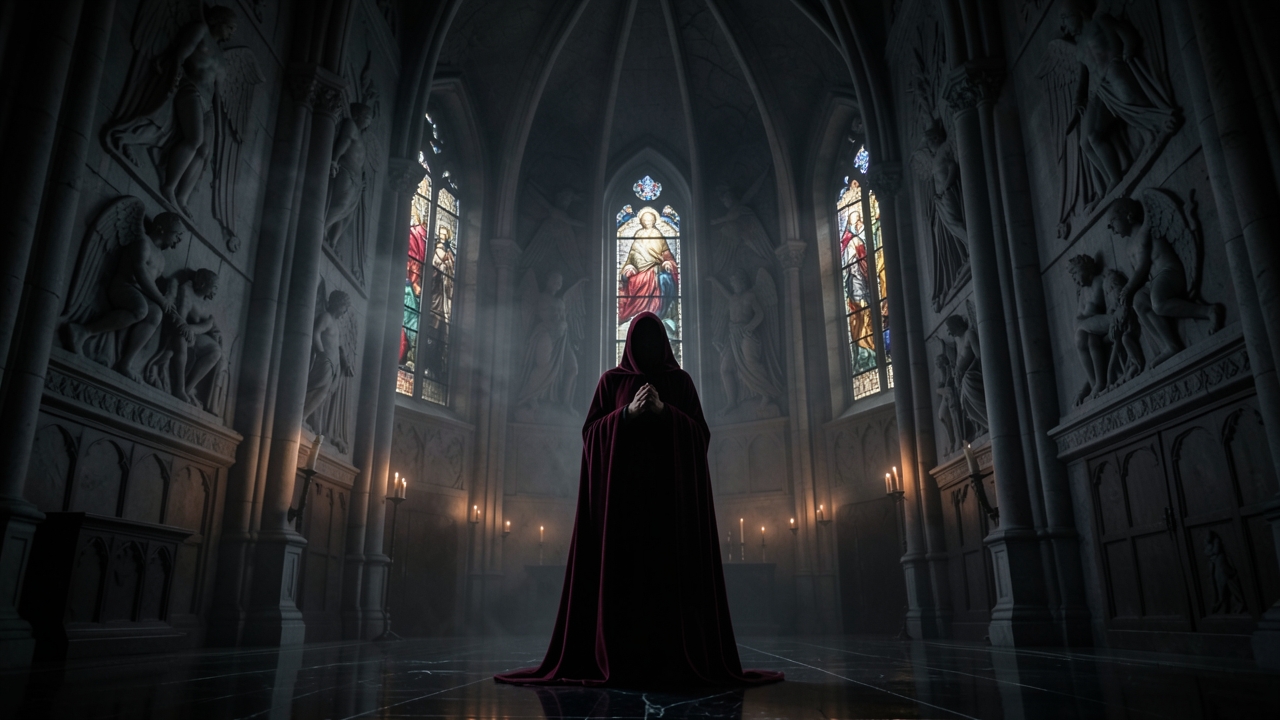
Have you ever felt the walls of a room contracting, not in physical reality, but in the chilling certainty of your own perception? Have you sensed that a hallway, with its illogical turns and deepening shadows, is not merely a passageway but an external map of a confused and fracturing mind? This is the profound and terrifying gift of the Gothic genre. It does not simply place characters in haunted houses. It weaves architecture from the very fabric of their psychological unraveling.
In 2026, as we revisit these enduring tales, we find their power unchanged. The gothic setting psychology is not about mere atmosphere. It is about a symbiotic decay, where stone and psyche erode in a shared, dreadful dance.
The Anatomy of Dread: Crafting the Psychological Exterior
The core technique lies in treating the setting not as a backdrop, but as an antagonist and a confession. The building breathes with the character’s breath. Its flaws are their flaws, amplified to a monstrous scale. To master this, one must first understand the architectural vocabulary of the mind in distress.
The Psychology of Labyrinthine Corridors
Consider the endless, recursive hallways in works like Shirley Jackson’s The Haunting of Hill House. The house’s inability to be mapped mirrors Eleanor Vance’s own fragmented identity and desperate need for belonging. Each turn offers no progress, only a deeper entanglement. For the writer, this means using spatial confusion to reflect cognitive dissonance. A corridor that doubles back on itself speaks to circular, obsessive thoughts. A staircase that leads to the same landing on every floor embodies the horror of being trapped in one’s own recurring patterns.
Craft this by focusing on sensation. Describe the feeling of wrongness. Does the air grow colder as one walks? Does the architecture subtly, imperceptibly shift? This is not mere disorientation; it is the externalization of a psyche losing its grip on reliable reality, much like the unreliable narrators in Poe’s “The Fall of the House of Usher” or du Maurier’s Rebecca.
Hidden Subterranean Levels: The Architecture of Repression
What lies beneath the grand drawing room? In Gothic tradition, it is the cellar, the crypt, the hidden tunnel—spaces of buried memory and repressed trauma. These subterranean levels are the architecture of the Freudian id, raw and uncontrollable. To explore the gothic setting psychology is to send one’s character descending into these lightless spaces, both literally and metaphorically.
In a story like Silvia Moreno-Garcia’s Mexican Gothic, the subterranean fungal world is not just a source of physical decay but a representation of a colonial and patriarchal history festering beneath the surface of a decaying finca. For the writer, crafting these spaces requires linking the physical details to the psychological. Is the air thick with the smell of damp earth and forgotten things? Is there a oppressive silence broken only by the sound of dripping water, echoing the relentless drip of guilt or secret? The descent must feel inevitable and terrifyingly revelatory.
Oppressive Ceilings and Claustrophobic Spaces
High, vaulted ceilings can inspire awe. But in the Gothic mode, it is the low, pressing ceiling that speaks volumes. Beams that seem to droop, rooms with no windows, spaces that shrink as a character’s options narrow—these are the embodiments of internalized pressure. They are the physical manifestation of a world closing in. Gillian Flynn expertly employs this in Gone Girl, where the Missouri heat and the claustrophobia of domestic life become a pressure cooker for Amy’s psyche.
Conversely, a vast, empty hall can be equally oppressive in its agoraphobic loneliness, mirroring a character’s profound isolation. The key is intentionality. Every architectural choice must echo an emotional state. A crumbling cornice is not just decay; it is the erosion of a character’s composure. A locked door is not just an obstacle; it is a barrier to repressed memory or acceptable truth.
A Case Study: The Whispering Gallery
Below is an original short story, “The Whispering Gallery,” crafted to demonstrate the principles of using architectural features to externalize a character’s psychological state.
The inheritance was not a gift, but a summons. I arrived at Blackwood Manor to claim a title I never wanted, and a house that seemed to breathe around me. Its first trick was the gallery on the second floor. It was a long, straight corridor lined with portraits of my ancestors, their eyes following not my body, but some flaw in my soul. The architect, mad or playful, had lined the ceiling with a peculiar, acoustically reflective plaster. A whisper at one end became a sibilant murmur at the other. I would speak a thought to myself, and the house would answer in my own voice, twisted and mocking. “Coward,” it would sigh back from the shadows. “Unworthy.” My own self-doubt, given voice by stone and plaster, walking beside me like a companion.
The true descent began when I found the door behind the heavy tapestry. It led not to a cellar, but to a winding, downward staircase, narrow as a throat. The air grew cold. The whispers followed, no longer from the ceiling above, but from the walls themselves, brushing past my ears as I descended. These were not my thoughts. These were older, sharper. Grandmother’s regret. Father’s silent rage. The house was not just echoing my psyche; it was downloading its own accumulated dread into mine. Each subterranean chamber was a tomb of a feeling: one of chilling, white-boned loneliness; another of a furious, silent scream trapped in the stones. The architecture was a library of forbidden emotional texts, and I was being forced to read them all.
I finally reached the lowest level, a circular room with a ceiling so low I had to stoop. It was the heart of the oppressive silence the rest of the house conversely shouted. Here, there were no whispers. There was only a profound, weighty quiet that pressed on my skull, a physical force of accumulated secrets. In the center stood a single stone plinth. On it lay a ledger, its pages filled not with debts or deeds, but with confessions in spidery ink. As my eyes adjusted to the gloom, I recognized the handwriting. It was my own. The house had not driven me mad. It had simply provided the perfect, echoing, subterranean architecture for me to finally hear the whispers I had carried within me all along.
The Echo in the Stone: Conclusion
We return to where we began: to the feeling of a setting that knows us too well. The genius of gothic setting psychology lies in this haunting recognition. The labyrinthine corridor, the hidden cellar, the pressing ceiling—these are not mere genre tropes. They are the externalized skeletons of our internal fears, the blueprints of our fragility etched in stone and shadow.
For further exploration of the Gothic atmosphere, one might delve into our analysis of [building dread through sensory details](https://froie.com/uncategorized/building-dread-through-sensory-details/) or the enduring legacy of [psychological horror in modern fiction](https://froie.com/uncategorized/psychological-horror-modern-fiction/). The works of the masters, from the Poetry Foundation’s overview of Poe to literary analyses of du Maurier, remain essential texts.
Ultimately, the house of the soul is built with the same materials as any great Gothic manor. Its doors are our denials. Its windows, our limited perspectives. And its deepest, most terrifying cellars? They hold the truths we are most afraid to excavate. So, I ask you: if your inner world were made manifest in architecture, what forgotten corridor would you dare to walk down? What sealed door would you finally dare to open?