
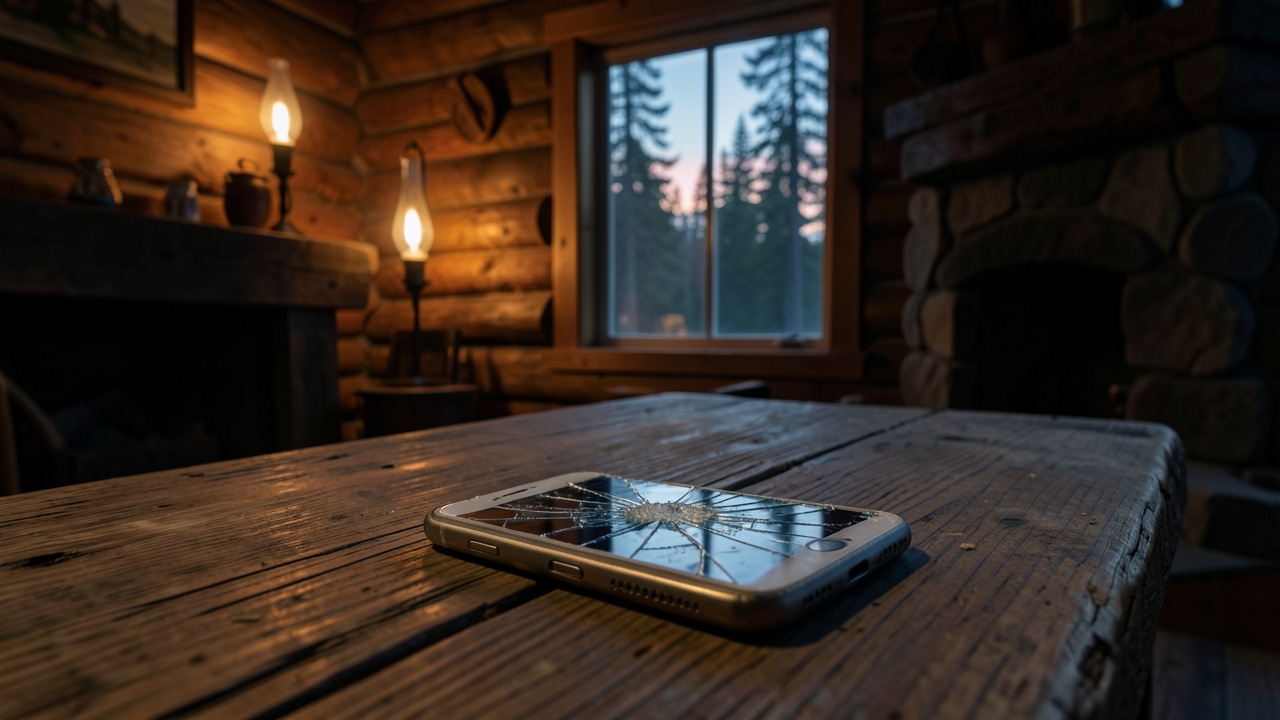
Have you ever felt the chill of silence when a screen goes black? In our hyper-connected world, true isolation might not be found in remote wilderness alone. It lurks in the fracture of a failed signal, the hollow echo of a dropped call. This is the realm of technological isolation horror, where the tools meant to connect us become the architects of our dread.
The Theory of Digital Claustrophobia
Horror has always thrived on confinement. Yet, modern storytellers have discovered a new, potent cage. It is built from silicon and shadow. It traps characters not by geography alone, but by the shattering of their digital umbilicus.
From Geographic to Technological Entrapment
Traditionally, isolation meant a haunted castle or a desolate island. Daphne du Maurier’s Rebecca uses the imposing Manderley to isolate its narrator. However, consider a cabin in the woods with perfect Wi-Fi. The horror might not begin until the router dies. This shift from external to internal collapse is key. As a result, the dread feels more intimate and inescapable.
In Edgar Allan Poe’s “The Fall of the House of Usher,” the decay is architectural and hereditary. It is a physical enclosure. In contrast, technological isolation horror presents a mental enclosure. The protagonist is surrounded by dead devices. These devices become mocking tombstones of connection. This amplifies the claustrophobia because the barrier is invisible yet absolute.
The Fractured Signal: Techniques for Heightening Dread
Crafting this specific horror requires careful, atmospheric layering. First, establish the character’s reliance on technology. Show their normalcy. Then, remove it. For example, Gillian Flynn in Gone Girl uses media blackouts to twist narrative control. But in isolation horror, the blackout is personal. It is a severance from the world.
Use sensory details that evoke digital failure. The blue light of a loading screen that never resolves. The harsh static hiss of a broken speaker. These sounds and images become the new whispers in the dark. Furthermore, contrast the character’s past connectivity with their present silence. This creates a psychological fracture that is profoundly unsettling.
Consider Tana French’s The Searcher, where a retired detective is isolated by both choice and circumstance. Now, imagine if his only contact—a satellite phone—failed during a crisis. The landscape itself would feel different. The silence would be heavier. It would be filled with the ghost of a signal that should be there.
Mastering the Craft: Lessons from Literary Masters
The masters of atmospheric horror provide a blueprint. They understood that the most terrifying prison is the one built within the mind. We can adapt their principles to our digital age.
Lessons from Poe and Lovecraft
Edgar Allan Poe excelled at the “locked-room” mystery. In “The Pit and the Pendulum,” the horror is the inescapable chamber itself. We can translate this to a “locked-screen” scenario. The character is trapped not by walls, but by a non-responsive device that holds vital information or connection. The tension builds from the inability to act or escape digitally.
H.P. Lovecraft’s horror comes from cosmic indifference and isolation. In “The Colour Out of Space,” technology and nature are corrupted by an alien force. Here, the lesson is about the failure of understanding. A character might see their smart home devices malfunctioning in impossible ways. The technology becomes alien, hostile, and utterly isolating. As a result, the character is alone with an incomprehensible threat.
Modern Echoes: Flynn and Moreno-Garcia
Gillian Flynn often explores the psychological cage of relationships. In Sharp Objects, the protagonist is trapped by family and memory. Technological isolation horror can mirror this. Imagine being trapped with a toxic person while all means of calling for help are severed. The dread becomes double-layered: interpersonal and technological.
Silvia Moreno-Garcia, in Mexican Gothic, uses a decaying mansion to symbolize decay and corruption. We can symbolize technological decay through corrupted data, endless buffering, and the eerie green glow of a terminal. This creates a modern gothic aesthetic. The horror feels fresh yet rooted in classic dread. For more on gothic techniques, delve deeper into gothic storytelling.
Common Pitfalls to Avoid
When crafting technological isolation horror, certain missteps can dilute the fear. Avoid making the technology too advanced or magical. The horror should stem from realistic failure. A smartphone that simply dies is scarier than one that starts speaking in tongues. The former is relatable. It taps into our universal low-battery anxiety.
Another pitfall is over-explaining the cause of the failure. Leave it ambiguous. Is it a solar flare? A malicious hack? An unknown entity? The uncertainty, like in Shirley Jackson’s The Haunting of Hill House, fuels the imagination. The house just is wrong. The technology just is broken. That simplicity is profound.
Finally, do not neglect the emotional core. The character’s loneliness must resonate. The broken phone is a metaphor for broken human connection. Jorge Luis Borges explored labyrinths of the mind. Our digital labyrinth is one of severed ties. Explore the character’s internal unraveling as their external world goes silent. This psychological depth transforms a simple plot device into lasting dread.
For a deeper exploration of psychological horror in fiction, consider our article on modern psychological horror tropes.
The Last Ping
The cabin’s window framed a perfect, postcard dusk. Elias had come here to write, to escape the ping of constant notifications. His sanctuary was real. He poured a whiskey, the ice clinking a solitary rhythm. Then, he checked his phone for the last time. One bar of service remained. A text from his sister: “Call me. Mom’s not good.” He hit call. The screen froze on her name. The signal icon dissolved into a grey void. The call dropped. He tried again. No service. He tried the landline. A dead, hollow tone. Outside, the wind began to howl, but inside, a deeper silence had just begun. It was the silence of a severed thread, a digital amputation. He was no longer just in a cabin; he was in a tomb of static.
Days bled into one another. The Wi-Fi router sat dark and inert. His laptop was a useless brick. He paced the small space, the walls seeming to inch closer with each failed attempt to reconnect. One evening, he saw a light blink on his satellite phone—a glimmer of hope. He grabbed it, hands trembling. The screen lit up, not with a connection, but with a single, unsent message he had drafted weeks ago, a plea he never sent. It glowed accusingly in the dark. The battery indicator showed 1%. As he watched, the percentage dropped to 0. The screen went black. In its reflection, he saw his own face, hollow-eyed and alone. The forest outside was vast, but his world had shrunk to the dimensions of a dead screen. He was utterly, completely, and technologically alone.
The Echo in the Void
We began with a question of silence. We end with the echo of that silence. The power of technological isolation horror lies in its reflection of our deepest modern fear: that beneath our seamless connectivity, we are profoundly alone. The broken screen is merely the veil torn away.
As we craft our stories, we must ask: when the final signal dies and the screen remains dark, what part of ourselves is truly lost? Is it merely our connection to others, or is it the reflection of our own identity in the digital world? The answer might be the most haunting horror of all.
To further explore the intersections of technology and fear, read our analysis of unseen digital threats in horror. For a broader look at isolation in literature, see isolation in the gothic tradition on Froie.com.
For scholarly context, the Poetry Foundation’s exploration of the uncanny provides valuable insight into the psychology of familiar-yet-strange dread, a core element of technological isolation horror.