
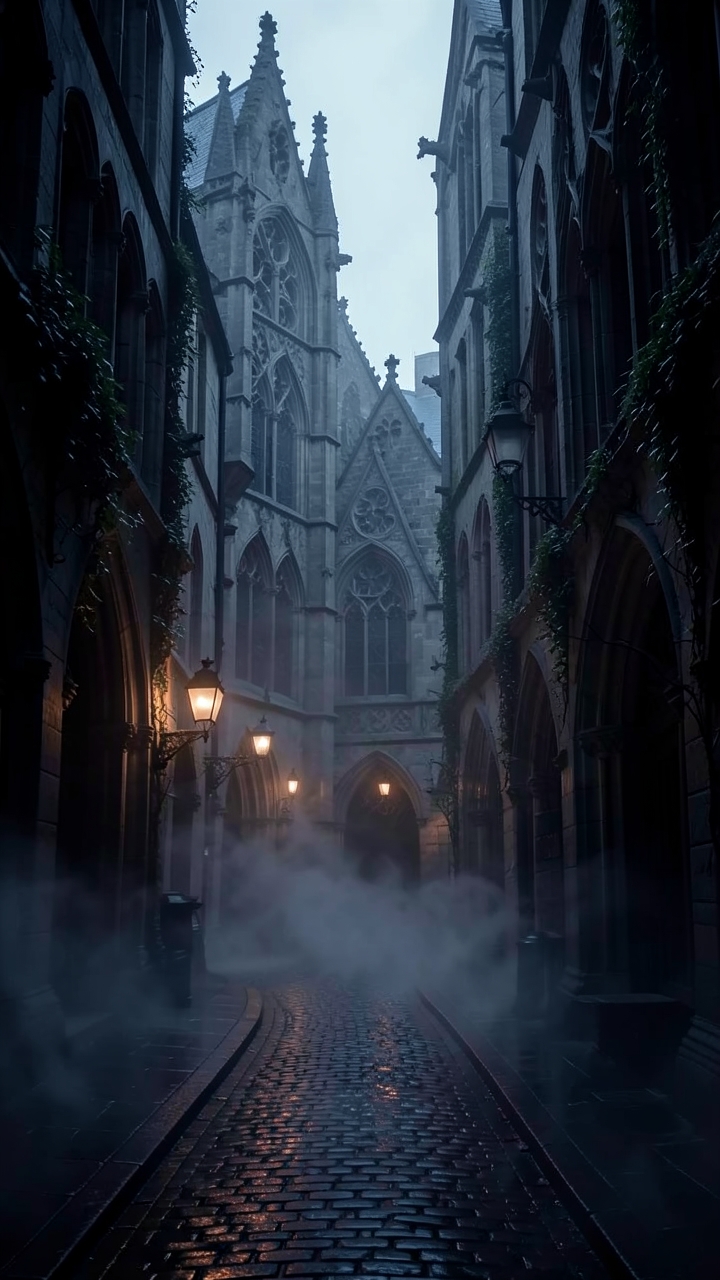
Have you ever felt the hairs on your neck rise, not from a sudden shock, but from a slow, creeping certainty that something is terribly wrong? That exquisite, lingering dread is the domain of gothic suspense. It is not merely a genre, but a profound psychological art. In an age of fleeting attention, how do we craft narratives that sink their hooks into the reader’s psyche and refuse to let go? To master gothic suspense techniques is to understand that true terror whispers; it does not shout.
The Anatomy of Dread: Foundational Principles
Suspense, in its gothic form, is a carefully managed exchange between writer and reader. It thrives on the delicate balance between revelation and concealment. As Edgar Allan Poe knew, the mind’s imagination is a far more potent chamber of horrors than any explicit description.
Pacing: The Heartbeat of the Inevitable
Consider Poe’s “The Fall of the House of Usher.” The narrative does not rush to the catacombs. Instead, it lingers. It breathes in the damp air, describes the fungal growth on the walls, and analyzes the family’s morbid psychology. This deliberate pacing builds a pressure cooker of atmosphere. Each sentence adds another brick to the wall of inevitability. The lesson here is crucial: decelerate. Allow the setting to seep into the reader’s consciousness. Let the protagonist’s unease unfold through mundane details that feel suddenly, subtly wrong.
Atmosphere as a Character
The environment must do more than provide a backdrop; it must become an active participant in the protagonist’s disintegration. Daphne du Maurier’s Rebecca is a masterclass in this. Manderley is not just a house; it is a vessel of memory, jealousy, and secrets. The weather, the flora, the very dust motes in the light conspire to oppress the narrator. To achieve this, use sensory details with surgical precision. Do not just say a room was dark. Describe the quality of the darkness—whether it was the thick, velvety dark of velvet curtains or the thin, watery dark of a moonless night filtered through grimy glass.
The Unreliable Lens
Gothic suspense often hinges on a narrator whose perceptions we cannot fully trust. This creates a dual layer of suspense: what is happening in the plot, and what is happening in the narrator’s mind? Shirley Jackson’s The Haunting of Hill House is the pinnacle of this technique. Eleanor’s internal monologue blurs the line between supernatural event and psychological fracture. By limiting the reader to this unstable perspective, you create a disorienting, intimate dread. The reader becomes an accomplice to the unraveling, desperately seeking clues outside the narrator’s skewed view.
The Economy of the Ominous Object
A single, recurring object can become a powerful vessel for suspense. Think of the yellow wallpaper in Charlotte Perkins Gilman’s story of the same name, or the endless, labyrinthine libraries in Jorge Luis Borges’ works. These objects are anchors for the mounting dread. They are tangible, yet their significance is deeply symbolic and threatening. Introduce such an object early, treat it with apparent normalcy, and then allow its meaning to metastasize as the narrative progresses.
A Case Study: The Clockmaker’s Silence
The clock shop smelled of brass polish and ozone, a scent that clung to Arthur’s coat like a second skin. He had come to purchase a mantel clock, a simple, cheerful mechanism to mark the hours in his empty flat. But the old clockmaker, a man with hands as delicate and precise as the movements he repaired, spoke little. He merely gestured toward a wall of ticking hearts.
Arthur’s gaze settled on one. Its face was mother-of-pearl, its hands black as a raven’s wing. It did not tick. It was silent. When he pointed this out, the clockmaker’s smile did not reach his eyes. “That one keeps perfect time,” he whispered. “It measures the silence between seconds.” A foolish phrase, Arthur thought, yet he bought it. It was the silence that followed him home, that seemed to pool in the corners of his living room, heavier than shadow.
Days passed. The silent clock watched from the mantel. Arthur began to notice other silences: the pause before a streetcar screeched, the held breath of the house before the pipes groaned. He heard the clockmaker’s words in his mind. Was he measuring time, or was time measuring him? One evening, a storm broke the sky. In a flash of lightning, he saw the clock’s hands had moved. They pointed to his front door. And then, in the ensuing darkness, he heard a slow, deliberate knock.
The Modern Echo: Applying Gothic Principles
While rooted in classic tales, these techniques are not relics. They are the bedrock of modern psychological thrillers. Authors like Tana French in the Dublin Murder Squad series and Gillian Flynn in Gone Girl wield gothic suspense with chilling precision. They isolate characters—physically, emotionally, and mentally—and subject them to immense internal and external pressures. The haunting is often internal: a guilty conscience, a buried trauma, a fractured identity. The lesson for the modern writer is to internalize the gothic. The haunted house can be the protagonist’s own mind.
In conclusion, writing compelling gothic suspense techniques into your work is an exercise in control and subtlety. It is about crafting an emotional experience, not just a plot. It requires you to be a puppeteer of pacing, a poet of atmosphere, and a cartographer of the fractured human psyche. You must build a labyrinth of implication, where the reader fears not what lurks in the shadows, but what those shadows might reveal about themselves.
For a deeper dive into atmospheric narrative, explore our essay on mastering atmospheric setting, or consider how unreliable narrators shape modern suspense. The shadows hold more lessons yet.
So, as you sit before the blank page, the cursor blinking like a watchful eye in the dark, you must ask yourself: what silence will you craft, and what will it ultimately measure?