
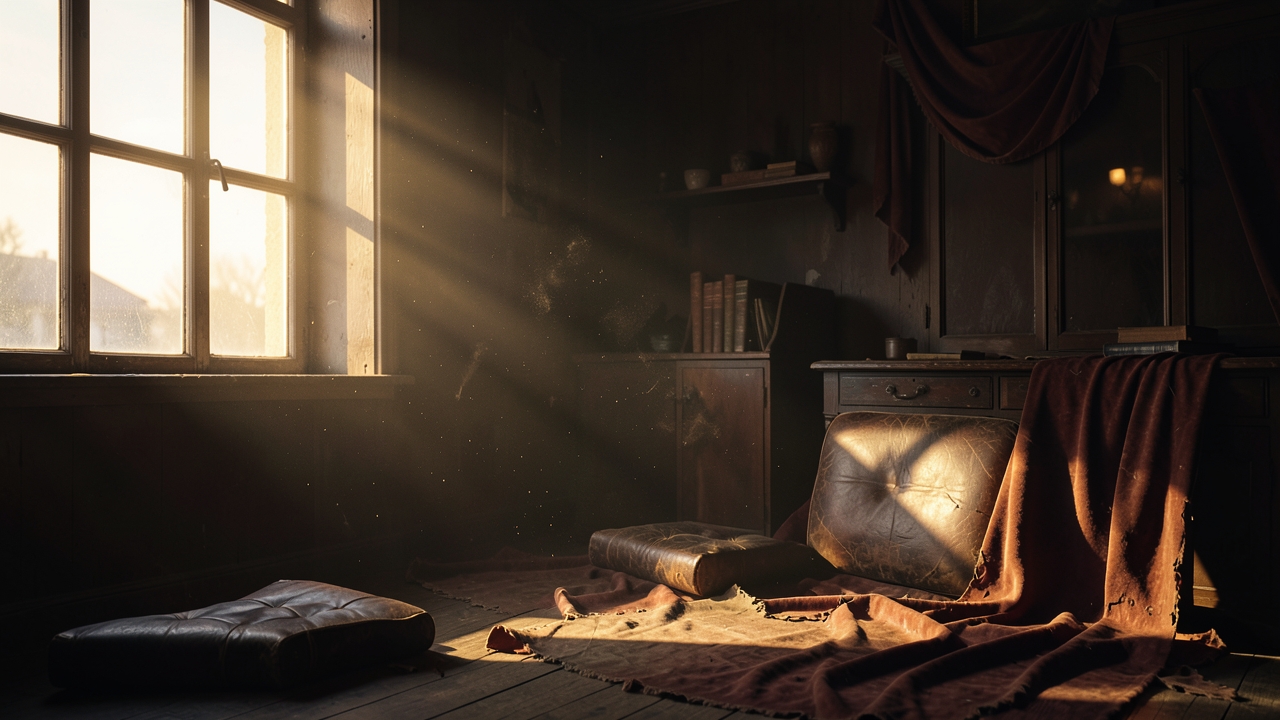
What if the true antagonist of your story never drew breath? That is the wager at the heart of hostile setting writing prompts: weather, terrain, and rotting architecture take the role we usually reserve for a monster behind a mask. The house becomes the hunter. The storm becomes the jury. Consequently, the writer must learn to externalize conflict, to make place itself the thing that wants the character undone.
Yet most writers treat setting as wallpaper. They describe a room, then forget it exists. Meanwhile, the plot limps forward on dialogue and human grudges alone. The danger reads as decoration. Therefore, the environment never truly threatens the body, the mind, or the hour on the clock.
Why a Hostile Setting Outlasts a Human Villain
A person can be reasoned with, bribed, or outrun. A blizzard has no appetite for negotiation. Moreover, the landscape never tires, never misjudges, and never softens out of affection. It has only physics, and physics is patient.
The masters knew this. Edgar Allan Poe made the very timbers of the House of Usher an argument for collapse: the masonry sweats, the fissure widens, the tarn swallows the last of a bloodline. In addition, Shirley Jackson’s Hill House is never merely haunted. It is hungry, precise, and architecturally confident. You can study both authors in the Poetry Foundation archive.
Consequently, an antagonistic place does something a human enemy rarely can. It removes choice slowly. It does not chase. It narrows. And narrowing is the purest form of dread.
The Anatomy of an Antagonistic Place
Not every setting qualifies as a villain. A hostile place needs five organs. Miss one, and the tension collapses into atmosphere.
- Specificity. A salt marsh is not the swamp. Name its smell, its give, its tide tables.
- Appetite. The place must want something: warmth, stillness, time, silence, bones.
- Escalation. It must escalate at least twice before your midpoint arrives.
- Cost. Strip the character’s advantages one by one: light, footing, exit, memory.
- Signature. Leave a repeating mark, such as a sound, a smell, a geometry.
Personify the Place, Without Turning It Into a Cartoon
Give the environment verbs of intent. The stairwell considers her weight. The fog forgets the road behind her. Verbs carry agency without costume. They let a doorway scheme while still behaving like a doorway.
Avoid literal sentience. A house that cackles belongs in parody. H.P. Lovecraft grasped the value of restraint in The Colour Out of Space: the horror resists naming, and therefore resists comfort. Meanwhile, if you need a broader method for tone before you begin, study building gothic atmosphere in fiction.
Deny Every Resource, Quietly, Then Again
The most elegant cruelty is subtraction. Cut the power. Cut the map. Cut the last warm coat. Then, at the exact moment the character adapts, cut the thing they just found. Tana French builds entire interrogations out of locked doors and dead radios.
Silvia Moreno-Garcia’s Mexican Gothic masters the pattern. The mould in High House takes the doctor’s certainty first, then his sight, then his ability to name what is happening. Likewise, Daphne du Maurier’s story The Birds denies the coastline any sanctuary whatsoever.
Escalation: The Environment Must Answer Back
Treat the setting like a slow opponent with a turn order. After every significant character decision, the place responds. He breaks the west window; the wind enters and takes the papers. She wades deeper; the mud answers with grip. Cause and consequence should feel inseparable.
Therefore, outline beats for the setting beside your plot beats. A reliable rhythm runs: pressure, release, pressure, trap. For a fuller method, read how to externalize conflict in fiction.
Common Pitfalls: The Passive Backdrop
- The weather that never touches anyone on the page.
- The anywhere room, with no smell and no history.
- Over-explaining the mechanism of the horror.
- Power so total that tension evaporates completely.
- Describing the place in one lump before the action begins.
Meanwhile, for description that carries subtext rather than decoration, see sensory details that carry subtext. For further craft reading, browse