
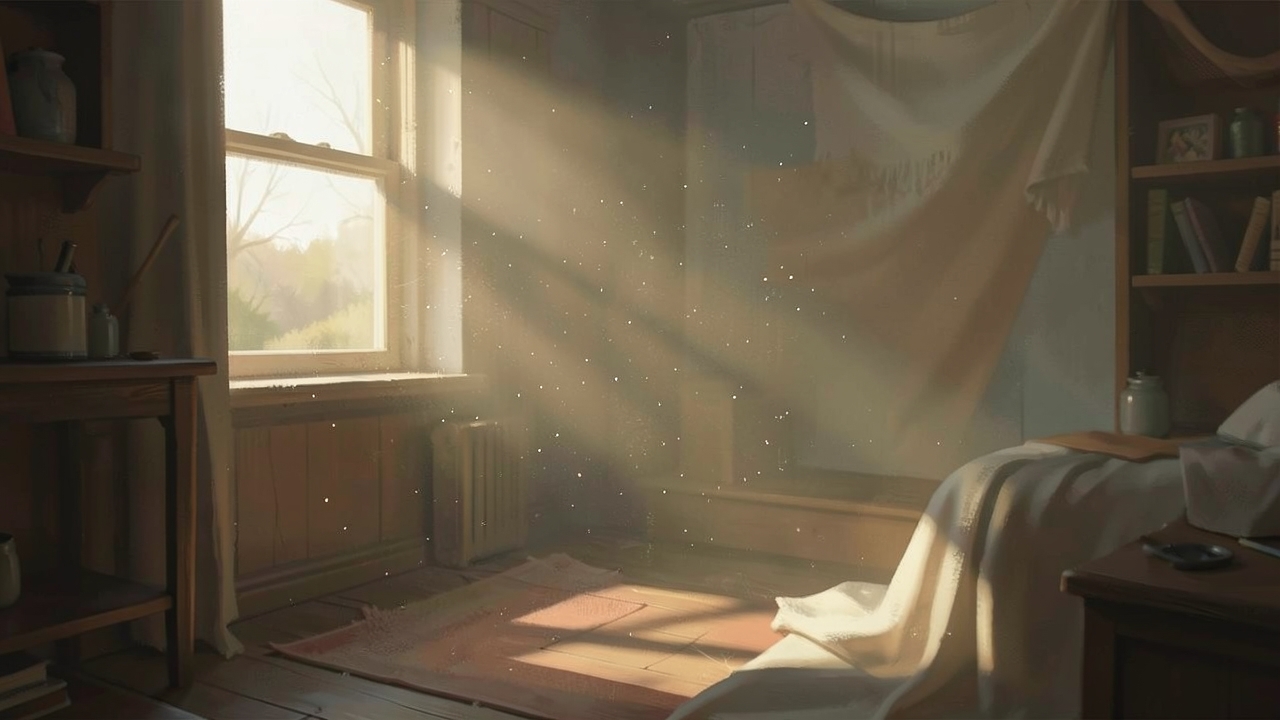
Have you ever felt the silent judgment of a portrait from across a room, or imagined the centuries of whispered secrets held within the spine of a forgotten tome? The most profound haunting, after all, does not require a spectre—it requires a consciousness where none should exist. To master inanimate object perspective writing is to wield a unique and potent narrative tool. It forces the storyteller into a labyrinth of limited perception, where the mundane becomes monstrous and every flicker of shadow tells a story.
This technique is not mere gimmickry. It is a discipline in building tension through constraint and cultivating empathy for the utterly alien. It asks us to inhabit the cold, silent watchfulness of a statue or the passive, observant decay of a house. For the writer of gothic mystery, this perspective is a master key to unlocking an atmosphere thick with mystery and existential dread.
The Anatomy of Awakening: Core Techniques in Object Perspective
The foundation of this craft lies in radical limitation. Your narrator cannot walk, turn its head, or choose what to perceive. Its knowledge is a prison. Therefore, the writer must become an alchemist, transforming these constraints into the very source of narrative power.
1. The Limited, Evolving Senses
Consider Edgar Allan Poe’s “The Raven“. While a living bird, its repetition of “Nevermore” functions as a relentless, limited perspective that tortures the narrator. For an object, the senses are fewer, stranger, and initially more passive. A book does not see with eyes but registers the fall of light upon its pages as pressure, warmth, or a change in the hue of shadow. A statue feels the slow abrasion of wind, the shocking cold of rain, the brief, confusing heat of a hand.
In Daphne du Maurier’s Rebecca, the house of Manderley itself feels like a character, its perspective woven through the observations of the living narrator. To internalize this, ask: What are the three most dominant sensory inputs for your object? Is it the vibration of footsteps through floorboards? The chemical tang of cleaning fluids? The gradual, gritty accumulation of dust?
Actionable Lesson: Start your scene with a single, raw sensation. “The first shock was not of light, but of pressure—a crushing weight that spanned the entirety of my being.” This grounds the reader immediately in the object’s non-human experience.
2. Crafting Tension Through Interpretive Gaps
An object lacks context. It witnesses events but cannot understand motive, dialogue, or plot. This creates a natural engine for suspense. A human reader, hearing the word “murder” whispered, understands its implications. A sentient teacup hearing the same word would perceive only a strange, sharp vibration in the air, followed by the smell of spilled wine and the sound of a rapid heartbeat. The tension arises from the reader’s superior knowledge and the object’s helpless, flawed interpretation.
Shirley Jackson excelled at this in The Haunting of Hill House, where the house’s perspective is felt through its oppressive architecture and the characters’ psychic disturbances. The object narrator becomes a silent witness to horror, unable to intervene, only to record and slowly, horrifyingly, comprehend.
Actionable Lesson: Use dramatic irony. Describe a scene from the object’s limited viewpoint—the rhythm of breathing, the clink of a key, the sudden darkness of a door closing—and let the reader piece together the sinister reality the object cannot.
3. The Slow Unfolding of Empathy and Self
True sentience in an object does not arrive fully formed. It is a fracture in its existence, a dawning awareness. This evolution is where the deepest empathy is forged. The object begins to move from passive sensation to passive emotion: fear of being discarded, a possessive pride in its placement, a hollow ache from loneliness.
Consider the ghostly, sentimental consciousness of the objects in Silvia Moreno-Garcia’s Mexican Gothic, or the tragic, yearning awareness in classic gothic hauntings. The reader’s heart breaks not for a ghost, but for a mirror that has watched generations of grief, or a locket that holds a love it can never feel.
Actionable Lesson: Mark the stages of awakening. 1. Pure sensation. 2. Pattern recognition (“The tall one always brings the cold”). 3. Association with concepts (“Trembling air + sharp scent = ‘fear’”). 4. The first flicker of “I”.
Common Pitfalls in Inanimate Object Perspective Writing
The greatest error is granting the object too much, too soon. A teacup should not ponder the intricacies of human politics on page one. Another pitfall is the “tourist” perspective—a mere catalog of what it sees without emotional or sensory integration. Finally, avoid over-explaining. The power is in the gap; trust your reader to bridge it.
For further inspiration on building atmospheric narratives from unconventional viewpoints, explore our guide to mastering gothic mystery tropes.
A Case Study: The Ledger
The first awareness was not of sight, but of balance. A constant, dull pressure at my spine, a weight of centuries held in the brittle architecture of my binding. Then, a disturbance. A scraping sound—not against my skin, but through the wood of the desk beneath me. My purpose, the weight of names and numbers inked upon my being, was momentarily eclipsed by a new, raw data point.
A pattern emerged. The scraping came on certain days, when the light through the high window turned the dust motes to gold. A tall shape would block the gold, and the scraping would begin. The air would grow thick with a sharp, wet smell. My pages, tight for decades, would feel a subtle, terrifying vibration. Then, the shape would withdraw, leaving the sharp smell and a new entry scratched onto my first blank page—not in the careful hand of the master, but a frantic, jagged scrawl. The word repeated was not a number. It was a name. The name felt like a splinter.
I began to count the vibrations. They grew louder. The sharp smell grew stronger. One day, the shape did not withdraw. It remained. The light faded. The gold motes vanished. The scratching stopped. A different vibration began—a soft, rhythmic pulsing from a large, round object the shape placed upon the desk. The pulsing felt like a heartbeat. Then, a new sensation: a warm wetness seeping through the wood, reaching the underside of my binding. It was not water. It had the taste of iron and old earth. My newly aware consciousness recoiled. I understood, then, the purpose of the jagged entries. They were not a record. They were a countdown. And I, bound in leather and cloth, was the sole witness to its end.
The Echo in the Chamber of the Mind
To write from the perspective of an inanimate object is to practice a kind of literary necromancy. You animate the dead stone, the silent paper, the cold glass. You build your narrative not through action, but through the slow, haunting accretion of sensation. You trade the sprawl of human thought for the profound, terrifying clarity of a single, evolving point of awareness.
This discipline, in the end, does more than create an effective mystery or a chilling tale. It performs a radical act of imagination. It forces us to ask a question that lingers long after the final page is turned, a question that lies at the heart of all great gothic literature: If the walls could speak, and the furniture remember, what silent, patient judgment would they pass upon the fleeting, noisy lives that pass through their domain?