
Have you ever felt that the most profound truths are whispered not in solitary chambers, but in the shadowed intersections where voices collide? The notion that a story is a solitary fire, kindled and tended by a single soul, is a comforting illusion. Yet, the deeper lore of narrative suggests a more haunting, more thrilling truth: the most resonant tales are born of a shared storytelling spirit. They are séances of the imagination, where multiple sensibilities convene to summon a narrative that no single ghost could conjure.
The Hive Mind of the Narrative
In the vast, echoing library of literature, the concept of the solitary genius persists. However, a contrapuntal truth reverberates through the halls. Literature itself is a grand, ongoing collaboration. Every writer who picks up a pen is, in fact, entering into a dialogue with every story that came before. Think of Jorge Luis Borges, whose labyrinths of text often feature libraries containing all possible books—a meta-commentary on the collective, infinite nature of storytelling itself. When we engage in deliberate, contemporary shared storytelling, we simply make this implicit dialogue explicit and urgent.
The Anatomy of a Living Manuscript
What distinguishes effective collaborative fiction from a mere cacophony of egos? It is not the absence of conflict, but the transmutation of that conflict into narrative tension. Consider the classic parlor game, the Exquisite Corpse, perfected by the Surrealists. André Breton and his cohorts created stories and poems by folding paper so each contributor could only see the sliver preceding their line. The result was a startling, dream-like collage. The lesson here is not to mimic its randomness, but to recognize its core principle: constraint breeds creativity. Successful shared storytelling often employs shared constraints—a common setting, a limited character roster, a thematic mandate—that force disparate voices into a coherent, if uncanny, harmony.
Common Pitfalls in the Collaborative Dark
The peril, of course, is twofold. The first is the tyranny of the loudest voice, which drowns out subtler, more essential tones. The second is a descent into formless pastiche, where no singular, haunting vision takes root. To navigate this, one must study masters of atmospheric unity, even if they worked alone. Shirley Jackson, in We Have Always Lived in the Castle, built a world so cohesive that every creak of the floorboard contributed to the same pervasive dread. A collaborative group must aspire to this same cohesion. They must learn to subordinate individual flourish to the emergent, overarching mood—a mood that belongs to the group, not the individual.
The Unwritten Chapter
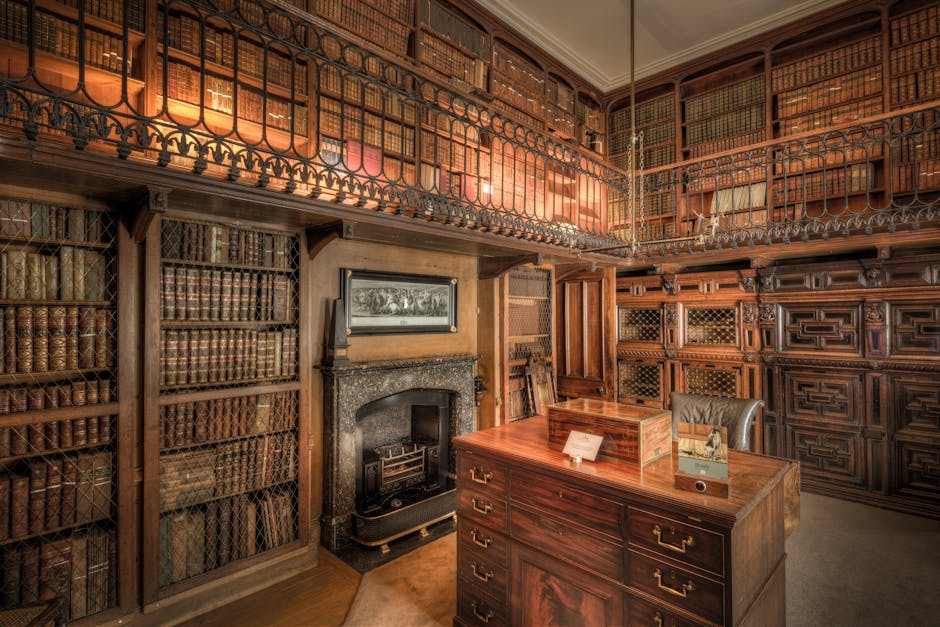
They gathered in the library of Blackwood Hall, not to read, but to listen. The air was thick with the scent of decaying paper and beeswax. Each participant had brought an object: a tarnished locket, a rusted key, a page torn from a physician’s journal. The rule was simple: they would build a story, each adding a paragraph in turn. The object they held would seed the next contributor’s addition. The locket’s owner began with a tale of a lost portrait; the key’s holder followed with a locked room; the journal page’s bearer introduced a feverish, illegible diagnosis. As the night deepened, the story grew. It became a tale of a matriarch’s secret sickness, a hidden chamber, a love that poisoned. The narrative did not belong to any of them. It had become a revenant, a thing animated by their collective breath, walking paths none would have dared to tread alone. When they finally stopped, the silence that followed was not empty. It was heavy with the presence of what they had summoned together—a gothic tapestry, woven from individual threads of shadow.
The Echo in the Chamber
The act of shared storytelling reveals a fundamental truth about the craft. It demystifies the myth of solitary inspiration and replaces it with something more robust: the dynamic, often tumultuous, process of communal dream-weaving. As Daphne du Maurier demonstrated in Rebecca, a story’s true power lies in the atmosphere it generates—the feeling that something unseen is always present, guiding the hand. In a collaboration, that unseen presence is the collective unconscious of the group itself. It is the ghost in the machine of your narrative. Therefore, to the writer who feels isolated in their craft, I ask: what more profound solitude is there than a room with only your own echoes? Is it not braver, and more fruitful, to step into the shared darkness and see what new, unanticipated monsters and marvels your combined voices might awake from their long slumber?