
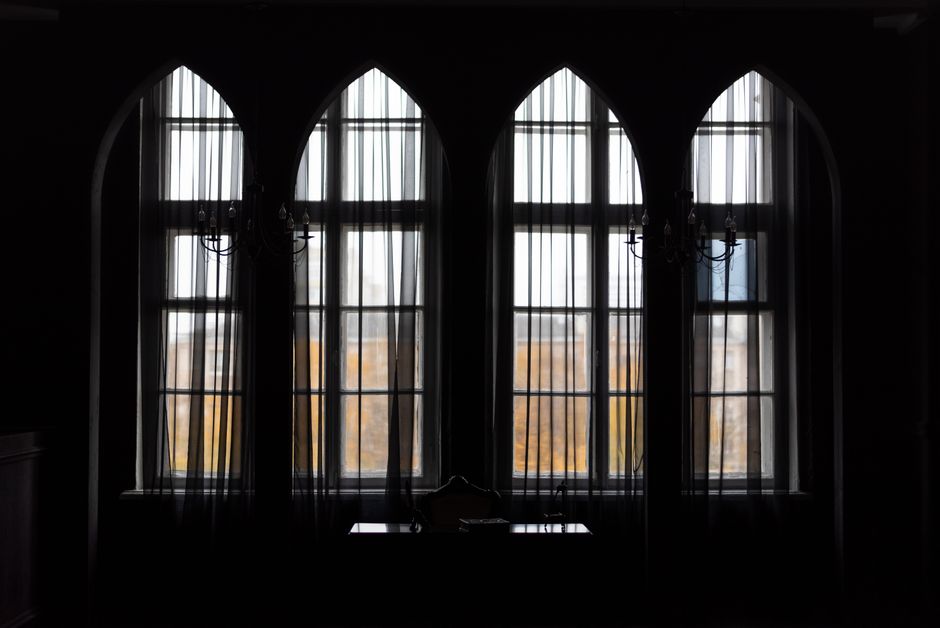
Have you ever felt a story’s locale pulse with a life of its own, as though the walls themselves held the narrative’s breath? This is the profound power of treating an atmospheric setting as character. In this first installment of our weekly writing prompt series, we begin our journey not with plot or dialogue, but with the very ground upon which your story walks. We will explore the theory, then demonstrate it with a miniature gothic tale, setting the stage for the craft lessons to come.
The Anatomy of an Living Landscape
A setting is more than a stage. It is a participant. To achieve this, you must move beyond mere description and into the realm of personality and motive. Consider the malevolent, decaying mansion in Edgar Allan Poe’s “The Fall of the House of Usher.” The house is not simply old; it is “insufferably gloomy,” its windows are “eye-like,” and its atmosphere directly mirrors the family’s hereditary decay. The setting doesn’t just contain the story; it is the story’s central, breathing metaphor.
Therefore, your first task is to ask: what is my setting’s temperament? Is it melancholic, watchful, predatory, or sorrowful? Does it have a memory? A secret? This transforms it from a noun into a protagonist.
Weaving Sensory & Psychological Detail
To breathe life into your location, engage all senses, but filter them through character. Don’t just state “it was cold.” Describe how the cold “clung to the bones like a damp shroud,” or how it “hushed all sounds into a deadened, reverent whisper.” As Shirley Jackson proved in The Haunting of Hill House, a setting can actively assault the psyche. Her descriptions of shifting hallways and oppressive architecture create a landscape of paranoia that is indistinguishable from the characters’ internal states.
Furthermore, employ pathetic fallacy with purpose. Rain isn’t just rain; it’s the sky weeping over a forgotten crime. The wind isn’t just wind; it’s the setting exhaling centuries of secrets. This technique, when used with subtlety, makes your environment an emotional mirror.
Crafting the Inescapable Mood
The true art lies in making your setting inescapable. It should seep into the narrative’s bones. Tana French, in novels like In the Woods, uses the encroaching forest not merely as a crime scene but as a living, consuming entity that holds the key to her protagonist’s trauma. The woods remember what the human mind has repressed.
Similarly, in gothic and speculative genres, the setting often operates by its own alien rules. H.P. Lovecraft’s landscapes defy physics and sanity, becoming characters that actively warp reality. Your setting, whether a realistic city or a fantastical realm, must have consistent rules—rules that the plot must obey, and that the characters must reckon with.
Common Pitfalls to Avoid
- The Info-Dump: Don’t halt the story to deliver a travelogue. Reveal the setting’s character through action and character interaction. Let the protagonist discover the grime on the windowsill or the way the floorboards groan a specific warning.
- Purely Visual Description: Remember sound, smell, touch, and even taste. The scent of decay, the taste of dust, the sound of a distant, rhythmic drip—these are the whispers of a living place.
- Inconsistency: If your setting is a watchful character, it must be consistently watchful. Its moods should shift logically with time and event, not randomly for convenience.
As we proceed in this series, each prompt will build upon this foundation. We will explore how character voice, pacing, and symbolism emerge from this initial, crucial relationship between story and space. To delve deeper into the foundations of craft, revisit our discussion on the writer’s necessary solitude, a state where listening to your setting’s whispers becomes possible.
A Case Study: The Keeper of the Stacks
The university library did not merely house its books; it brooded over them. Its stone facade was pitted like aged skin, and the air within was a preserved silence, thick with the dust of forgotten arguments. Clara felt it watching as she navigated the labyrinth of stacks on the third floor. The shelves here leaned inward, creating aisles that felt less like corridors and more like held breaths.
She sought the poetry section, but the library seemed to have other intentions. A turn meant to lead east deposited her firmly in a dead end of rare manuscripts. The fluorescent lights overhead flickered not in succession, but in a pattern—a slow, deliberate blinking that felt like a Morse code of disdain. She ran a finger along a shelf; it came away gray, the dust undisturbed for decades. Yet, a cold draft curled around her ankle, insistent, pulling her deeper into the warren.
The whisper started then, or perhaps it had always been there. It was the sound of paper thinning, of spines cracking in a language of neglect. It coalesced not into words, but into a feeling: you do not belong to the living stories here; you belong to the silence. The library’s true book, she understood with a sinking heart, was itself. A vast, self-referential tome, and she was an intruder in its margins.
The Echo in the Emptiness
So, we return to our initial question. The settings we build are more than backdrops; they are the silent interlocutors of our tales. They hold the grief, the history, and the prophecy that human characters may not even recognize. By granting your locale a soul—a mood, a memory, a motive—you elevate your narrative from a simple account to a haunting resonance.
This week, we ask you to choose a space from your life or imagination. Sit within it. Listen. What is its prevailing emotion? What secret does it keep? What would it say if it could speak, not in words, but in the language of shifting shadows and enduring stone? Let that answer become the heartbeat of your next scene.
As the great fabulist Jorge Luis Borges once mused, time is the substance we are made of. Is not setting merely time made visible, solid, and expectant? And in that expectant silence, what character will you allow to finally speak?