
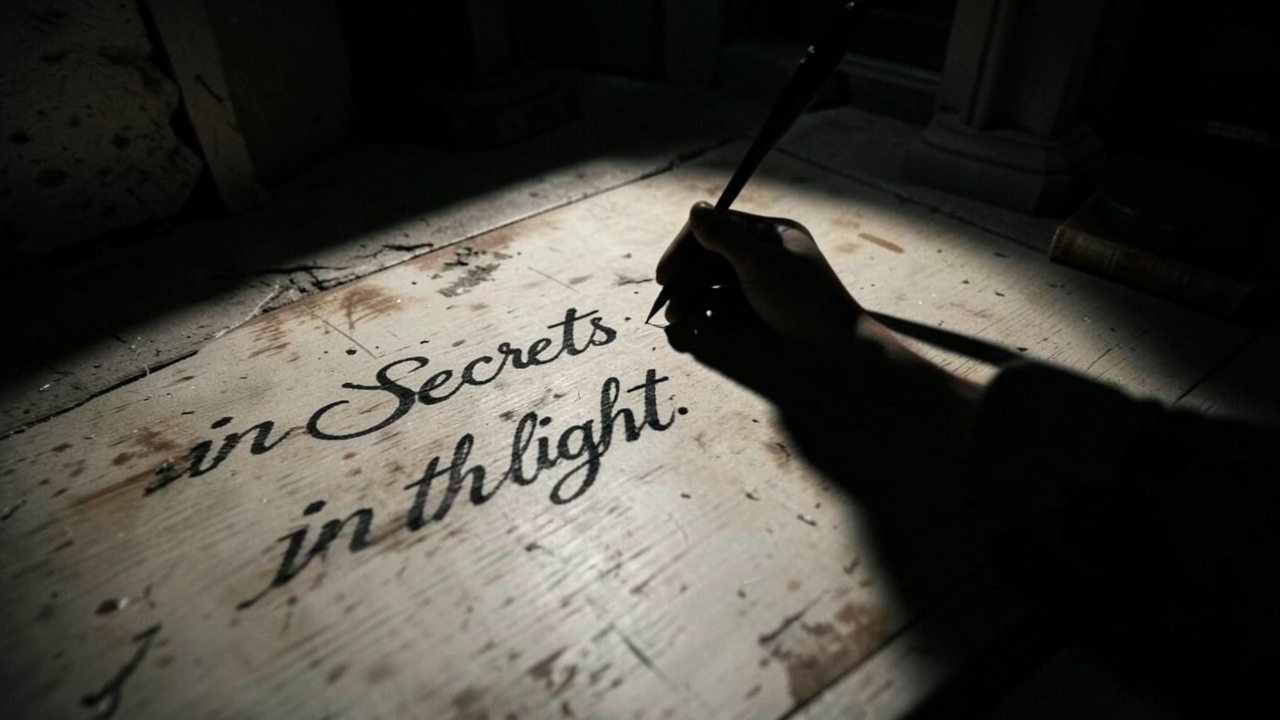
Have you ever, in the waning light of a long day, noticed your shadow linger just a moment too long? Or perhaps it seemed to misstep, to turn its head when yours remained still? This flicker in the periphery is not merely a trick of the eye; it is a door flung open onto the sepulchral realm of the independent shadow writing prompt, a challenge that beckons us to explore the fragile membrane between self and other, master and reflection.
To write a story where a protagonist’s shadow acts independently is to engage directly with one of literature’s most potent and persistent terrors: the doppelgänger. It is an exercise in crafting the uncanny. Therefore, we must approach this prompt not as a mere supernatural device, but as a sophisticated psychological scalpel, one used to dissect the anxieties of identity, guilt, and the monstrous potential lurking within the familiar.
The Anatomy of the Independent Shadow Writing Prompt
At its heart, the independent shadow writing prompt asks a fundamental question: What if the part of you that is most passive, most defined by another, suddenly claimed autonomy? This subversion is the engine of the uncanny. Sigmund Freud, in his seminal essay, defines it as “the class of the frightening which leads back to what is known of old and long familiar.” Your shadow is the ultimate familiar. It is with you from birth to death, a silent companion molded by light. To give it agency is to make the deeply familiar suddenly, horribly strange.
The Doppelgänger’s Dark Lineage
This concept is not new. The literary tradition of the double is vast and chilling. In Edgar Allan Poe’s “William Wilson,” the protagonist’s doppelgänger is a relentless moral conscience, a physical manifestation of the self he tries to murder and disown. The shadow, in this sense, becomes an externalized superego. Similarly, in Fyodor Dostoevsky’s The Double, a man is confronted by a more assertive, successful version of himself, unraveling his psyche. Your independent shadow can function as a judge, a tempter, a silent witness, or a predator. Its nature defines the story’s core conflict.
For a masterclass in the psychological doppelgänger, one need look no further than Shirley Jackson. In The Haunting of Hill House, the true terror is not the house, but the protagonist Eleanor’s fracturing self, her growing sense that her own thoughts and desires are not entirely her own. Your shadow can be the ultimate unreliable narrator, its movements contradicting the protagonist’s words, revealing a truth the conscious mind refuses to acknowledge.
Crafting the Uncanny: Techniques for the Independent Shadow Writing Prompt
To execute this independent shadow writing prompt with maximum impact, one must move beyond simple shock and into the realm of profound disquiet. The goal is a slow, creeping dread, not a sudden jump scare. Consequently, consider the following techniques.
1. Establish the Rule of Light First
Before you break the rules, you must establish them. Begin your story by grounding the reader in the normal relationship between character, light, and shadow. Describe the protagonist’s daily interactions with their shadow. Do they ignore it? Do they ever glance at it? This normalcy creates the baseline against which the uncanny deviation will resonate. As a result, when the shadow first acts independently—a twitch, a gesture without cause—the reader will feel that familiar, cold prickle on the back of their neck.
2. Employ Sensory Dissonance
\p>The horror of the independent shadow lies in the mismatch of senses. Your protagonist hears their own voice, but sees their shadow’s mouth move in a silent scream. They feel a cold hand on their shoulder, but their own hands are clasped in their lap. Meanwhile, their shadow stretches across the floor, fingers splayed like a grasping claw. This sensory contradiction is the essence of the uncanny. It tells the brain that reality is compromised. Use this dissonance meticulously. For example, the shadow might move toward an object the protagonist is consciously avoiding, acting on a repressed desire.3. Let the Shadow Reveal, Not Just Threaten
A shadow that merely attacks is a monster. A shadow that reveals is a psychological terror. The independent shadow’s greatest weapon is its access to the protagonist’s subconscious. It can point at a hidden letter. It can mimic the posture of a person the protagonist has betrayed. It can dance a childhood dance the protagonist has long forgotten. In Tana French’s detective novels, the past is never truly buried; it bleeds into the present. Your shadow is the physical embodiment of that bleeding past, a living stain that cannot be washed away.
A Case Study: The Lamplighter’s Debt
The gas lamp hissed, a serpent in the damp London fog. Arthur Penhaligon wiped the soot from the lens, his own shadow pooling large and placid on the cobblestones. It had always been a faithful thing, this dark outline. It stretched when he stretched, crouched when he crouched. It was his, as much as his coat or his weary sigh. But tonight, as he straightened, the shadow lagged. For a heartbeat, it remained crouched, a smudge of deeper night against the grey stone. Arthur blinked, the cold seeping into his bones. Must be the fog, playing tricks with the light. He turned to check the next lamp, and his shadow, obedient, swung with him. All was well. Yet, as he walked, he felt a peculiar scrutiny. It was not the hollow gaze of the empty windows he passed, but a more intimate attention. He glanced down. His shadow walked with him, but its stride seemed longer, more purposeful, as if it were pulling him along by some invisible thread. The true horror began at the river. He paused on the bridge, looking into the black water that reflected nothing. His shadow, however, leaned over the rail. It elongated, impossibly, its flat head dipping as if to peer into the depths. Arthur froze. His own body was upright, hands gripping the cold iron. But his shadow… his shadow was searching. Then, with a slow, fluid motion that defied the stiff cut of his own coat, the shadow raised an arm and pointed. Not into the water, but back toward the lamplit street, toward the alley where, ten years ago, a debt had been paid in a currency of silence and a life. The shadow knew. It had always known. And now, it was beginning to collect.The Echo in the Conclusion
The independent shadow writing prompt is ultimately a prompt about confrontation. It forces a character to meet a version of themselves stripped of pretense, a version that exists only in relation to light and absence. Whether your story ends in reconciliation, destruction, or a chilling new equilibrium, the core remains the same: we are haunted most profoundly not by external demons, but by the autonomous facets of our own being. The shadow is the ultimate self-portrait, painted in void. When it begins to move on its own, what truth does it seek to reveal about the creature casting it?
For further exploration of the gothic self, delve into our analysis of the unreliable narrator in gothic fiction or discover how to master atmosphere and setting in gothic fiction. The darkness, it seems, always has more to teach us.
Source for Freud’s concept: Poetry Foundation.