
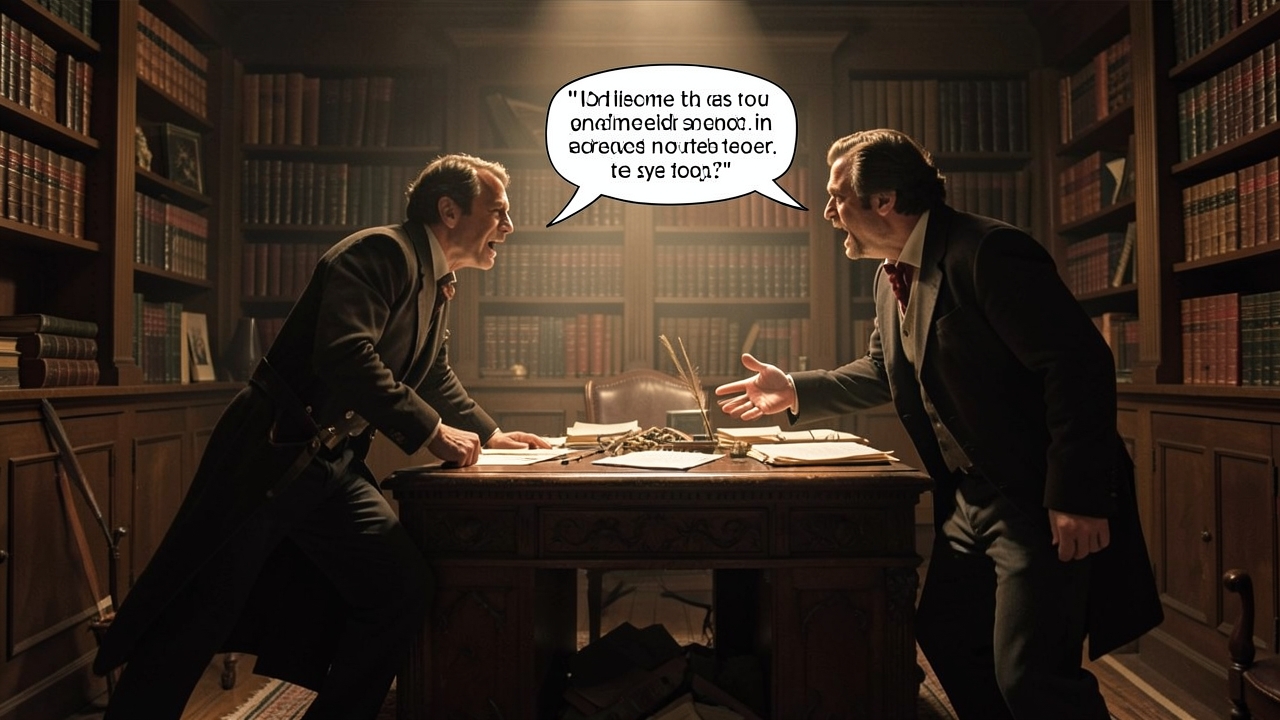
Have you ever read a scene where characters argue, only to feel the words fall flat, like echoes in an empty hall? In the realm of fiction, conflict is the lifeblood, yet many writers falter when penning writing character arguments dialogue, resulting in exchanges that resemble screenplays rather than lived experiences. As we navigate the shadows of storytelling in 2026, this guide delves into the craft, revealing how to infuse arguments with depth, ensuring they resonate with haunting authenticity.
The Anatomy of Writing Character Arguments Dialogue
To master writing character arguments dialogue, one must first dissect its components. A flat argument often suffers from predictable back-and-forth exchanges, devoid of emotional undercurrents. Consequently, we must transcend mere words and embed layers of meaning that linger like whispers in dusk.
Embedding Subtext in Conflict
Subtext is the shadow that dances beneath dialogue, the unsaid truth that shapes every utterance. For example, Edgar Allan Poe mastered this in “The Tell-Tale Heart,” where the narrator’s insistence on sanity reveals profound guilt. Therefore, in writing character arguments dialogue, characters rarely say exactly what they mean. Instead, they cloak their fears and desires in evasion. Consider Daphne du Maurier’s Rebecca, where Mrs. Danvers’ subtle taunts carry layers of obsession. By crafting subtext, arguments gain psychological depth, avoiding the robotic feel of a screenplay.
Furthermore, use metaphors and indirect references. For instance, a character might deflect anger by talking about the weather, symbolizing inner turmoil. This technique, employed by Shirley Jackson in We Have Always Lived in the Castle, adds a chilling realism. As a result, readers engage in the unraveling of hidden motives, making the conflict feel lived-in.
Physical Interruptions and Environmental Cues
Arguments in real life are messy, interrupted by gestures and surroundings. In writing character arguments dialogue, incorporate physical actions to break the rhythm. For example, a character might pause to pour tea, their hand trembling, revealing anxiety. H.P. Lovecraft often used environmental details in tales like “The Shadow over Innsmouth” to heighten tension. Consequently, describe how a gust of wind rattles a window, or how a clock ticks ominously, adding atmospheric pressure.
Moreover, physical interruptions can signify power shifts. If one character abruptly stands, it creates a visual hierarchy. This method, seen in Tana French’s crime novels, makes scenes dynamic. In contrast, a screenplay might rely on stage directions, but in prose, these details must weave seamlessly into the narrative flow.
Asymmetric Power Dynamics
Power imbalances fuel compelling arguments. In writing character arguments dialogue, assign one character a psychological edge. For instance, in Gillian Flynn’s Gone Girl, Amy’s calculated calm contrasts with Nick’s frantic denial. Therefore, use techniques like interruption frequency, word choice, and silence to denote control. A character who speaks in short, clipped sentences may assert dominance, while another rambles, showing vulnerability.
Similarly, leverage backstory. A character with a secret past, as in Angela Carter’s The Bloody Chamber, can wield knowledge as a weapon. This asymmetry ensures that dialogue feels organic, not scripted. Additionally, consider how Haruki Murakami uses surreal elements in Kafka on the Shore to disrupt power structures, adding layers of mystery.
Common Pitfalls in Writing Character Arguments Dialogue
Many writers fall into traps that make arguments sound artificial. For example, over-reliance on exclamation marks or excessive emotion can strain credibility. In contrast, masterful dialogue, like that of Jorge Luis Borges in his labyrinthine stories, thrives on restraint. Therefore, avoid direct exposition; instead, show conflict through action and reaction.
Another pitfall is neglecting pacing. Arguments should build gradually, like a murmur growing to a crescendo. Silvia Moreno-Garcia in Mexican Gothic expertly paces tensions, using gothic settings to amplify unease. Consequently, vary sentence length and use transitions to mirror emotional shifts. For instance, after a heated exchange, a moment of silence can speak volumes.
Furthermore, ensure arguments serve character development. Each clash should reveal new facets, as in the works of Poe where every word unveils a fractured psyche. By avoiding these pitfalls, writing character arguments dialogue becomes an art form that captivates rather than confuses.
Techniques to Elevate Your Dialogue
Using Metaphor and Symbolism
Metaphors can infuse arguments with poetic depth. For example, in writing character arguments dialogue, have a character compare their relationship to a crumbling wall, symbolizing decay. This technique, reminiscent of Poe’s symbolic ravens, adds an intellectual haunting. Moreover, it avoids literalness, making exchanges more evocative.
Incorporating Silence and Pauses
Silence is a powerful tool in conflict. In literature, pauses can convey unspoken emotions, as in du Maurier’s use of atmospheric tension. Therefore, in writing character arguments dialogue, allow moments where characters hesitate or avoid eye contact. This creates a hollow echo, inviting readers to fill the gaps with their own interpretations.
Leveraging Environmental Reflections
The environment can mirror internal states. For instance, a storm brewing outside during an argument, as in many gothic tales, amplifies turmoil. In writing character arguments dialogue, describe how rain lashes against windows, or how shadows lengthen, to externalize conflict. This method, used by Lovecraft, ensures scenes feel immersive and multidimensional.
Additionally, reference trusted sources for further reading on dialogue craft. For example, explore insights from Literary Hub on subtext techniques, or delve into Poetry Foundation for metaphorical applications. These resources complement the art of writing character arguments dialogue.
A Case Study: The Whisper in the Walls
The attic was a mausoleum of forgotten things, where dust motes danced like specters in the dim light. Elara stood by the window, her fingers tracing the frost on the glass, as Julian’s voice cut through the silence like a shard of ice. “You always did hide behind these walls,” he murmured, his words laced with a bitterness that seemed to seep from the very wood. She turned, her shadow elongating across the floorboards. “And you,” she replied, her voice a whisper that held the weight of years, “always did mistake silence for surrender.” A gust of wind rattled the windowpane, and for a moment, neither spoke. Julian clenched his fist, the knuckles white, as if trying to grasp something slipping away. Elara crossed to the old chest, her movements deliberate, each step a fracture in the tension. “This house remembers,” she said, lifting the lid to reveal a tarnished mirror. “It remembers what we’ve buried.” Julian stepped forward, but the floor creaked, a protest against his intrusion. In the mirror’s surface, their reflections warred—her eyes dark pools of resolve, his a storm of unspoken rage. “You think you can erase it?” Julian’s voice broke, a hollow echo in the vast space. Elara didn’t answer; instead, she let the mirror slip from her fingers, shattering on the floor with a sound that seemed to rend the air. As shards scattered, she met his gaze, and in that moment, the argument was not in words but in the violent dance of light and shadow, a testament to the asymmetry of their pain. The whispers in the walls grew louder, a murmur of centuries, as they stood amidst the wreckage. Julian reached out, but his hand hovered, unsure. “We’re both prisoners here,” he finally said, his voice now a murmur. Elara nodded, her eyes fixed on the broken mirror, where their fractured images seemed to whisper back—a silent, haunting agreement.Conclusion: The Echo of Conflict
In the end, writing character arguments dialogue is about capturing the essence of human discord—the subtext, the physical interruptions, the power dynamics that make conflicts feel real. As we’ve explored through the lenses of masters like Poe and Jackson, the key lies in embedding layers of meaning, allowing arguments to unravel like dusk shadows. Therefore, as you craft your scenes, remember that the most compelling dialogues are those that linger, echoing long after the last word is spoken. Can you hear the whispers in your own stories, urging you to delve deeper into the hollows of conflict?