
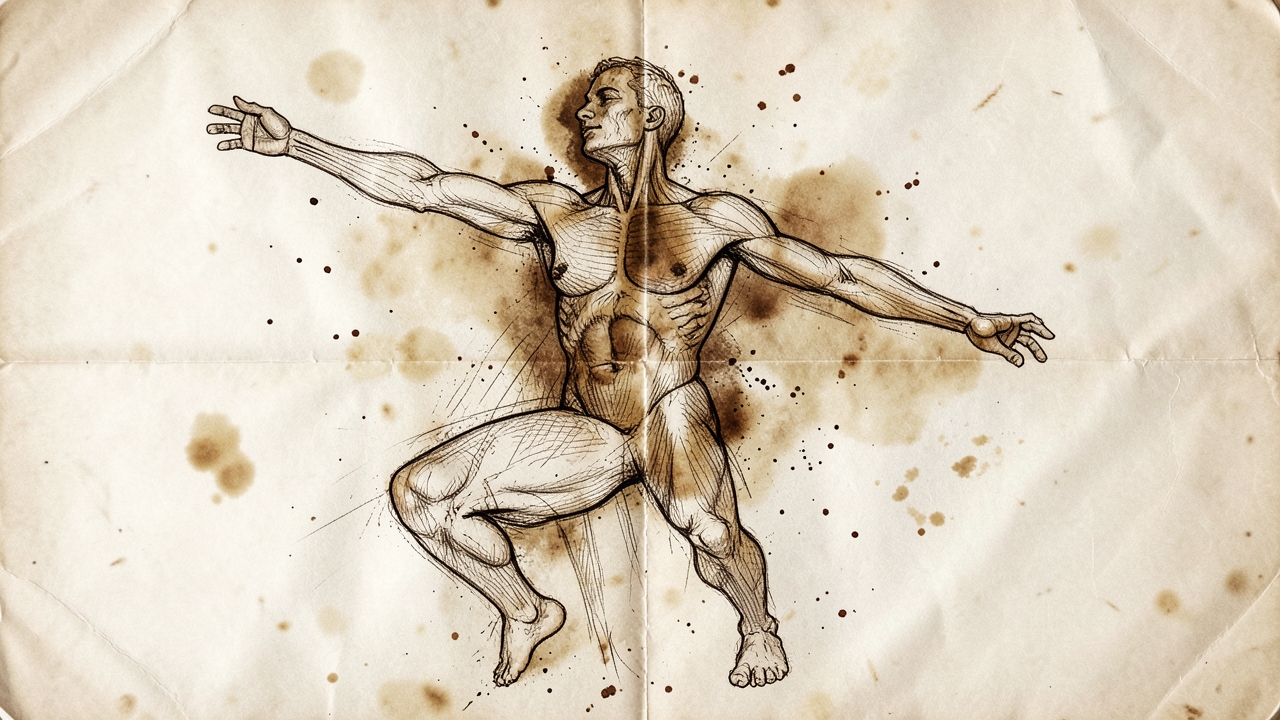
What happens when the wound is too deep for a straight line? When the memory shatters upon recollection, how can the prose that contains it remain whole? This is the central agony of writing from trauma, and the key to its most potent expression lies not merely in what is said, but in the very architecture of the saying. Today, we perform an autopsy on the essay form, dissecting how contemporary writers use deliberate structural fragmentation to make the page itself a site of haunting and revelation.
Essay Structure Tips: The Anatomy of a Wound
The traditional essay marches forward with thesis, evidence, and conclusion. It is a structure of argument, of settled minds. But the experience of trauma is not an argument; it is a rupture. Therefore, the writer grappling with it must first commit an act of literary surgery—cutting open the conventional form to let the chaotic truth breathe. These essay structure tips are not about neatness, but about honest excavation.
Embracing Negative Space
One of the most powerful essay structure tips is to use white space as a character. The gap between sections can signify a memory too painful to articulate, a moment of dissociation, or the silence of a speaker. In her collection of lyric essays, The Empathy Exams, Leslie Jamison frequently deploys these pauses. The breaks are not absences; they are presences of dread and longing. For example, a clinical description of a medical procedure might be followed by a half-page of white space before a childhood memory surfaces, the gap itself conveying the vertigo of connecting present pain to past root.
The Recursive Loop
Furthermore, trauma does not adhere to chronological time. It ambushes the present. Consequently, effective essay structure tips often advise abandoning linear progression for the recursive loop. The writer circles the central event, approaching it from different angles, each return adding another layer of understanding or distortion. This technique finds its dark ancestor in Edgar Allan Poe’s “The Tell-Tale Heart,” where the narrator’s confession spirals around the crime, unable to approach it directly. In contemporary personal essays, this looping manifests as returning to a single image—a locked door, a specific phrase from a doctor—each recurrence revealing new psychological terrain. It formally embodies the obsession of memory.
For a deeper exploration of this technique, consider how it shapes our understanding in the essay on haunted chronology in non-linear narrative.
Collage and Juxtaposition
Another crucial set of essay structure tips involves the collage method. Here, the essayist places disparate fragments side by side: a clinical report, a lyric description of a landscape, a snippet of dialogue, a research finding on neurobiology. The reader must draw the connections, experiencing the same cognitive labor the traumatized mind performs daily. Carmen Maria Machado’s In the Dream House masterfully uses this, cataloging abuse through various genre lenses—horror, choose-your-own-adventure, sci-fi. The structural fragmentation mirrors the way abuse splinters one’s reality. Each genre frame is a different, insufficient container for the same truth, and the spaces between them are where the real story lives.
A Case Study: Shards
The house is a mouth. The hallway is a throat. I am swallowed daily, then expelled at dawn, only to return. The doctor calls it “the incident.” He speaks in full, measured sentences. His words are stones in a neat wall. My memory is not a wall. It is a shattered window.
Shard One: The color of the carpet. Burgundy. The way the fibers held the dark. Shard Two: His voice, not shouting, but a low hum of absolute certainty. The hum of a refrigerator in an empty house. Shard Three: The sound the phone made when I dropped it. A plastic clatter, then silence. The silence lasted for seven years.
The wall of stones the doctor builds is for him, not for me. He needs a narrative with a beginning, a middle, a conclusion. For me, the conclusion is always present. It is the weight in my chest. So I take the shards and arrange them not by time, but by resonance. The burgundy carpet resonates with the color of the wine I spilled last week, which resonates with the feeling of shame, which resonates with the doctor’s clean, quiet office. I place them in a circle. There is no first or last shard. They just are. They form a constellation of impact, a map not of what happened, but of where the fragments landed.
Conclusion: The Essay as Living Scar
We return, then, to the question of the whole. The purpose of these essay structure tips is not to glorify brokenness, but to honor the truth of an experience that breaks form. The structured fragmentation becomes the essay’s most honest voice. It says: this is how it lives in me—not as a story, but as a system of echoes, a pressure, a recurring syntax of fear and survival. The essayist, in adopting this architecture, performs a radical act. They transform the personal, jagged wound into a shared, intelligible structure of feeling.
The most enduring essays on trauma are not those that merely describe the fracture, but those that become the fracture on the page. They stand before us not as finished accounts, but as ongoing autopsies, their formal scars a testament to the struggle for articulation. So, we ask the writer staring at the page: will you build a monument, or will you map the earthquake?
For further dissection of form and feeling, read our analysis of the landscape as psychology in Gothic literature, or explore the philosophical underpinnings of this practice in this definition of the lyric essay from the Poetry Foundation.